How to Clean a Car After a Beach Trip
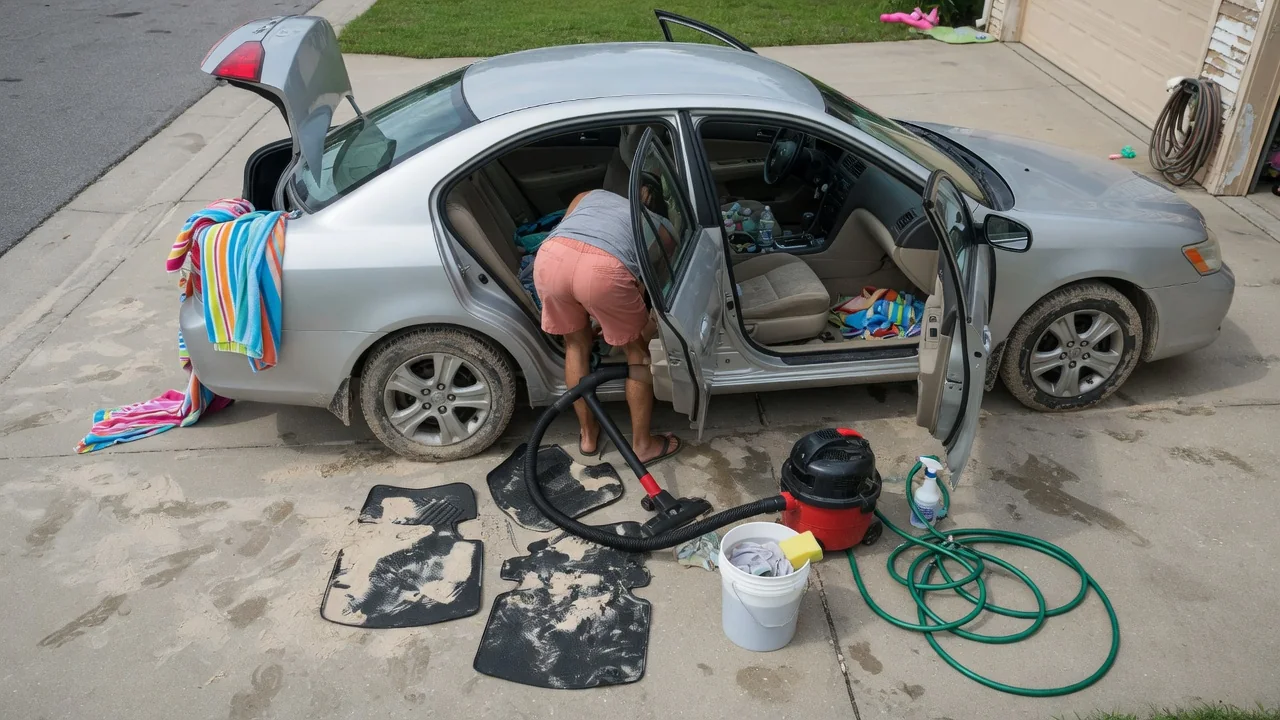
Knowing how to clean a car after a beach trip matters because sand and salt behave differently from ordinary road dirt. Sand is abrasive and scratches paint, glass, and trim when dragged across them, while salt residue holds moisture against metal and encourages corrosion. The safest approach removes loose grit first, floats contamination away with water, and leaves wiping until last.
Shake and vacuum sand
Start inside, before any water touches the vehicle. Pull out the floor mats, beach towels, and cargo liners and shake them well away from the open doors so the grit does not blow back in. Rubber mats can be knocked against a hard surface, while carpeted mats respond better to a firm beating from the back side, which pushes sand grains out of the pile instead of driving them deeper into the fibers.
Vacuum with a stiff brush in one hand to agitate carpet as the nozzle passes, because sand settles at the base of the pile and a single pass rarely lifts it. Work along seat rails, between cushions, under child seats, and in the trunk well. On leather, vinyl, and screens, vacuum or blow grit away before wiping; a cloth dragged over sandy surfaces acts like fine sandpaper. Seat track layouts and carpet density vary by vehicle, so some cabins take much longer.
Rinse exterior
On the outside, water should do the work before any mitt or sponge touches paint. Rinse from the roof down with a steady flow from a hose, letting sand and dried salt spray float off the panels. Rubbing a dry, dusty finish is how swirl marks and fine scratches appear, especially on dark colors and soft clear coats. Spend extra time on the windshield base, mirror housings, door handles, and panel gaps where grains collect.
Salt deserves the same attention underneath. Direct water into the wheel wells, behind the wheels, along the rocker panels, and across the underbody, since these areas catch spray and wet sand that stay damp against metal, brake components, and fasteners. After the rinse runs clear, wash with car shampoo and a clean mitt, rinsing the mitt often. If you use a pressure washer, keep a sensible distance from the paint, sensors, and trim, as tolerance differs between vehicles.
Dry seals
Door, trunk, and window seals trap both sand and salty water, and they are easy to overlook. Open every door, the hood, and the liftgate, then check the rubber weatherstripping and the painted jambs behind it. Grit sitting on a seal gets pressed against paint each time the door closes, gradually dulling the finish along the contact line. Lift it away with a damp microfiber towel using light, single-direction strokes rather than scrubbing back and forth.
Once clean, dry the seals and jambs with a fresh towel so salty moisture does not linger in the channels. Pay attention to the drain holes at the bottom of doors and around a sunroof, if fitted, because packed sand can block them and hold water inside. Lower each window slightly and wipe the top edge of the glass; grit caught in the felt channel can leave vertical scratches. Seal shapes and drain locations differ by model, so the owner's manual helps.
Everyday Use and Observations
In the days after a coastal visit, the car itself reveals whether the cleanup worked. A faint white haze on glass or paint as panels dry points to remaining salt residue, and a gritty crunch from a window, door hinge, or seat slider suggests sand still lodged in a moving part. Sand also keeps migrating out of carpet with normal driving, so a second vacuum a few days later often collects a surprising amount.
Habits on the trip shape how much work follows. Brushing off feet, rinsing gear, and bagging wet towels before loading keeps much of the sand outside, and all-weather mats or a cargo liner make the rest easier to remove. Vehicles driven on the sand itself, or parked close to the surf for hours, collect far more underbody contamination than those left in a paved lot. Convertibles, open-bed pickups, and cars with cloth upholstery tend to hold grit in more places.
Limits and Next Steps
A home wash has limits. A garden hose cannot reach every cavity of the underbody, and sand packed into frame rails, skid plates, or brake hardware after driving on the beach may need a lift and a professional underbody rinse. Grinding noises from the brakes, a sticking window, or a sunroof that moves unevenly after the trip are worth having inspected rather than forced, since continued use with trapped grit can worsen wear.
Existing scratches are another boundary. Washing removes contamination but does not repair marks already cut into the clear coat; those may call for polishing by a detailer who can judge how much correction the finish can safely take. For regular coastal visitors, a coat of wax or sealant makes salt and sand release more easily at the next wash. Follow the manufacturer's care guidance for matte paint, wraps, and soft tops, which need different products.