How to Clean a Car AC Condenser Safely
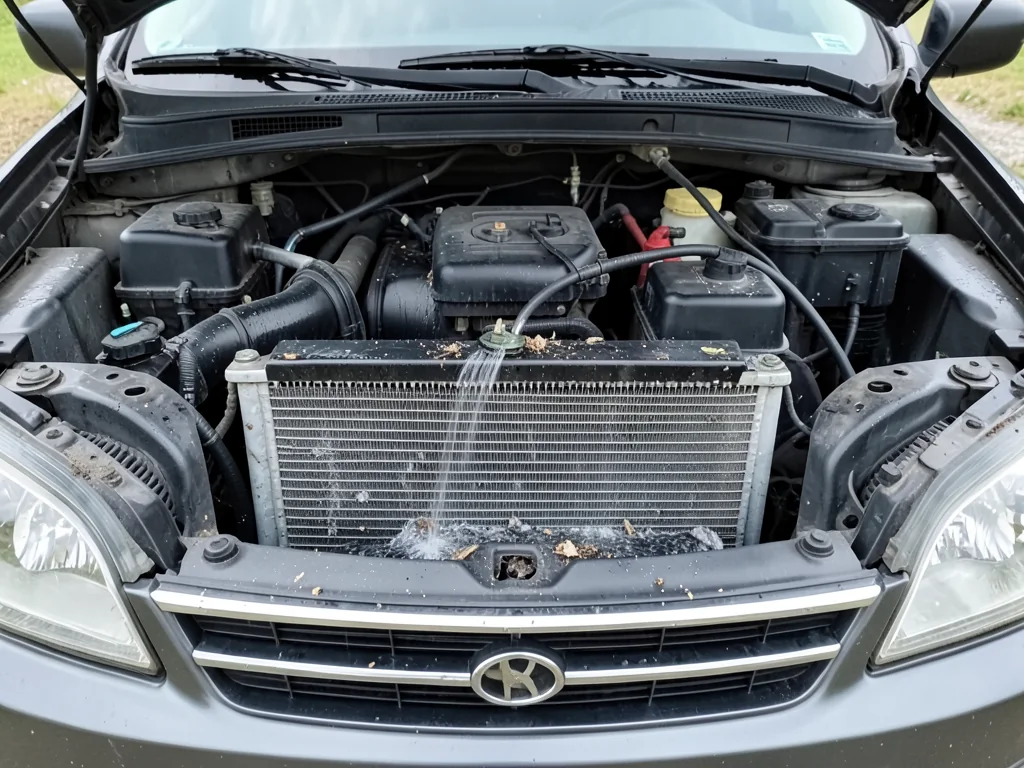
Cleaning a car AC condenser is a careful rinse of surface debris from the heat exchanger at the front of the vehicle. The right AC condenser cleaner for car use, plus a gentle method, can help when insects, leaves, and road debris clog fins and limit heat rejection. External cleaning does not fix leaks, charge issues, or electrical faults.
How Surface Debris Can Affect Condenser Cooling
The condenser sits in the incoming airstream so refrigerant can reject heat to outside air. After the compressor raises refrigerant pressure and temperature, that heat must leave through the condenser fins as air moves across the core. When the cooling fan or vehicle motion supplies that airflow, heat rejection keeps high-side temperature and pressure in a workable range. Restricted airflow makes the same heat stay in the refrigerant, so cabin cooling suffers even if the compressor still runs.
When insects, leaves, dirt, and road debris pack into the fins, they create an airflow obstruction that shrinks the effective cooling area. Cleaning the AC condenser on a car can help when that external layer is the problem, because rinsing restores the path air needs. It cannot open an internal restriction, seal a refrigerant leak, or restore a failed fan circuit. Treat car AC condenser cleaning as surface recovery, not proof that the rest of the system is healthy.
Locate the Condenser and Decide Whether Access Is Safe
The condenser is typically near the front of the vehicle, often ahead of or integrated with other heat exchangers, but layout varies by model. Confirm its location with the owner's documentation rather than assuming the first visible grille object is the AC core. Before any attempt to clean a car AC condenser, shut the vehicle fully down and let components cool. Electric cooling fans can start without the engine running, so keep hands and tools clear of the fan blades and shroud.
Use a flashlight to inspect only what you can see: packed debris, flattened condenser fins, bent metal, or oily residue. Those observations are clues, not a diagnosis of a failed part or a refrigerant leak. Limit home cleaning to safely accessible surfaces from the grille side. If reaching the core requires bumper removal, electrical disconnection, or work near refrigerant fittings, stop and seek professional help instead of forcing access that could damage lines or wiring.
Choose Water or a Cleaner Approved for the Condenser
A gentle water rinse is often enough for loose surface dirt, insects, and light road debris. If you need more than water, select a car AC condenser cleaner labeled for condenser metals and coatings. Confirm that any AC condenser cleaner for car use is aluminum-safe through its label and vehicle guidance, rather than assuming a generic shop degreaser will do. Cabin evaporator formulas are not automatically approved for this job and can leave residues that do not belong on exterior fins.
Follow the product's dilution, dwell time, protective equipment, and rinsing directions. There is no universal recipe for cleaning an AC condenser on a car, because coatings and alloys differ. Avoid household acids, caustic degreasers, solvents, and evaporator-only formulas unless the label explicitly approves this application. The wrong chemistry can etch fins, strip coatings, or leave residue that later attracts dirt. When in doubt, stay with a low-pressure rinse instead of improvising a mix.
Rinse Accessible Fins Without Damaging Them
Use a gentle, low-pressure rinse aimed squarely at accessible condenser fins, and follow any vehicle guidance on water exposure around electronics. The spray should wet and lift debris, not hammer the thin aluminum. Where you can reach both faces safely, rinsing from the cleaner side toward the packed debris can carry dirt outward without forcing it deeper. Do not reach through the cooling fan or separate stacked heat exchangers to create that path.
Keep spray away from sensitive electrical connectors, sensors, and control modules. Skip pressure washers, concentrated jets, scraping, and stiff brushes, because they flatten fins and worsen airflow obstruction. If a compatible cleaner is necessary during car AC condenser cleaning, apply and rinse it by the label and do not let residue dry on the surface. Stop if debris stays deeply trapped, fins deform, or the work would disturb refrigerant lines.
Check the Results Without Assuming the Fault Is Fixed
After rinsing, inspect accessible areas for remaining insects, leaves, film, and cleaner residue. Leftover product can attract more dirt and interfere with heat rejection, so finish the rinse until visible surfaces look clear of soap. Before restarting, remove hoses, bottles, and lights, secure any permitted access covers, and confirm the work area is clear of rags and tools. A forgotten cover or a dangling spray bottle near a cooling fan is a new hazard.
Then run the air conditioning under ordinary driving or idle conditions and notice whether cabin cooling feels more adequate. Weather, sun load, and recent operation all change how cold the vents feel, so one cool blast is not a verdict. Vent temperature and a cleaner-looking core cannot establish refrigerant charge or prove overall system health. Cleaning the car AC condenser only addresses external airflow; hidden restrictions and electrical issues remain possible.
When Condenser Cleaning Needs Professional Follow-Up
If cooling stays weak, comes and goes, or is accompanied by unusual noises or a cooling fan that seems reluctant to run, have the system diagnosed rather than repeating rinses. Persistent poor heat rejection after you clean the AC condenser on a car often points past the grille. Intermittent cooling can involve clutch, sensor, or fan-circuit behavior that surface washing cannot correct. Unusual sounds deserve inspection before more water is applied around electrical parts.
Treat oily residue, visible impact damage, and extensively crushed fins as reasons for a professional look, not as proof that a particular part must be replaced. Refrigerant leak checks, pressure testing, internal restriction diagnosis, and fan-circuit testing need equipment and procedures that belong in a shop. After heavy insect seasons, leaf fall, or dusty road travel, an occasional visual check of accessible fins is reasonable. Do not treat that glance as a fixed service interval, because exposure and vehicle design vary.