How to Choose Which Work to Do First on a Project Car
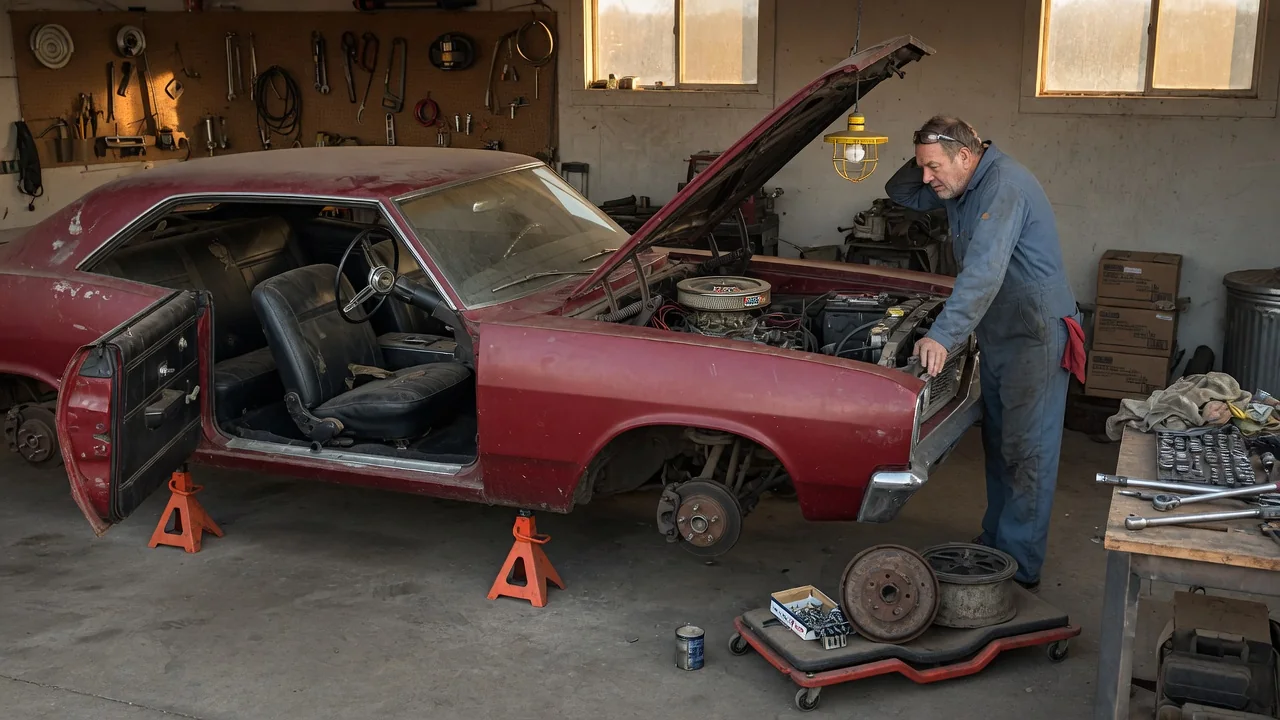
Every project car comes with a long list of needs, and the order you tackle them in shapes the budget, the timeline, and how much work you end up doing twice. A sensible project car work order usually follows one principle: fix what can hurt someone first, then what holds the car together, and only then what makes it look good. The sections below explain how to weigh safety systems, structure, and cosmetics when deciding where to start.
Safety systems: what must work before the car moves
Brakes, steering, suspension, tires, the fuel system, and the electrical wiring decide whether the car can be moved safely, even if it is only rolling onto a trailer or across the shop floor. A car that has sat for a long time may have parts that look fine but have degraded. Brake fluid absorbs moisture over time, rubber brake hoses and fuel lines can harden and crack, and tires age even when plenty of tread remains. Seized calipers, worn steering joints, or tired suspension bushings can turn a short test drive into a hazard. These systems go first because a failure can injure people, not just damage the car.
Fire risk deserves special attention. Leaking fuel lines, a deteriorated tank, or old fuel that has gone stale can all cause trouble on the first start. Wiring is another common problem on older or previously modified cars: brittle insulation, amateur splices, missing fuses, and corroded grounds can short and overheat. Many restorers keep the battery disconnected until the wiring and fuel system have been inspected, which removes the most obvious ignition sources while the car is being evaluated.
A practical way to handle this stage is to inspect each system and sort findings into three groups: unsafe right now, must be fixed before driving, and can wait. Use the factory service manual for the specific vehicle when it comes to torque values, fluid types, and wear limits, because those details vary between models and years. General rules of thumb are useful for spotting problems, but they are not a substitute for the manufacturer's specifications.
Structure: the foundation everything else attaches to
Structure means the frame or unibody, floor pans, rocker panels, suspension and steering mounting points, and subframe or body mounts. Every safety component bolts to this foundation, so new brakes or suspension parts do little good if the area they mount to is badly corroded. For that reason, a structural assessment belongs at the very beginning of the project, alongside the safety inspection, even if the actual repairs happen later. What you find can change the whole plan. Extensive rot in critical areas may make the project far more expensive than expected or push you toward a different goal for the car.
Structural repair usually involves cutting, welding, and sometimes straightening, and that has consequences for sequencing. Heat and sparks can damage nearby wiring, fuel and brake lines, seals, and upholstery, and they create a fire risk around fuel components. Parts near the repair area often have to be removed first, so installing fresh wiring or a new interior before welding risks ruining that work. Straightening or replacing structural sections can also change suspension geometry and how body panels line up, which is why final alignment and panel fitting come after structural work rather than before.
When inspecting, distinguish surface rust from metal that has thinned or perforated, and pay close attention to places where water and dirt collect. Look for signs of earlier repairs hidden under thick undercoating, body filler, or fresh paint. If there is any doubt about whether a frame or unibody is straight, a body shop with measuring equipment can compare it against the manufacturer's dimensional data. That kind of check is more reliable than judging by eye.
Cosmetics: why paint and interior usually come last
Paint, trim, chrome, and upholstery are the most visible parts of a project, so it is tempting to start there. They are also the most easily damaged by everything else on the list. Weld spatter, grinding dust, spilled fluids, tools resting on fenders, and pulling an engine or transmission can all mark a fresh finish. Doing cosmetic work early often means paying for it twice.
Within the cosmetic stage there is also a natural order. Metal repair comes first, followed by panel alignment and gap adjustment, then filler and primer, then paint. Trim, glass seals, and exterior hardware go back on after the paint has properly cured, and the interior is typically installed last because it is the most sensitive to dirt and handling. There are sensible exceptions. Bare metal left exposed for a long time can rust, so a protective primer may be worth applying early. Sealing water leaks at windows or doors also protects the structure and interior, so it is not purely cosmetic.
Some cosmetic decisions still need to be made early even though they are carried out late. A color change, for example, often means painting door jambs, the engine bay, and other areas that are much easier to reach while components are removed. Deciding on the final look before disassembly helps you avoid reassembling something only to take it apart again.
Practical implications and limits
Real projects are rarely perfectly linear, and the right order depends on what you want from the car. A weekend driver and a show-quality restoration lead to different plans. Some owners prefer to make the car safe and drivable first so they can use it and learn what else needs attention, while others commit to a full teardown from the start. A car that rolls, steers, and stops is also far easier to move, store, and take to specialists. The trade-off is that driving a car with known, unrepaired structural weakness carries real risk, so drivability should never get ahead of structural soundness.
Outside factors also shape the sequence. Body-on-frame and unibody designs lead to different disassembly approaches, which affects what can be worked on in parallel. Parts availability matters too: if a component is hard to find, ordering it early can prevent a stalled project, even if it will not be installed for months. Local inspection and registration rules vary, and they may determine what must be completed before the car can legally return to the road.
A general framework cannot replace a hands-on inspection or the service information for your specific vehicle. It works best as a starting point. Write down the plan, photograph and label parts during disassembly, and expect to revise the order as new problems turn up. Keeping the plan current is often what separates a project that gets finished from one that stalls halfway through.