How to Choose a Transmission Fluid Change Kit for Your Automatic Transmission
The short answer
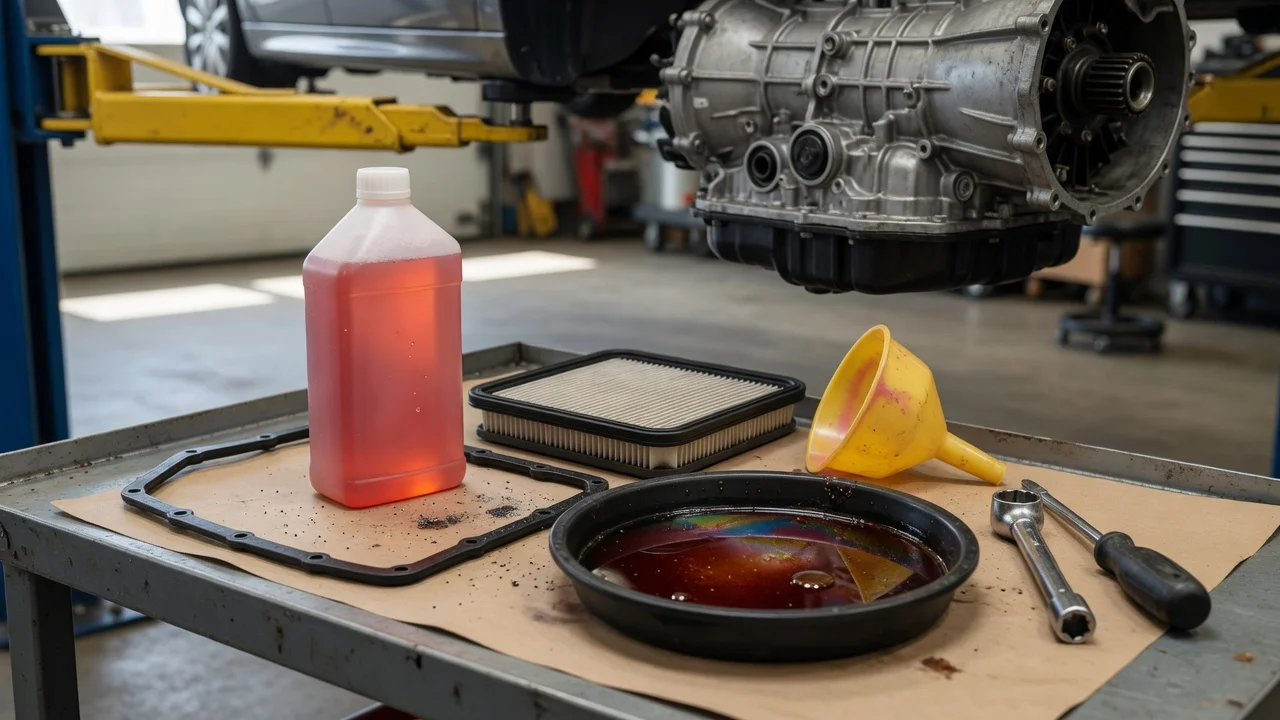
A transmission fluid change kit is a packaged set of parts and fluid meant to service an automatic gearbox: typically the specified automatic transmission fluid (ATF), a filter or strainer, a pan gasket or pan seal, and sometimes a drain-plug washer, pan bolts, or a fill adapter. The kit that fits is the one that matches your vehicle’s transmission family, fluid specification, pan design, and the service method you will actually use. Buying by engine size or model name alone is not enough, because the same car can use different transmissions across years, markets, and drivetrains.
The choice changes if the unit is a dual-clutch, continuously variable (CVT), or automated-manual gearbox rather than a conventional torque-converter automatic. Those designs often need a different fluid chemistry, a different filter layout, and a kit sold under a different product line. If the vehicle uses a sealed or “lifetime-fill” unit with no conventional drain and fill path, a retail pan-drop kit may not apply, and the work may require dealer-level fill equipment.
Identify the transmission before you shop
Start with the vehicle identification number (VIN), the build sheet or owner’s manual fluid chart, and the transmission code on the unit or on a door-jamb or under-hood label when one is present. Confirm model year, market, engine, two-wheel or all-wheel drive, and whether the gearbox is the original unit. A replacement transmission, a rebuilt unit, or a mid-cycle running change can invalidate a kit that “fits” the original catalog listing.
Then match the kit to the gearbox family, not only to the car. Catalog listings that stop at make, model, and year are a starting filter. Cross-check the listed transmission designation, pan shape, filter type (spin-on canister versus in-pan strainer), and fluid specification against what is on the vehicle. If those four items do not agree, treat the kit as unconfirmed.
Match the fluid specification first
Automatic transmission fluid is not interchangeable by color or by a generic “ATF” label. The specification on the dipstick, filler cap, owner’s manual, or service information is the controlling requirement. Common families include Dexron, Mercon, ATF+4, Toyota/Lexus WS, Honda DW-1, Nissan Matic grades, and various European OEM approvals. A kit that supplies the wrong chemistry can affect clutch friction, shift quality, and hydraulic control even when the filter and gasket physically fit.
Use a fluid that states the exact OEM specification, or a listed equivalent that the fluid maker warrants for that specification. “Compatible with” language that does not name the required spec is weaker evidence than an explicit approval or equivalent claim. Do not mix leftover fluid of an unknown spec with a fresh fill. Capacity printed on a retail bottle or kit box is only a starting figure; actual fill volume depends on whether you drain the pan, drop the pan, replace a torque-converter drain plug if one exists, or exchange fluid through a machine.
Choose the kit type that matches the service you will do
Kits fall into a few practical groups. A drain-and-fill pack is mainly fluid, sometimes with a crush washer, and suits a pan that has a drain plug when you only intend to replace the fluid that comes out of the pan. A pan-drop or filter-service kit adds the filter or strainer and the pan gasket or reusable pan seal, which is the usual complete service when the pan must come off. A spin-on filter kit is for transmissions that use an external canister instead of an in-pan strainer. A flush or exchange kit is fluid volume sized for a machine exchange and may omit the filter and gasket entirely.
The intended use decides the kit. If the pan has no drain plug, a fluid-only kit leaves you unable to service the filter without extra parts. If you will only drain and refill through a plug, a full filter kit is unused hardware. If the shop will machine-exchange the fluid, confirm whether they still replace the filter and pan gasket; many exchanges leave the old strainer in place unless you buy those parts separately.
Compare kits on the same decision criteria
Hold every candidate to the same checklist so OEM, dealer, and aftermarket kits are compared on equal terms. Physical fit, fluid spec, and service method matter more than brand packaging.
Criterion What to verify What a mismatch does; Transmission identity Family code, pan shape, filter style, two- or all-wheel-drive variant Parts do not bolt up, or the kit is for a different gearbox in the same car; Fluid specification Exact OEM spec or a named equivalent on the bottle and in the kit listing Wrong friction and hydraulic behavior even if the pan gasket fits; Filter or strainer In-pan strainer, spin-on canister, or no serviceable filter You cannot complete a pan drop, or you buy a filter the unit does not use; Pan seal One-piece gasket, reusable rubber seal, RTV-only pan, or both gasket and sealant as specified Leaks, or a kit that assumes a gasket on a pan that uses sealant only; Fluid volume and fill method Pan drain, pan drop, converter drain, or machine exchange; dipstick versus sealed fill-for-life procedure Underfill, overfill, or a kit that assumes a dipstick the vehicle does not have; Hardware Drain-plug washer, pan bolts, magnets, fill adapter, level plug A job stopped for a missing crush washer or a model-specific fill tool
OEM and dealer kits usually take the guesswork out of spec and filter shape for the listed application, at a higher parts price. Aftermarket kits can be a good fit when the listing names the same transmission, filter, and fluid spec, and when the filter media and gasket material are described rather than left generic. Avoid kits that substitute a “universal” gasket sheet or an unnamed ATF blend for a transmission that publishes a strict fluid standard. Price and included quart count are not comparable across kits unless the fluid spec, filter type, and intended service method are the same.
Constraints that should change the recommendation
Conventional torque-converter automatic with a serviceable pan and a published ATF spec: choose a pan-drop kit that includes that spec, the correct filter or strainer, and the specified pan gasket or seal. Same automatic, drain plug present, filter recently replaced and known to be in good condition: a fluid-only kit in the correct spec can be enough for a partial drain and fill. Repeat drains after a short drive replace more of the old fluid than a single drain, but still do not equal a full converter exchange unless the converter itself is drained or flushed. External spin-on filter: buy the canister, sealing washer, and spec fluid together; an in-pan strainer kit will not apply. CVT, dual-clutch, or automated-manual unit: use only a kit and fluid labeled for that transmission type and OEM spec. Do not use conventional ATF kits on these units. Sealed fill-for-life unit, no dipstick, temperature-based level set: a retail kit may supply fluid and a filter, but the fill procedure often needs a scan tool, a specified fluid temperature, and a level plug. Treat that as qualified service unless you have the procedure and tools. Unknown fluid already in the pan, burnt smell, metal on the magnet, or a slipping or harsh-shifting gearbox: a change kit addresses fluid and filter condition, not internal damage. Diagnose before you buy a maintenance kit. Severe duty, towing, taxi, or very high mileage with no service history: plan for more fluid volume than a single pan drain, and inspect the pan and magnet. A kit sized only for a pan drop may not replace fluid remaining in the converter and cooler.
How to complete the selection
Treat kit choice as a short, ordered check. Stop if any item fails; do not substitute a “close enough” fluid or gasket.
Confirm the transmission family, model year, market, and drivetrain from the VIN, labels, and service information. If the unit was replaced, identify the installed gearbox, not the original catalog entry. Read the required fluid specification from the owner’s manual, filler cap, dipstick, or manufacturer service data for that gearbox. Write the spec down before you open a catalog. Decide the service method: pan drain only, pan drop with filter, spin-on filter change, converter drain if equipped, or machine exchange. This sets which parts the kit must contain. Select a kit that lists that transmission, that filter or strainer style, and that fluid spec. Confirm pan gasket versus reusable seal versus specified sealant. Check included hardware against the vehicle: drain-plug washer, pan bolts if they are torque-to-yield or one-time-use on your unit, fill adapter, and level-plug seal. Add any missing pieces from the same application, not from a generic assortment. Compare fluid volume to the service method. A pan-drop kit should cover pan capacity plus a margin for residual wetness; an exchange job needs the volume the machine and the shop specify. Do not assume the bottle count on the box is a complete fill for every method. Completion check: the kit’s transmission listing, filter photo or part number, gasket or seal type, and fluid specification all match the vehicle in hand, and you still have a way to set fluid level after the service (dipstick, level plug and temperature procedure, or shop equipment). If any of those is missing, the kit is not complete for the job.
Hazards belong to the later service, but they affect what you buy. Hot fluid and a hot exhaust are burn risks; a weak jack stand or an unsupported transaxle pan can crush the pan or the technician. Overfill and underfill both cause shift problems. If the pan is bonded with a large magnet full of flakes, or if clutch material coats the fluid, stop and have the gearbox inspected rather than finishing a routine kit install. Work that needs a temperature-controlled level set, a pressure fill, a factory scan tool, or a cooler flush after contamination is qualified service.
Limits and gaps
This guide does not name a single kit brand, quart count, torque value, or fill temperature, because those figures are vehicle-specific and must come from the manufacturer’s service information for that transmission. Applicability of any retail “fits” claim is unknown until the transmission code, fluid spec, and pan or filter design are confirmed on the actual vehicle. Legal or warranty effects of using aftermarket fluid vary by maker and by jurisdiction; check the warranty booklet for the vehicle in question rather than assuming a fluid change voids coverage. If the service information for your gearbox is not available, identify the unit first or have a shop that has that data choose the parts.