How to Choose the Best Cabin Air Filter for Your Car
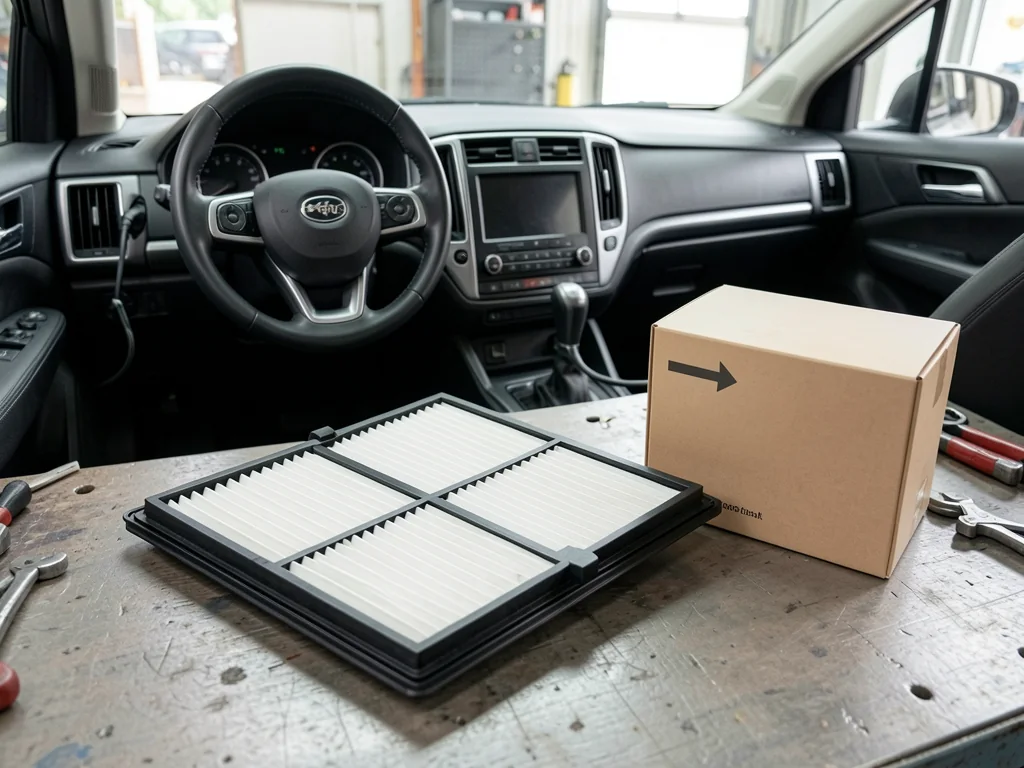
Choosing the best cabin air filter depends on verified fit, suitable media, and claims you can check, not a single universal winner. The cabin air filter best for one vehicle can be wrong for another. A strong in-cabin choice still has to match the housing, keep airflow usable, and set realistic HVAC expectations before brand names enter the decision.
Define What Your Cabin Air Filter Needs to Do
The best in-cabin air filter for a given car is the one that matches cabin air filter fitment, the vehicle's ventilation path, and the kind of filtration you actually need. Start with the housing the part must fill, then decide whether the job is mainly particulate filtration, some odor reduction, or both. Dusty commuting, seasonal pollen, and traffic fumes can shift those priorities, but no cabin filter removes every particle or smell that reaches the interior.
A cabin filter also cannot fix every complaint that sounds like a filter problem. Weak blower output, a dirty evaporator, a clogged intake, or a leaking housing can leave airflow low or odors lingering even after a new element is installed. Treat the purchase as one HVAC component: it should seat correctly, present suitable media to incoming air, and meet the system's need for a sealed path. If odors or weak flow persist, the filter is only one possible cause.
Confirm Fitment Before Choosing a Filter
Confirm cabin air filter fitment with year, make, model, and any catalog notes about engine, climate package, or dual-zone equipment before you compare brands. Then match the listed part number to the vehicle application and to manufacturer documentation, not to a photo or a tape-measure guess. Two filters can look similar and still miss the housing's shape, thickness, or latch points. Appearance and approximate size do not prove the element will seal.
Frame shape, the frame seal, and how the element seats in the housing decide whether cabin air actually goes through the media. A warped frame, a missing gasket, or a filter that sits proud or short can open a bypass path around the media, so dusty air skips filtration. Before you install anything, look for arrows or text that mark airflow direction or an upward orientation. Those markings only help if they match the housing's documented flow path.
Choose Filter Media for Your Driving Conditions
Filter media is the working surface. Particulate filtration uses a fibrous or electrostatically treated layer to capture airborne dust, pollen, and other particles, but capture depends on the filter's documented specifications, not on how dense the pack looks. If you drive in dusty or high-pollen areas, particle capture usually outranks odor marketing. Activated carbon, when present, can adsorb some odor-causing gases from exhaust or outside air, yet that capacity is finite and declines as the carbon becomes loaded.
Fine-particle, HEPA, and allergen labels should be treated as claims until you see applicable filtration test data and confirm the part is actually listed for your vehicle. A thicker or darker pack is not evidence of medical-grade protection, and a cabin is not an airtight chamber. Outside air still enters through doors, windows, body leaks, and recirculation limits. Filtration can reduce what the HVAC path brings in; it does not guarantee protection from every allergen or illness-related exposure.
Evaluate Airflow and Filtration Claims
A usable cabin filter has to capture particles without starving the blower. Airflow resistance rises as media becomes denser or loaded, and excessive restriction can reduce vent output, slow windshield defogging, or make the fan work harder. Particle capture and flow therefore have to be judged together. When a maker publishes performance statements, look for particle sizes, test methods, and the airflow conditions used. Filtration test data that omit those details are hard to compare across the best cabin air filter brand options.
Pleat count, media color, thickness, and premium-sounding labels cannot independently prove how a filter performs. Extra folds may add surface area, or they may be packed so tightly that resistance climbs with little extra capture. Unexplained percentages, such as a round number with no particle size or test standard, and odor-removal promises without capacity or method notes, are reasons to ask for clearer documentation. Compare claims only when the same kind of test data sits behind them.
Assess Brand Credibility and Part Sourcing
OEM parts are those supplied through the vehicle maker's parts channel; aftermarket parts come from other manufacturers or private labels. Neither label, by itself, proves the best brand cabin air filter for your car. Some OEM filters document media and fit well; some aftermarket filters do too. Judge brands by an accurate application catalog, a traceable part number, technical documentation you can actually read, and support that can confirm the listing. Reputation without those traces is advertising, not evidence.
Customer reviews can flag repeating fitment errors, crushed frames, missing gaskets, or packaging that arrives damaged, which matters because a broken frame seal undermines filtration. Those comments say little about laboratory efficiency. When you compare the best cabin air filter brands, include the seller: a listing with a clear return policy, intact packaging, and a part number that matches the catalog is more useful than a famous name on a generic box. No single brand wins every vehicle.
Check the Purchase and Recognize Filter Limits
Before you pay, confirm the application listing, the part number, documented media claims, an intact frame seal, and clear orientation markings. If any of those are missing, keep shopping. Use the owner's manual for housing access and the maker's maintenance notes rather than assuming a calendar interval that was never specified for your vehicle. After the element is in place, close the housing fully and listen for new rattles or whistle that can mean a filter sitting proud of the cover.
A small change in vent feel can follow a clean, correctly seated filter, especially if the old one was loaded. A sudden roar, a large drop in airflow, or a cover that will not latch is a reason to reopen the housing and check seating, not to force the lid. Persistent musty odor, poor defogging, or weak blower output after a confirmed-fit filter is installed often points beyond the element. Those symptoms may need professional HVAC inspection rather than another filter.