How to Choose an Ignition Coil for Your Car
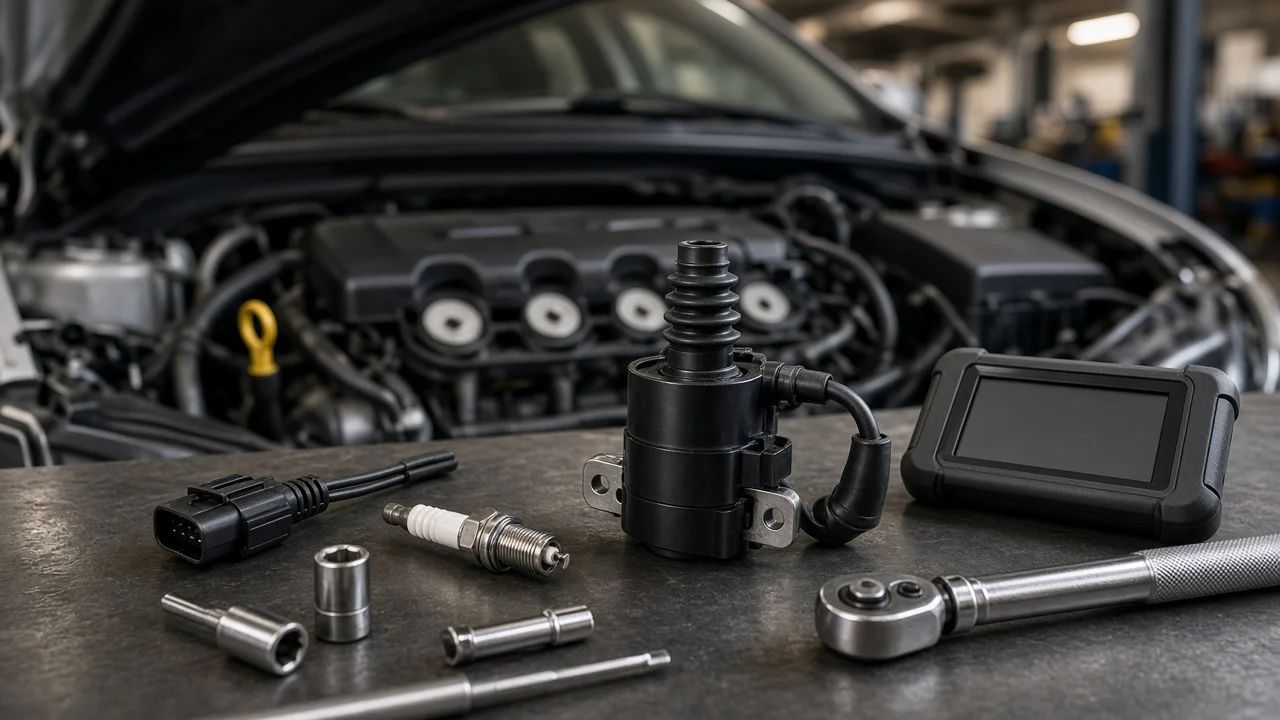
A failing ignition coil usually shows up as a misfire, a flashing check engine light or a rough idle under load. Choosing the right replacement starts before you open a parts catalog. First confirm that the coil is actually the problem. Then match the part to your exact engine and decide how much to spend on quality and warranty. This guide covers each step from a mechanic's point of view, including fuel system faults that can look like a bad coil.
Define the job the product must do
An ignition coil turns low battery voltage into the high voltage that fires the spark plug at the right moment. Before you buy one, make sure that is the job that is failing. The classic sign is a misfire code tied to a single cylinder. A simple test is to swap the suspect coil with the one from a neighboring cylinder, clear the code and drive. If the misfire moves with the coil, the coil is the likely cause. If the misfire stays on the same cylinder, check the spark plug, injector and compression instead.
Misfires that have nothing to do with ignition often leave other clues. A strongly positive long-term fuel trim means the engine is running lean. That points to a vacuum leak, a weak fuel pump, a clogged fuel filter or low fuel pressure rather than a coil. A misfire on every cylinder under heavy load can also come from fuel delivery. Testing fuel pressure safely requires the correct gauge and the service procedure for your vehicle. On direct injection engines, only a trained technician should open the high-pressure side, and it should never be loosened to bleed off pressure. Fuel additives may reduce deposits over time, but they are not a proven fix for a misfire and do not replace a proper diagnosis.
Fuel type also matters. Diesel engines ignite fuel by compression and have no ignition coils, so a diesel misfire comes from fuel, injector or compression problems. Gasoline, flex-fuel and factory natural gas or propane engines all use coils. Gaseous fuels generally need a strong spark, so use the coil specified for your exact engine variant rather than a generic substitute.
Check compatibility
Fit depends on the engine, not just the model name. The same car may be sold with several engines, and each can use a different coil. Search by year, make, model and engine size, then confirm with the engine code or the part number printed on your old coil. Matching the OEM number, or a supplier cross-reference to it, is the most reliable way to get the right ignition coil for your car.
Next, confirm the physical design. Most modern engines use coil-on-plug units, often called pencil or stick coils, that sit directly on each spark plug. Some engines use a coil pack that feeds several cylinders through plug wires, and older vehicles may use a single coil with a distributor. Check the connector shape and pin count, whether the coil has a built-in igniter module, the boot length, the mounting bolt position and any heat shield or bracket. A coil that is close but not identical may sit loosely, seat poorly on the plug or set fault codes.
Engine configuration affects the work involved. Coils on inline engines are usually easy to reach. On many V6 and V8 engines, the rear bank sits under the intake manifold or cowl, so reaching those coils takes longer and may require new gaskets. Keep that in mind when deciding whether to replace one coil or several in the same visit.
Features that affect the choice
The main decision is between original equipment, a reputable aftermarket brand and a budget unit. Original or OE-supplier coils match the factory design and are the safest choice when an engine is sensitive to coil characteristics. Established aftermarket brands often offer the same fit for less money and publish clear part numbers and warranty terms. Very cheap coils can work, but quality varies widely, and an early failure means paying for the labor again.
Be cautious with performance labels. A coil advertised as high output does not add power to a stock engine. The engine only needs enough voltage to fire the plug reliably, and the engine computer is calibrated around the original design. More useful evidence includes an exact OEM cross-reference, a stated warranty period, a silicone boot that resists heat and oil, a new spring or contact inside the boot, and clear return terms. Reviews that mention fit problems on your specific engine tell you more than overall star ratings.
Limitations and ownership costs
A new coil only restores spark. It cannot fix a leaking or clogged injector, a lean condition from a vacuum leak, low compression or a fuel pump that cannot keep up. Worn spark plugs raise the voltage the coil must produce and can shorten the life of a new coil, so inspect or replace the plugs as your maintenance schedule requires when you change coils. Also check the plug wells for oil. Oil there usually means a leaking valve cover gasket or tube seal, and it can degrade coil boots.
Before reinstalling anything, do a quick visual leak check around the fuel rail and injectors. A fuel smell or wetness near hot engine parts and high-voltage components is a fire risk and must be repaired before the car is driven. Disconnect the battery if your service procedure calls for it, keep the fuel system sealed, and tighten the coil hold-down bolts to the specified torque.
Ignition coil price depends on the coil design, the brand, whether you buy a single unit or a set, and how many cylinders the engine has. On engines where the coils sit under the intake, labor can cost more than the part. Replacing only the failed coil is reasonable on a lower-mileage engine. On a high-mileage engine with hard-to-reach coils, replacing the full set in one visit can avoid paying for the same labor twice. That is a cost decision, not a requirement.
Build a practical shortlist
Run each candidate for your car through the same short checklist. Confirm the fault with a coil swap test, and rule out fuel trim, injector and fuel pressure problems first. Match the part to your engine code or OEM number, not just the model year. Verify the connector, pin count, boot length, mounting and whether the igniter is built in. Compare warranty periods and return policies. Decide between a single coil and a full set based on mileage and access. Budget for spark plugs if they are due.
Narrow the list to two or three coils that pass every fit check, then choose based on warranty and the brand's track record on your engine. If the misfire returns after a correct coil replacement, do not buy another coil. The next step is a deeper diagnosis of the plugs, injectors, compression and fuel delivery.