How to Choose Floor Mats That Fit a Car
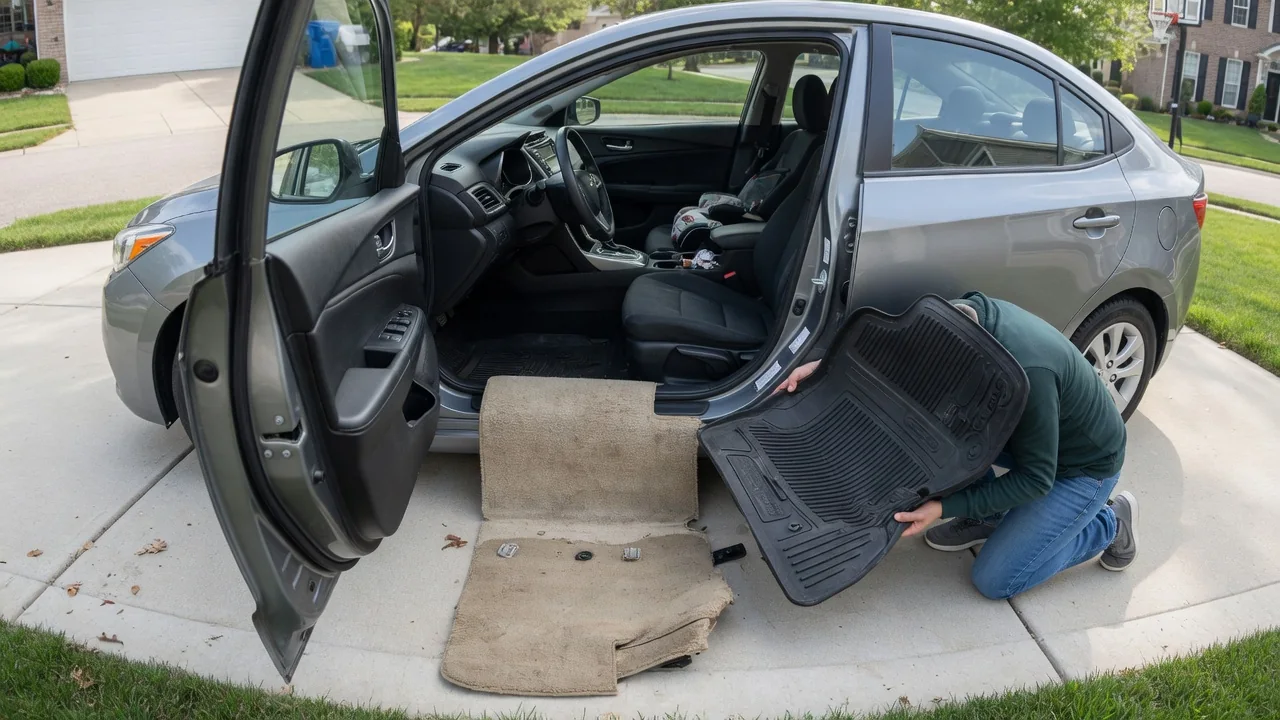
Learning how to choose floor mats that fit a car starts with the floor itself, not the mat. The shape of the footwell, the position of the factory retention points, and the space around the pedals decide whether a mat stays put or creeps forward. This guide focuses on fit, pedal clearance, and daily practicality rather than comparing products.
Confirm fit points
Most modern vehicles have some form of anchoring on the driver's side floor, typically hooks, posts, or twist-lock clips set into the carpet. A mat that fits properly has reinforced holes or receivers that line up with those anchors without stretching or bunching. Start by looking at the bare floor and noting how many anchors exist and where they sit, because layouts differ between manufacturers, between model generations, and sometimes between trim levels of the same car.
The outline matters as much as the anchors. A well-matched mat follows the edges of the footwell, clears the dead pedal or footrest, and sits flat against the transmission tunnel and door sill rather than curling up against them. Details such as a floor-hinged accelerator, a manual transmission's clutch pedal, or a different seat rail layout can change the required shape, so confirm the mat is specified for your exact model year, body style, and drivetrain rather than assuming a similar vehicle shares the same pattern.
Check pedal travel
Pedal clearance is the safety-critical part of fit. With the vehicle parked and the engine off, press each pedal slowly through its full travel by hand or foot and watch the mat's leading edge. The accelerator should reach the floor stop and return freely without touching the mat, and the brake and clutch should move through their full stroke without the mat's edge catching underneath or behind the pedal arm. Any contact, however light, means the mat is the wrong shape or is sitting in the wrong position.
Thickness and edge height deserve attention here. Deep-dish liners with raised lips hold more water, but a tall front wall can sit closer to a low-mounted accelerator than a thin carpet mat would. Floor-hinged accelerator pedals pivot from the bottom, so the mat needs a cutout around the hinge rather than a straight front edge. Never stack one mat on top of another, since the upper mat loses its anchoring and the combined height reduces the space pedals need to travel.
Cleaning needs
How a mat cleans affects how long it keeps its shape, which ties back to fit. Rubber and thermoplastic liners can be lifted out, hosed off, and dried quickly, which suits drivers who deal with snow, mud, or sand. Carpet mats feel quieter and look closer to the original interior, but they hold moisture and grit in the pile and need vacuuming and occasional shampooing. Think about what actually ends up on your floor through the year before choosing a material.
Removal and reinstallation are part of the cleaning routine, so the retention hardware should be easy to release and re-engage without force. After washing, let the mat dry completely, because a damp backing can trap moisture against the carpet and encourage odor or corrosion beneath it. Avoid glossy dressings or silicone-based protectants on the top surface or the backing; they can make the mat slick under a shoe and reduce the grip that keeps it from sliding. Then reseat it on the anchors and recheck the pedals.
Everyday Use and Observations
Daily driving reveals fit problems that a showroom glance misses. Watch for a mat that migrates forward after a week of getting in and out, a corner that curls where your heel pivots, or a rear edge that rides up over the seat rail when the seat is moved. On the driver's side, a worn heel patch is normal over time, but a hole or a deep groove can snag a shoe and should prompt replacement rather than continued use.
Passenger and rear positions are more forgiving, yet they still vary. Rear footwells may be split by a tall center tunnel or nearly flat, depending on the drivetrain layout, which changes whether a one-piece or two-piece rear mat sits properly. Check that the mats do not block floor-level air vents under the front seats or interfere with seat-track movement. In vehicles with a third row or a cargo liner, folding seats should latch fully with the mat in place.
Limits and Next Steps
No general guide can confirm fit for a particular vehicle. Anchor types, footwell dimensions, and pedal layouts are specific to each model and can change mid-generation, so the owner's manual and the manufacturer's fitment information are the references that count. Universal or trim-to-fit mats are a compromise by design; they rarely engage factory anchors and depend on the backing texture alone to stay in place, which makes the pedal check even more important on the driver's side.
If a mat touches a pedal, slides despite being anchored, or will not sit flat, remove it from the driver's footwell until the cause is sorted out rather than adjusting your driving around it. Missing or broken floor anchors can usually be addressed by a dealer or a trim shop, and it is also worth checking whether your vehicle has any open recall or service notice related to floor mats. Repeat the fit and pedal checks whenever mats are removed, replaced, or swapped seasonally.