How to Choose an STP Engine Air Filter for Your Car
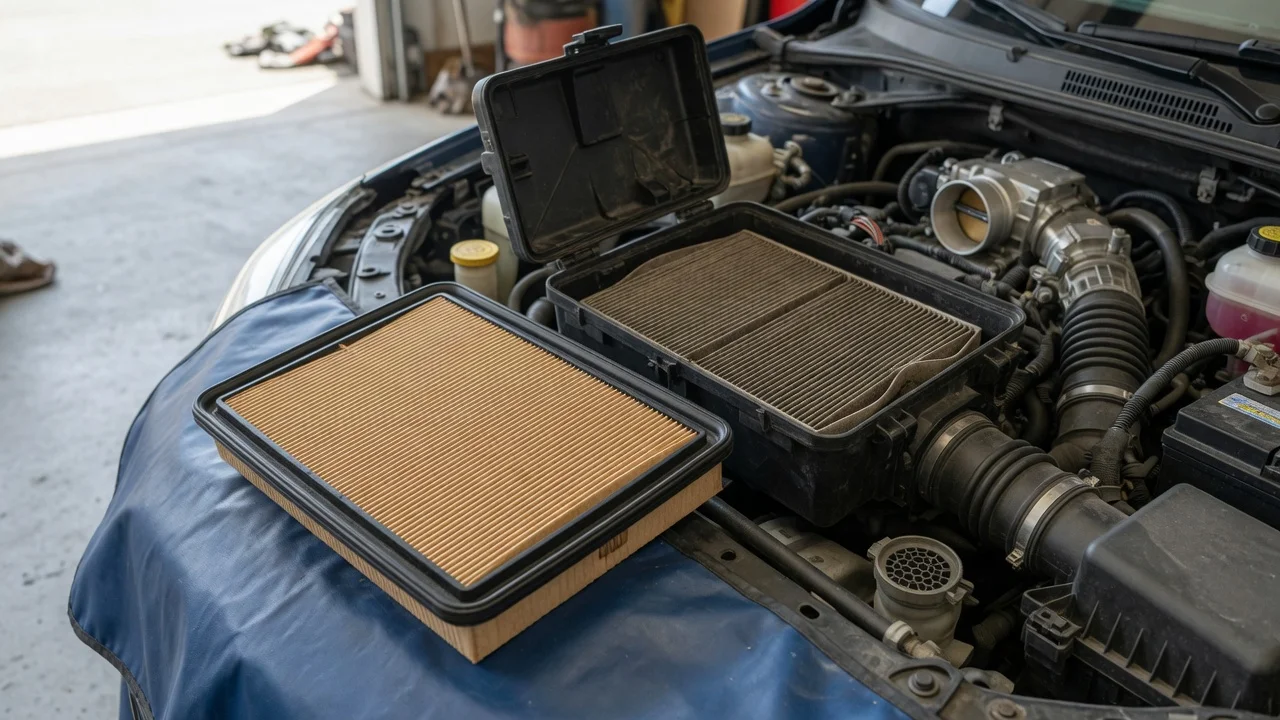
The short answer
An STP engine air filter is an aftermarket replacement filter that sits in the engine airbox and traps dust, sand, pollen and other debris before that air reaches the throttle body, mass-airflow sensor and cylinders. To choose one, first lock the exact physical fit for your vehicle’s year, make, model and engine, then decide whether a disposable paper filter in the STP value range suits your driving and budget, or whether an original-equipment, premium-paper or reusable high-flow design is a better match.
Fitment is the condition that changes the answer. There is no single STP filter for every car. Panel, round and some conical shapes are catalogued separately, and two engines in the same model year can take different housings. Until the part number and dimensions match the airbox, brand and media type do not matter.
What you are buying
The engine air filter is the service part in the intake tract, separate from the cabin (pollen) filter that cleans air for the occupants. STP’s engine-air line is a mass-market disposable paper (cellulose or cellulose-blend) filter sold through auto-parts and general retailers. The brand is aimed at like-for-like replacement of a stock paper element at a lower purchase price than many original-equipment and specialist filters.
Paper media works dry. It is designed to be replaced, not washed or oiled. A correctly seated filter seals at the gasket or end caps so unfiltered air cannot bypass the media. Independent, part-number-specific figures for STP filtration efficiency, dust-holding capacity and airflow restriction were not verified for this guide and vary by SKU, so treat catalog marketing claims as unconfirmed until you have the maker’s data for that exact part.
Confirm the vehicle and the old part first
Start with identification, then shop. Record model year, make, model, engine displacement and, where the catalog asks for it, fuel type or drivetrain. A VIN lookup at a parts counter can resolve trim-level airbox differences that a year-make-model search misses. Open the airbox and read the part number printed on the existing filter if it is still legible; that number is the fastest cross-reference into STP and competing lines.
Check that you are ordering the engine filter. Cabin filters are often listed beside engine filters in the same brand family and will not fit the airbox. Some vehicles use more than one engine-air element, or a different element after a mid-year airbox change; if two catalog rows appear for the same model, match housing shape and listed dimensions to the unit in the car.
Year, make, model and engine (and VIN if the listing splits by trim or production date); Engine air filter, not cabin filter; Printed OEM or aftermarket number on the old element, if present; Panel, round or conical shape and overall length, width, height or diameter; Gasket or end-cap style that matches the airbox sealing surface
If the old filter is destroyed or missing, measure the airbox cavity and sealing lip, or use the vehicle maker’s parts catalogue. Do not force a near-size panel into the housing. A short or thin element leaves a bypass path; an oversized one can crush media or prevent the lid from clamping the seal.
Compare options on the same criteria
Once fitment is fixed, the useful choice is among four common approaches that all claim to clean intake air: original-equipment paper, value aftermarket paper such as STP, premium aftermarket paper, and reusable high-flow media. Compare them on seal and dimensions, media and service method, operating environment, replacement cost over a service interval, and any warranty or inspection rules that apply in your market. Prices, test efficiencies and service-life miles are not interchangeable across brands or even across part numbers in one brand, so use the table as a decision frame rather than a ranking of measured performance.
Option Typical media and service Fits which use Main trade-off; Original-equipment filter Dry paper; replace at the vehicle maker’s interval Stock tune, dealer service history, known housing fit Usually higher unit price; specification is the vehicle maker’s; STP and similar value paper Dry paper; replace on a similar interval to stock Ordinary road dust, budget like-for-like swap Lower purchase price; published dust capacity and restriction for each SKU are often sparse; Premium aftermarket paper Dry paper, sometimes higher dust capacity or tighter production control Drivers who want a paper element with a specialist-filter reputation Higher price than value lines; still a disposable part; Reusable high-flow (oiled cotton or dry synthetic) Clean and re-oil, or wash, on a maker-specific schedule Enthusiasts seeking lower restriction and a serviceable element Different maintenance; over-oiling can contaminate a mass-airflow sensor; street filtration versus paper depends on the specific product
STP belongs in the value-paper column. It is a reasonable choice when the catalog application is an exact match, you accept a disposable element, and your driving is mostly paved-road dust at the vehicle’s normal service interval. It is a weaker match when you want a documented high dust-holding figure for unpaved or desert use, a reusable performance element, or a part whose test data you can read for that exact SKU.
Match the filter to how and where you drive
Light highway and suburban use is the design point for a standard paper element. In that setting, a correctly fitted STP filter and a timely replacement interval are usually enough. Short-trip, stop-start driving loads the filter more slowly with dust and more quickly with soot and moisture; inspect the element rather than stretching the calendar interval.
Dusty, unpaved, agricultural or construction use fills paper media faster. Brand choice matters less than inspection frequency: a clogged value filter and a clogged premium filter both raise intake restriction. If the old element is packed with dirt well before the handbook interval, shorten the interval or consider a paper design whose maker publishes a higher dust-holding capacity for that housing. Off-road and competition intake setups can also use pre-filters or different housings; those are vehicle- and sport-specific and fall outside a stock STP panel.
Cold, wet climates can load paper with moisture and road film. Do not oil an STP paper filter to improve sealing or capacity; oil belongs only on media designed for it. Turbocharged and direct-injection engines still use a conventional airbox filter in most road cars; follow that vehicle’s airbox design rather than assuming a universal performance cone.
How to pick the right STP part number
Use a retailer or STP application lookup built on year, make, model and engine, then confirm the listed shape against the part in the airbox. If several STP numbers appear, the extra rows are often supersessions, optional heights, or a cabin-filter listing. Prefer the number that matches both the old filter’s printed ID (via a cross-reference) and the measured panel or round size.
Reject a listing that only matches make and model when the engine or production-date split differs from your car. Compare listed length, width and height (or diameter and height) with the old filter on a flat surface. Confirm the gasket sits on the same face as the original so the lid can compress the seal. If the car has a second intake or a pre-filter, order every element the airbox uses. Keep the old filter until the new one is in the housing so you can compare media area and seal in hand.
Aftermarket catalogues contain errors. A parts-counter check against the VIN, or a match to the vehicle maker’s part number, is the completion test for the purchase. You are done choosing when you have one engine-air SKU whose application, dimensions and seal match the car, and you know it is paper disposable media you will replace rather than wash.
Cost, interval and warranty limits
A value paper filter is cheaper per piece; lifetime cost depends on how often you change it. Use the interval in the owner’s manual as the baseline for a stock-type paper element, then inspect earlier in dusty service. There is no single verified STP-only mileage figure that covers every vehicle and climate. Replacing too late raises restriction and lets dirt load the media to the point of bypass if the seal is poor; replacing far too early only costs money.
Warranty treatment of aftermarket filters is a legal and policy question, not a filtration one. In the United States, federal warranty law generally stops a vehicle maker from denying coverage solely because an aftermarket filter was used; coverage can still be denied if that part caused the failed component. Dealer inspection policies and rules outside the United States differ. Identify the country of registration and the warranty document before you assume an STP element is accepted or refused. This article does not verify current STP product warranties, which are set by the seller and the brand and can change by region.
When to choose something other than STP
Choose the original-equipment number when you want the filter the vehicle was certified with, or when a service department specifies it. Choose a premium paper brand when you can obtain part-specific test data or you want a specialist-filter supply chain. Choose a reusable high-flow element only if you will follow that product’s cleaning procedure and you accept a different restriction and filtration profile from stock paper.
Skip a bargain filter of any brand when the cardboard frame is warped, the gasket is incomplete, or the media is visibly thin or torn in the box. Poor sealing is a larger risk than a modest difference in paper grade. If the airbox lid is cracked, the snorkel is missing, or the housing clips no longer clamp, fix the housing; a new STP element cannot seal a damaged box.
What this guide cannot specify
No universal STP part number, price, efficiency percentage or replacement mileage applies across cars. Those values are vehicle- and SKU-specific and were not verified here against the vehicle maker’s service literature or STP’s current catalogue. For the fitting torque of airbox fasteners, any sensor reset, and the safe way to open a particular housing, use the service information for that model year and powertrain. Installation itself is a separate task from choosing the part; if the housing is awkward, the filter is deeply packaged, or a fault code appears after a previous intake repair, have the work done by a qualified technician.
Next step after a correct choice: buy the matched engine-air element, compare it side by side with the old filter, and replace it according to the vehicle manual, with an earlier visual check if you drive in heavy dust.