How to Choose an Air Suspension Compressor Kit
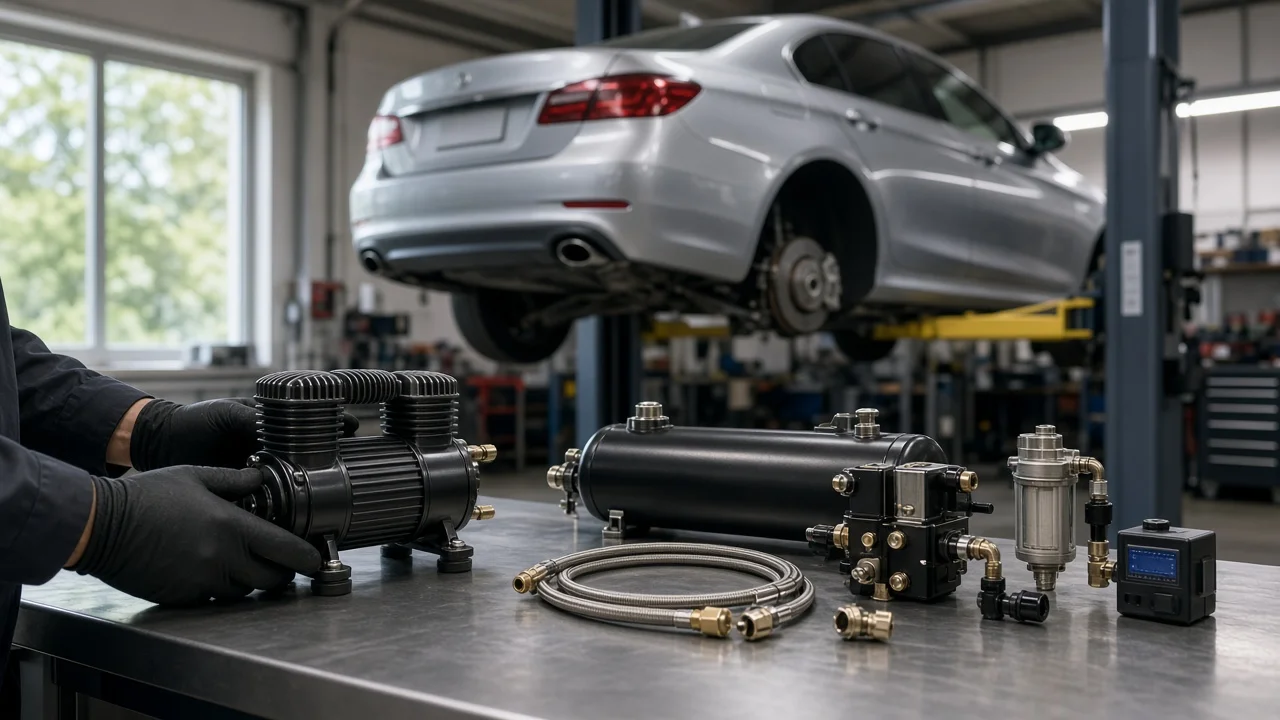
An air suspension compressor kit has a simple job: deliver enough clean, dry air at the right pressure to hold your vehicle at its intended ride height without overworking itself. Whether you are replacing a failed factory compressor or adding onboard air to aftermarket air springs, the right kit depends on your vehicle, how you use it and what is actually in the box. Here is how a suspension mechanic would narrow the options.
Define the job the product must do
Most buyers fall into one of two groups. The first owns a vehicle with factory air suspension, such as a luxury SUV, a full-size sedan or a truck with rear load leveling, and the original compressor has stopped working or keeps setting faults. In that case the replacement has to work with the existing control module, height sensors, valve block and dryer, and the goal is restoring original behavior rather than improving on it. The second group is adding or upgrading an aftermarket system, usually helper air springs for towing and hauling or a full air ride setup. Here you choose capacity, mounting location and controls yourself, so the decision involves more variables.
Before shopping, confirm the compressor is really the failed part. A compressor that runs too long usually wore out because something else was leaking: an air spring, a cracked line, a fitting or a valve. Installing a new unit without fixing that leak tends to repeat the failure. Read stored fault codes with a scan tool that supports the suspension system, listen for hissing, and spray soapy water on springs and connections. Also note your practical constraints: how often the system adjusts, whether you tow or carry heavy loads regularly, whether you drive in cold, wet or dusty conditions, and how much space and electrical capacity you have.
Check compatibility
For a factory replacement, match the kit to your vehicle by part number or VIN rather than by model name alone. Compressors can differ within the same model and year depending on engine, trim level, suspension package and production date. Compare the electrical connector and the pneumatic fittings with the original part; adapters add leak points and should not be needed on a correct direct replacement. Check whether the kit includes the dryer, valve block, mounting bracket, rubber isolators, relay and connector pigtail, because some listings sell only the bare pump head while others supply the complete assembly.
For an aftermarket setup, start with the pressure your air springs need when loaded, as published by the spring manufacturer, and choose a compressor whose rated working pressure comfortably exceeds it. Match the air line size and fitting type to the rest of the system. Confirm the compressor suits your vehicle's 12-volt system and follow the maker's wiring gauge, fuse and relay requirements. Plan solid mounting points that are protected from road spray, exhaust heat and debris, with room for airflow, and use the fastener specification provided by the vehicle or kit manufacturer rather than guessing.
Features that affect the choice
Duty cycle is one of the most useful ratings. It describes how long the compressor can run within a given period, and it only means something when the manufacturer states the pressure and ambient temperature it applies to. Flow rate deserves the same scrutiny: a figure quoted at zero pressure always looks better than flow at your working pressure, so compare kits at similar pressures whenever the data allows. Current draw matters too, since it determines wiring size and the load placed on the battery and charging system.
Moisture control protects the whole system. Factory compressors normally work with a dryer that is part of the design, and aftermarket systems with a tank should include a water trap or drain. Other features worth weighing are thermal protection that shuts the motor down before it overheats, sealing against water and dust, intake filtration, and isolators that reduce noise and vibration. A reservoir tank allows quicker height changes and lets the compressor cycle less, but it needs space and regular draining. Controls range from a simple pressure switch and gauge to electronic height management, and the right level depends on how often you adjust.
Treat labels such as heavy duty, OE quality, direct fit or lifetime with caution. Useful evidence includes published ratings with their test conditions, a clear part number cross-reference, a complete parts list, written warranty terms and proper installation instructions. If you are comparing new and remanufactured units, ask what was replaced during remanufacturing.
Limitations and ownership costs
A compressor cannot fix leaking air springs, damaged lines, a failing valve block, faulty height sensors or worn suspension parts. Excess joint play in links, ball joints or bushings affects ride and handling regardless of air supply, so inspect those components if the vehicle wanders or clunks. Replacing the compressor alone does not change wheel alignment, but if ride height was incorrect or other suspension parts were replaced, verify ride height against the manufacturer's specification and have the alignment checked where the service information calls for it.
Installation needs proper preparation. Follow the model-specific procedure for disabling or deflating the system, which may involve a service or jack mode, and relieve pressure before disconnecting any line. Never work under a vehicle supported only by its air springs or a jack; use rated jack stands or a lift at the designated lifting points for safe vehicle support. Some factory systems also require a scan tool to recalibrate ride height or clear adaptations after a component is replaced.
Running costs include the dryer or its desiccant, intake filters, the relay, tank draining and periodic leak checks. A relay that sticks closed can keep the compressor running until it overheats, so many technicians replace it along with the compressor. A cheaper kit that leaves out the dryer, bracket or harness may end up costing more once the missing parts are added.
Build a practical shortlist
Run each candidate through the same checklist. Is the fault confirmed and any leak repaired? Does the part number or rated pressure match your system? Does the kit include everything your installation needs, from dryer to relay and connector? Are duty cycle and flow quoted at a stated working pressure? Can your wiring, fuse and battery support the current draw? Do you have a protected mounting location? Are warranty terms and return conditions written clearly, and is an installation procedure available for your vehicle?
Keep only the kits that pass every point, usually two or three, and then compare price, warranty length and documentation quality. Without independent test data, do not assume the most expensive option is the best fit. If the diagnosis is uncertain or the system needs scan tool calibration you cannot perform, a suspension specialist can confirm the fault and complete the installation.