How to Choose a Toyota Corolla Engine Air Filter
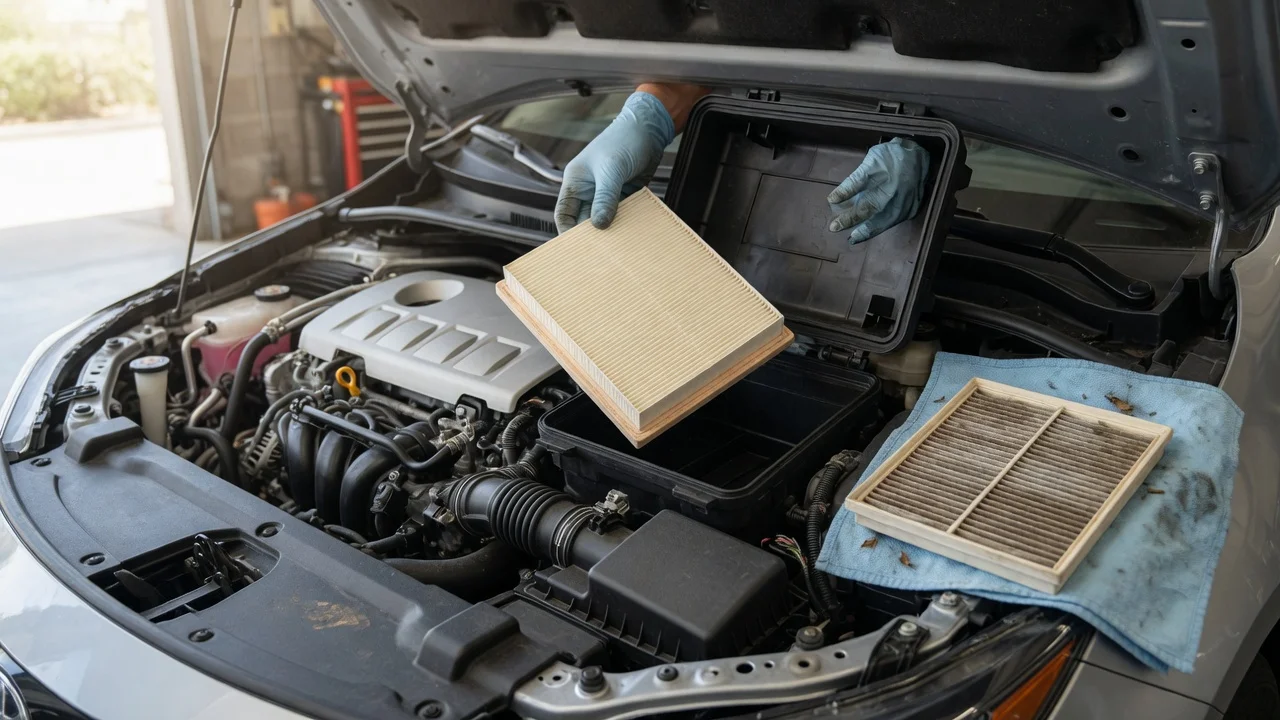
The short answer
Choose the engine air filter that seals in your Corolla’s intake housing and matches the year, engine, and market of the car. Start with the Toyota genuine part number for that configuration, then decide whether you want that factory element, a disposable paper equivalent crossed to the same number, or a reusable performance filter that fits the same housing. An engine air filter (also called an intake air filter) is the element in the engine bay that traps dust, grit, pollen, and other debris before air reaches the throttle body and cylinders. It is a different part from the cabin air filter, which cleans air for the passenger compartment.
Fitment is the condition that changes the answer. Corolla generations, gasoline engines, hybrid powertrains, and regional equipment use different housings and element shapes. A filter that fits one year or engine may leak around the seal or fail to seat in another. Until year, engine, and market are known, no single part number or brand is universally correct.
Identify the filter your car actually uses
The owner’s manual, a dealer or catalog lookup that uses the vehicle identification number (VIN), and the markings on the current element are the reliable ways to get the genuine Toyota part number. Door-jamb labels and the manual also give model year and engine information you need before shopping. If the intake has been replaced with a non-stock box or tube, stock Corolla numbers may no longer apply.
Confirm model year, market, and engine (displacement or engine code, including hybrid versus gasoline). Look up the Toyota genuine engine air-filter part number for that configuration. Read the shape, thickness, and sealing edge of the current element, or compare a candidate part to the empty housing. Panel elements and older round or cylindrical styles are not interchangeable. Reject listings that only say they fit a Corolla without stating the matching genuine number or the same housing dimensions.
A completion check for this step is simple: the part you intend to buy is either the genuine Toyota number for your VIN or a replacement that publishes that number as its cross-reference and matches the housing’s length, width, height, and seal. If those details conflict, stop and re-check year and engine before ordering.
Which type fits how you use the car
Once the correct size is known, the remaining choice is media and service method. Compare options on the same criteria: sealed fit in the stock housing, ability to hold dust, restriction to intake airflow, how you will service the element, and whether you want a factory-specified part. Published airflow or efficiency percentages are omitted here because brands often use different test methods, and those figures are not confirmed for Corolla applications on a common basis.
Option Fit and specification Service Best when; Toyota genuine (OEM) Made for the stock housing and the engine’s intended filtration and airflow balance Discard and replace on the maintenance schedule for your year and driving conditions You want a known-fit factory part for a stock daily driver; Aftermarket paper equivalent Sold as a direct replacement when crossed to the genuine number and the same panel size; seal and paper quality vary by brand Same replace-and-discard pattern as OEM You want the stock form at a lower purchase price and will verify the cross-reference; Reusable oiled cotton or similar performance media Must still match the housing; media and oiling are not Toyota’s paper specification Clean and re-oil on the filter maker’s schedule You accept extra service and will follow that product’s oiling instructions exactly
For a stock Corolla used as everyday transport, a genuine Toyota element or a paper equivalent crossed to that part number is the straightforward choice. It keeps the lid sealed, matches the service method in the owner’s manual, and avoids introducing oil into the intake. Brand-to-brand paper quality is not ranked here; use the genuine number as the fitment key and prefer a maker that states that cross-reference clearly.
Dusty roads, unpaved driving, or heavy stop-and-go dirt favor a well-sealed disposable paper element inspected more often than a clean-highway schedule. Use the severe-service notes in the owner’s manual for your model year when they exist. A reusable filter does not automatically last longer in grit; its advantage is that it can be cleaned instead of thrown away, and only if it is washed and oiled as that product instructs.
A reusable oiled filter is a reasonable enthusiast option when it is made for the exact housing and you will service it on the maker’s cycle. Over-oiling can contaminate the mass airflow (MAF) sensor, which measures incoming air so the engine computer can set fuel. If you choose this path, apply oil only as directed and keep oil off the sensor and its wiring. Toyota’s published paper-filter interval and media type then no longer describe the part in the car.
Limits you should not ignore
No universal Corolla part number, price, or replacement mileage is given here. Those values depend on model year, engine, market, and driving conditions and belong in the owner’s manual or a VIN-based parts lookup. Applicability is unknown when those details are missing. Comparative cost and performance claims for aftermarket brands are also omitted where the test standard, engine, and year are not aligned.
Warranty treatment of a non-genuine filter depends on jurisdiction and on whether a later failure is shown to be caused by that part. That legal outcome is not determined in this guide. A clogged, wet, or collapsed element can starve the engine of air; a filter that does not seal can let debris past the housing. Either condition is a reason to replace the element and inspect the housing rather than to keep driving on a doubtful part.
What to do next
Look up the genuine engine air-filter number for your VIN or year and engine, confirm the housing shape, then buy that Toyota element or a paper cross-reference of the same size. Shop the engine filter and the cabin filter as separate parts. If the housing is cracked, the lid will not clamp evenly, the old element is soaked with filter oil, or you are unsure the intake is stock, have a qualified technician inspect the housing and MAF sensor before the new filter goes in.