How to Choose a Toyota Camry Engine Air Filter
The short answer
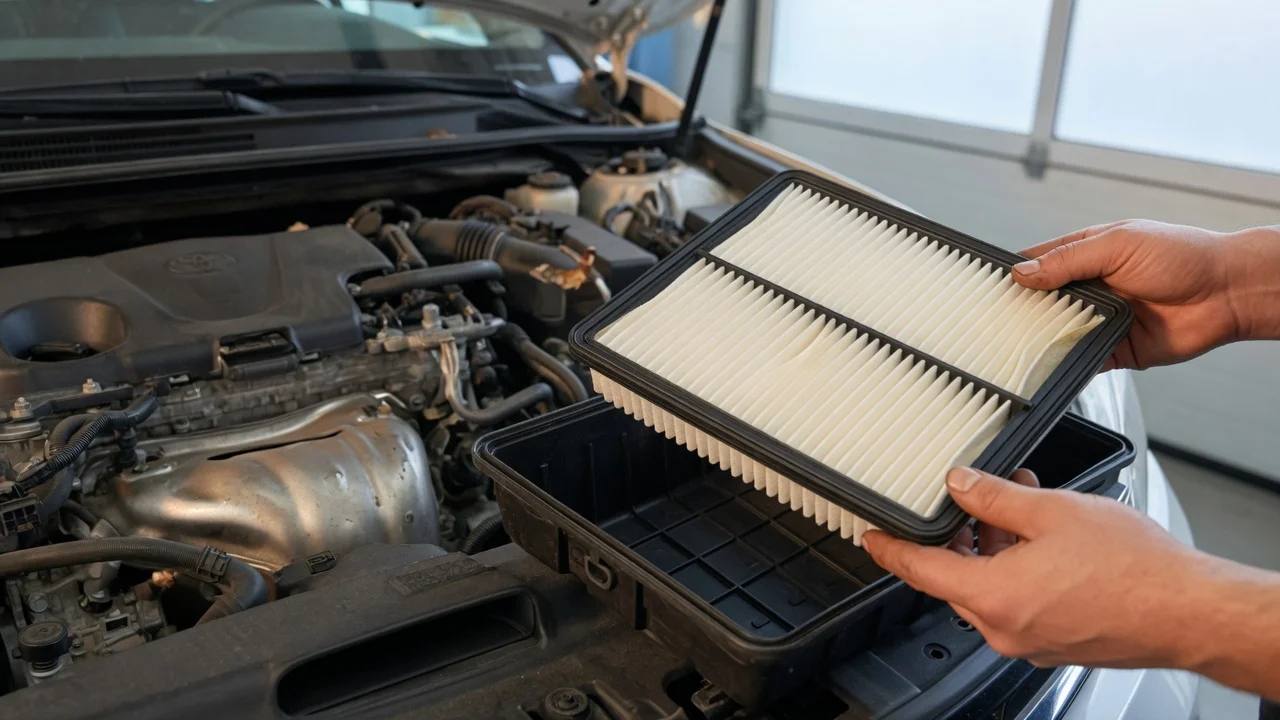
Choose the engine air filter that is listed for your Camry’s model year, engine, and market, then pick a construction type that matches how and where you drive. The engine air filter (also called the engine air cleaner element) sits in the airbox in the engine bay and traps dust and debris before intake air reaches the engine. A cabin air filter is a different part and will not fit the airbox. Fit and seal come first: an element that is the wrong length, thickness, or end-cap shape will leak dirty air around the filter. Construction is the second decision. A Toyota original or an application-correct paper or dry-synthetic replacement is the usual choice for a daily Camry. Reusable oiled cotton filters trade replacement cost for cleaning work and can cause trouble if they are over-oiled on engines that use a mass airflow (MAF) sensor. Exact part numbers and replacement intervals are vehicle-specific; they are not the same across Camry generations or engines, and they should be taken from the owner’s manual, maintenance schedule, or a parts lookup for that vehicle.
Confirm the filter matches your Camry
Camry airboxes and elements have changed with generation, four-cylinder, V6, and hybrid gasoline engines, and with market equipment. A filter sold for “Camry” without a year and engine match is not enough. Use the model year, engine displacement or engine code, and the market the car was built for (for example, a North American Camry can differ from other regions). A vehicle identification number (VIN) lookup at a dealer or parts counter is the most reliable way to pin the application when the engine badge is missing or the car has been repaired. Hybrid Camrys still use an engine air filter for the gasoline engine. If the airbox lid will not close evenly, the element sits proud of the housing, or the rubber seal does not contact the lid all the way around, the part is the wrong application even if the label mentions Camry.
Which type fits the intended use
Once the application is correct, the remaining choice is filter media and whether the element is disposable or serviceable. Brands publish their own airflow, efficiency, and capacity figures, often on different test methods, so those numbers should not be compared as if they were a single standard. For a stock Camry used as daily transport, filtration, seal quality, and a replacement interval you will actually follow matter more than advertised horsepower. The comparison below is qualitative for that reason.
Type | What you get | Upkeep | Best fit; Toyota original (OEM) | Shape, seal, and filtration balanced for that airbox and the factory engine calibration | Replace at the interval in the maintenance schedule | Owners who want factory specification and the least fitment risk; Application-correct paper aftermarket | Same job as OEM when the catalog lists the same vehicle; quality varies by maker | Replace | Cost-conscious replacement when the part is sold for your year and engine; Dry synthetic or “premium” disposable | Often marketed for higher dirt holding or lower restriction; results depend on the specific product | Replace | Dusty roads or long service intervals, only if the element is still application-correct; Oiled reusable (cotton gauze) | Cleaned and re-oiled instead of replaced; restriction and efficiency change with how it is serviced | Clean, dry, and oil on a schedule; over-oiling can contaminate a MAF sensor | Enthusiasts willing to service the filter correctly, and only with a kit and method meant for MAF-equipped engines
Match the type to constraints rather than to marketing claims. If the car is under warranty or you want stock behavior, a Toyota element is the straightforward pick. If you want to spend less per change and will replace the filter on schedule, an aftermarket paper element listed for the same application is usually enough. If you regularly drive on dirt, gravel, or in blowing dust, a disposable filter with strong particle capture and a seal that still fits the airbox is more useful than a reusable filter you might delay servicing. If you want to reuse one element, budget time for correct cleaning and light, even oiling; skip this type if you will not service it, or if you are not prepared to inspect the MAF sensor for oil film. Do not choose a “universal” panel and trim it to fit. Do not choose a racing or high-flow part that leaves gaps in a stock airbox. Those shortcuts let unfiltered air into the engine, which defeats the purpose of the filter.
Limits of this choice and a sensible next step
This guide cannot name a single part number or mileage interval that covers every Camry. Those values change with year, engine, severe-service schedules, and local dust. Published power or fuel-economy gains for aftermarket filters are also not a reliable decision tool here, because test conditions and intake setups rarely match a street Camry. After you have the correct application, the next step is to order that specific element (OEM or catalog-matched aftermarket) and replace it according to the maintenance schedule, sooner if the filter is visibly packed with debris or the airbox is full of dirt. Replacement is a common owner job on most Camrys, but stop and use qualified service if the airbox is damaged, the intake tubes will not reseal, a check-engine light related to airflow appears after a reusable filter is oiled, or you cannot confirm the engine and year. Inspecting the old filter during an oil change is a practical way to see whether the current interval is too long for your roads.