How to Choose a K&N Engine Air Filter for Your Car
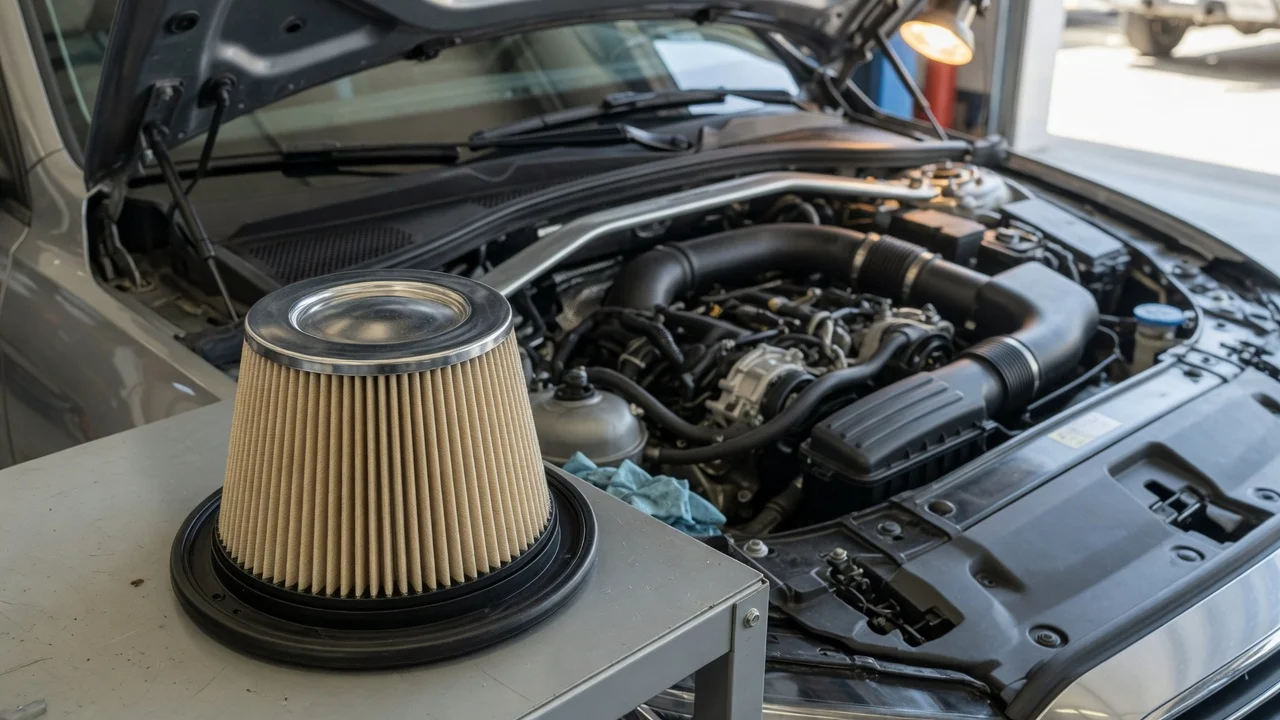
The short answer
A K&N engine air filter is an aftermarket intake filter, usually a reusable oiled cotton-gauze element, made to sit in the engine airbox or in a matching K&N intake housing. Choose the part listed for your car’s year, make, model and engine, then choose the form that matches the intake you want: a drop-in element that seals in the factory airbox, or a complete intake system that replaces the airbox and tubing. Fitment is vehicle-specific. Two filters can look alike and still differ in height, neck diameter, sealing flange or sensor provision.
That answer changes when the part you need is a cabin (pollen) filter for the interior, when a particular engine, market or model year uses a unique airbox, or when inspection and warranty rules where the car is registered limit aftermarket intakes. Airflow and power figures measured on one engine and test setup apply only to that setup.
Confirm you are choosing an engine air filter
The engine air filter lives in the intake tract, typically inside a plastic airbox in the engine bay, and traps dust, sand and debris before that air reaches the mass airflow sensor, throttle body and engine. K&N also makes cabin filters and other products; those use different part numbers and serve the heating and air-conditioning system. On some hybrids and tightly packaged bays the airbox sits in an uncommon place, so identify the housing on the car before you order.
Match the filter to the vehicle, then to the airbox
Start from the vehicle specification and then read the K&N application line. Year, make, model and engine displacement set the element. When a maker offers more than one intake layout, the specific airbox matters as well. Trim, drivetrain and market can change the housing. Engines that share a nameplate can still use different filters.
Year, make and model; Engine code or displacement, and whether that engine is turbocharged, supercharged or naturally aspirated when both exist; Whether the factory airbox is still fitted; The part number on the current element or in the owner’s manual parts list; Any intake already installed, factory or aftermarket
The authoritative match is the current application listing for that exact configuration. This guide has no parts catalogue, so treat a listing as confirmed only after it matches your year, engine and airbox. When two listings could apply, a parts specialist who can see the vehicle identification number and the housing can settle the choice.
Drop-in element or complete intake
A drop-in K&N engine filter is shaped to seal in the original airbox. You keep the factory lid, ducts, snorkel and sensor mounting. Selection then means matching the element type—panel, round, oval or conical—and the same sealing flange and thickness as the stock filter. This is the usual path when you want K&N media and a factory-looking bay.
A complete K&N intake replaces some or all of the airbox and inlet tubing with a housing and a conical filter sold as a kit for that vehicle. Kits remain vehicle-specific. They change more of the intake path, take more fitting work and can relocate the filter in the bay. Choose a kit when the application list names your year, engine and market, and when you accept the extra hardware, a different under-bonnet layout and any inspection questions that follow.
Which option fits the intended use
Compare options on the same criteria: correct fitment, how you will service the media, how much of the stock intake you want to keep, and the rules that apply where the car is registered. Like-for-like laboratory figures for restriction, filtration efficiency, dust capacity and power on a given engine were not supplied for this article, so published airflow or horsepower claims are unverified here.
Criterion Factory paper filter K&N drop-in filter K&N complete intake; Fitment Specified for that airbox Must match the same airbox Must be the kit listed for that vehicle; Installation Element swap on the service schedule Element swap in the stock box Kit hardware; some cars need inner-wing or bumper access; Maintenance Replace the element Clean and re-oil on the product instructions Same media service, plus clamps, couplers and ducts; Intake path Factory box and ducts Factory box and ducts New housing and tubing; Sensors Factory routing and orientation Same routing when the lid seals as designed Must keep the mass airflow and intake-air temperature sensor location the kit specifies; Ownership pattern Disposable service part Higher upfront cost, reusable element Highest parts and labour cost, largest change to the bay
A correctly fitted drop-in element, or the factory paper filter if you want the original service routine, suits daily driven cars that should stay close to stock and pass visual or emissions inspection. A complete intake suits a listed application whose owner will maintain clamps, oil film and sensor cleanliness, and whose local rules allow the kit. Dusty-road and unpaved use puts more weight on a sealed housing and on cleaning interval than on advertised flow.
Trade-offs that should drive the choice
Cotton-gauze filters of this type are built to be washed, oiled and reused. Oil on the media helps hold fine dust; surplus oil can migrate. On engines with a hot-wire or hot-film mass airflow sensor, over-oiling is a known cause of a contaminated sensor and poor running. If you choose an oiled K&N filter, the cleaning kit and the oiling procedure in the product instructions are part of the decision. Some K&N lines use a dry synthetic media that does not take oil; those parts are still selected by vehicle application when you want reusable media without oil.
Reusable filters move cost from regular replacements to a cleaning kit and time. Cleaning frequency depends on how dusty the air is and on the maker’s guidance for that filter; no single interval in this guide covers every climate and duty cycle. Factory paper filters remain a sound choice when you prefer a throw-away service item and the original airbox restriction.
Aftermarket intakes can change intake noise and, if the filter sits lower in the bay, the risk of drawing in water. An inspection station may treat a kit as a modification. Warranty handling on a new vehicle is set by the manufacturer and by law in your jurisdiction. An aftermarket filter does not automatically cancel an entire warranty; a failure traced to the filter or kit can still be excluded. Confirm the rule that applies where the car is sold and serviced.
Checks before you order
The application line lists your year, make, model and engine, including turbo, supercharged or hybrid variants; The product is an engine filter or engine intake, and the listing is for the engine airbox you have; Drop-in versus kit matches the hardware actually on the car; The kit includes or specifies any extra clamps, couplers or heat shields that engine needs; You have a compatible cleaning and oiling kit if the media is oiled; Local inspection and warranty terms for aftermarket intake parts; A return path if the flange, height or neck is wrong once the box is opened
Limits of this guidance
Exact K&N part numbers, current prices, warranty length and laboratory figures for filtration efficiency, dust holding or power change on a given engine are not included here. Those values have to come from the current application guide, the product instructions and, for legal requirements, the authority in your jurisdiction. If the airbox is damaged, non-standard or already fitted with an unidentified intake, identify that hardware on the car before choosing a replacement element.