How to Choose a Honda Pilot Engine Air Filter
The short answer
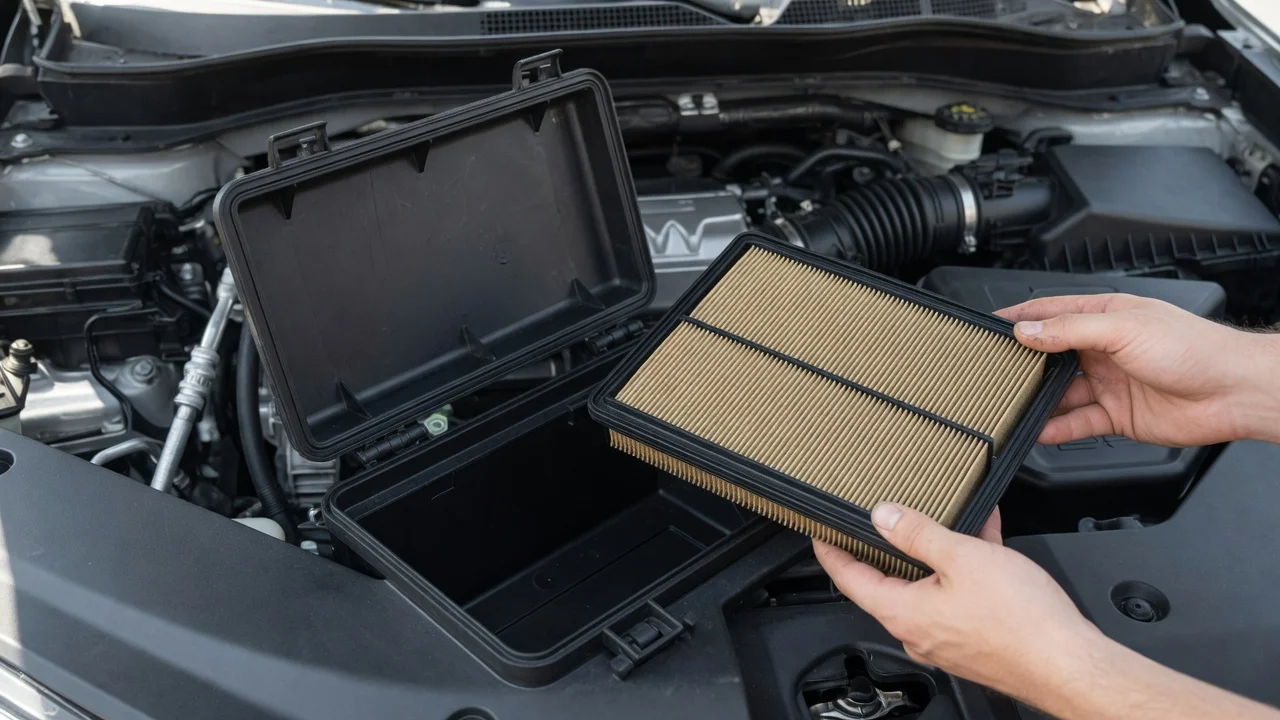
A Honda Pilot engine air filter is the replaceable element inside the engine airbox. It traps dust, pollen, sand, and other debris so cleaner air reaches the intake, mass airflow sensor, throttle body, and cylinders. Choosing the right filter means matching the exact size and shape for your Pilot’s model year and engine, then selecting a filter media that fits how you drive and how you want to maintain the vehicle.
This is not the cabin air filter. The cabin filter cleans air entering the passenger compartment through the HVAC system. The engine air filter sits in a plastic housing in the engine bay and serves only the powertrain. Buying the wrong one of those two parts is a common mix-up when shopping by vehicle name alone.
Fitment is year-specific. Honda has used different airbox designs across Pilot generations, so a filter that seats correctly in one year may leak unfiltered air, sit crooked, or fail to latch in another. Confirm the year, market, and engine from the owner’s manual, the label on the airbox lid, or a parts lookup that uses the vehicle identification number. Exact Honda part numbers, service intervals, and brand efficiency ratings are not listed here because they vary by year and supplier; treat those figures as unknown until you check the documents for your vehicle.
What you are choosing among
Once the correct physical size is locked in, the real choice is filter media and brand construction. The options below share the same job—pass air and stop particles—but they differ in how they load with dirt, how they affect intake sensors, and how often you replace or clean them.
Honda genuine (OEM) disposable filter: dry paper or paper-synthetic media cut to the factory airbox. This is the baseline Honda designed the intake around. Aftermarket disposable paper or synthetic filter: same drop-in shape from independent brands. Quality ranges from close copies of OEM media to heavier-duty synthetic pleats meant for dusty use. Oiled reusable cotton-gauze filter: washable media treated with tacky oil to hold dust. Sold as a long-term alternative to throwing filters away. Dry reusable or high-flow synthetic filter: washable or extended-life media that does not rely on oil. Aimed at extra airflow without coating the mass airflow sensor.
All four types can be sold as “Honda Pilot” filters. The listing is only useful if the catalog application matches your year and engine. A universal or “near fit” panel that needs trimming or foam tape is a poor substitute for a filter that fills the airbox sealing surface on all sides.
Decision criteria that actually matter
Use the same criteria for every option. Do not mix a high-flow claim from one brand with a filtration number from another, and do not treat a price from one year as a spec for another. Where a figure is missing from the product sheet or the Honda service information for your year, treat it as a gap rather than assuming the Pilot average.
Criterion What to check Why it changes the choice; Exact fitment Year, engine, and airbox shape; Honda part number or equivalent catalog match A filter that does not seal lets dusty air bypass the media entirely; Filtration vs airflow Whether the maker publishes efficiency and restriction data for this element, not a different size Tighter media usually holds more fine dust; more open media usually flows more air when clean; Driving conditions Dust, gravel, pollen, stop-and-go traffic, towing, or mostly highway Dirty-air use loads a filter faster and favors higher-capacity or more frequent service; Sensor compatibility Dry media versus oiled media around the mass airflow sensor Oil mist from some reusable filters can contaminate the sensor and cause drivability issues; Maintenance style Throw-away replacement versus wash, dry, and (if specified) re-oil Reusable filters shift cost and labor from buying elements to cleaning them correctly; Warranty and documentation Whether the product is listed for your Pilot and whether you keep receipts and the old filter A misfit or oil-fouled sensor can become a service dispute if drivability problems appear
Which option fits which use
Honda genuine disposable filters are the conservative match for most Pilots. They are built for the factory airbox, they are dry, and they keep the intake system in the condition Honda used for calibration. Choose OEM if you want the least guesswork, you follow the Maintenance Minder or the owner’s manual, or you prefer a dealer or independent shop to install a known part.
A reputable aftermarket disposable filter is the usual alternative when OEM is unavailable, slow to arrive, or priced far above a catalog equivalent with the same dimensions. Choose this path when the application listing is explicit for your year, the sealing gasket looks complete, and the media is dry paper or synthetic. Treat “will fit several Hondas” listings with extra care: several Honda V6 models share a family resemblance without sharing one filter.
Oiled reusable cotton-gauze filters trade replacement cost for cleaning labor and a different risk profile. They can make sense if you accept a wash-and-re-oil routine, you drive in conditions where you would otherwise replace disposable filters often, and you are willing to keep oil off the mass airflow sensor. Honda intake systems typically use a mass airflow sensor; oil from an over-oiled or poorly dried filter can coat that sensor. If a reusable kit’s instructions require oil, follow those instructions exactly and do not add extra oil. If you want to avoid that variable, skip oiled media.
Dry reusable or high-flow synthetic filters sit between OEM paper and oiled gauze. They are the better reusable choice when you want extra capacity or a washable element without introducing oil to the intake tract. Confirm that the product is a panel for the stock Pilot airbox rather than a cone that requires a different intake tube. An intake swap is a separate modification and is outside a stock-filter choice.
Driving conditions should override brand preference. Frequent unpaved roads, construction dust, agricultural pollen, or desert sand load any filter faster. In that use, a high-capacity disposable or a correctly serviced reusable filter is more important than a small advertised airflow gain. Mostly highway commuting in clean air favors a simple OEM or quality paper element replaced on schedule. Towing and mountain driving raise intake airflow demand, but they do not by themselves require a non-OEM filter; they do make a clogged filter more noticeable as reduced power or a strained engine.
Match the filter to the Pilot you actually own
Honda Pilot generations do not share one engine air filter. First-generation, second-generation, third-generation, and current-generation airboxes differ in housing shape and element size. Trims such as Touring or TrailSport do not usually change the engine air filter by themselves; the engine and model year do. A hybrid powertrain, if equipped on your year, still uses an engine air filter for the gasoline engine. Do not assume a Passport, Odyssey, or Ridgeline filter is interchangeable even when the engines look similar.
Identify the part before you buy. Open the airbox if you can do so safely with the engine off and cool, and photograph the old filter’s Honda part number, aftermarket number, and physical outline. Compare length, width, thickness, pleat direction, and the foam or rubber seal. If the lid will not close without force, the element is wrong. If you cannot inspect the box, use the VIN at a Honda dealer parts counter or a catalog that lists the Honda number for that VIN.
Replacement interval is vehicle- and condition-dependent. Honda’s Maintenance Minder and the owner’s manual for your year are the authoritative schedule. Severe dust can require inspection far sooner than a highway schedule. A filter that is dark gray, packed with debris, wet with oil, crushed, or dripping water should be replaced regardless of mileage. A lightly gray filter that still shows pleat depth may still be in service; do not replace on color alone if the maker’s inspection method says otherwise.
Quality checks before you pay
A suitable Pilot engine air filter has a continuous seal that matches the airbox groove, evenly spaced pleats that do not collapse, and media that fills the frame without gaps at the corners. Avoid warped frames, exposed glue blobs on the sealing face, and kits that tell you to cut the element to fit. For disposable filters, dry media is the expected Honda-style design. For reusable filters, the kit should include the cleaner specified by that maker and, if the media is oiled, a measured oil application method rather than an open-ended “add until dark” instruction.
Published micron ratings, airflow percentages, and horsepower claims are only comparable when they come from the same test method, the same filter size, and the same restriction point. Many retail listings do not provide that. If two brands do not share a test basis, compare them on fitment, media type, seal quality, and service method instead of on advertised power or a single efficiency number.
Cost of ownership is the purchase price plus how often you replace or clean the element. A cheap disposable that sheds fibers or leaks at the seal is more expensive than a correctly fitting OEM filter. A reusable filter is cheaper only if you actually clean it on time and do not damage the mass airflow sensor. Keep the receipt and the old filter until the new one has been run and the engine behaves normally.
A practical pick by constraint
Stock reliability and simplest service path: Honda genuine dry filter for your year. Good fit at a lower purchase price: name-brand aftermarket disposable listed for that exact year and engine, with a full perimeter seal. Dusty roads and frequent clogging: higher-capacity synthetic disposable or a dry reusable, inspected more often than a highway schedule. Willingness to clean filters and stay off oiled media: dry washable panel for the stock airbox. Willingness to clean and re-oil, and to protect the mass airflow sensor: oiled cotton-gauze only with the maker’s oiling procedure, never extra oil.
If two options both fit and both use dry media, prefer the one with a documented Honda application, a complete gasket, and a service interval you will actually follow. Airflow marketing is a weak tie-breaker on a stock Pilot intake. Sealing and cleanliness are the strong ones.
Limits and next step
This guide does not replace the owner’s manual, Honda service information, or a VIN-specific parts list. It does not assign a single best brand, a universal Honda part number, a mileage interval, or a cost, because those values change with model year, market, and supplier. If the engine has a check-engine light, rough idle, or sudden power loss after a filter change, stop and inspect for a dislodged housing clip, a crushed seal, an unfiltered gap, or oil on the mass airflow sensor; that inspection is a diagnostic step, and sensor cleaning or replacement may require qualified service.
Next step: identify your Pilot’s year and engine, read the engine air filter procedure and interval in that year’s owner’s manual, then buy a dry OEM or equivalent-fit disposable unless your driving and maintenance habits clearly justify a reusable design.