How to Choose a Honda Accord Engine Air Filter
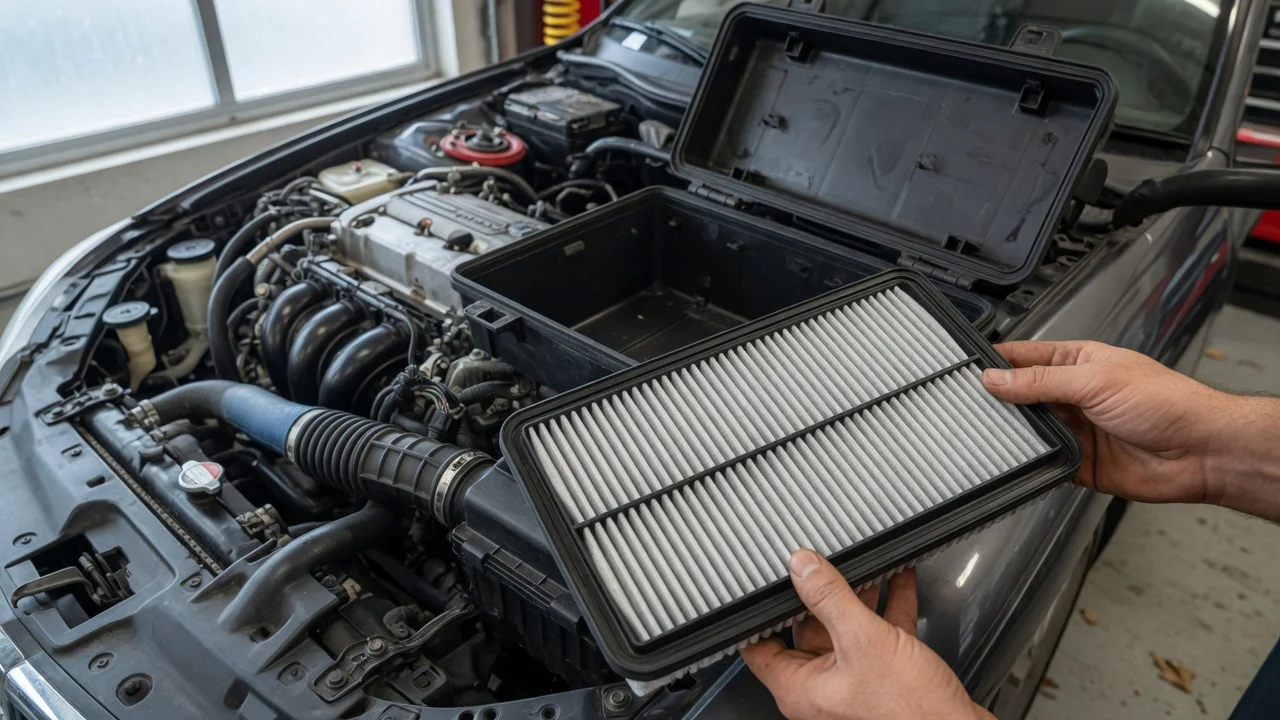
A Honda Accord engine air filter is the replaceable element inside the engine air-cleaner housing. It traps dust, pollen, and debris before intake air reaches the throttle, sensors, and combustion chambers. The correct choice is the element that physically seals in your Accord’s air box for that model year, engine, and market, then uses a media type that matches how you drive and how you will service the car. For an unmodified daily driver, a dry paper filter listed for that vehicle is the appropriate default. Reusable high-flow filters are a separate trade-off: they can be cleaned and are often sold for lower restriction, but they typically emphasize airflow over the finest dust capture and they need a different maintenance routine. Fitment is not universal across Accords. A panel that fits one generation or engine can leave unfiltered gaps in another housing.
Engine air filter and cabin filter are different parts
The engine air filter sits in the intake air box in the engine bay. The cabin filter sits in the heating and air-conditioning path and only affects the air inside the car. Listings, boxes, and parts-counter labels sometimes use similar wording. Confirm you are buying the engine (intake) element, not the cabin element, before you compare brands or prices.
Confirm the vehicle before you compare types
Honda Accords have used several engines and air-box shapes across model years, including four-cylinder, turbocharged, V6, and hybrid powertrains depending on year and market. A listing that says it fits a Honda Accord is not enough. The housing, element outline, and gasket must match the air box on your car. If the intake or air box has been replaced with an aftermarket system, stock panel-filter catalogs no longer apply; you then choose a filter made for that intake, not for the original Honda box.
Gather these details before you shop. Applicability of any catalog number is unknown until they match the car in front of you.
Model year and the market the car was built for (for example, a filter sold for one region’s Accord may not match another region’s air box). The engine actually installed, including whether the car is a hybrid. Do not copy a filter from a similar year if the engine or air box differs. Whether the air box, lid, snorkel, or intake tube is still original. The owner’s manual or Maintenance Minder item for engine air-cleaner service on that year. Replacement timing is vehicle- and condition-dependent; it is not a single mileage figure for every Accord. How the car is used: highway commuting, short trips, unpaved roads, construction zones, or a dusty climate.
A Honda dealer parts lookup by vehicle identification number, or the old filter’s Honda or aftermarket number if it was the correct part, is the most reliable way to pin the shape. If those sources disagree with a generic “fits Accord” listing, treat the generic listing as unconfirmed.
Filter types compared on shared criteria
Once the shape is fixed, the decision is the filter media and the service method. Brands publish airflow, restriction, and efficiency figures on different benches, with different particle sizes and different face velocities. Those numbers are not interchangeable, so this comparison uses the same qualitative criteria rather than mixed test claims or prices. Local cost, claimed horsepower, and percentage efficiency must be checked on the actual product sheet for your year and engine; they are not established here.
Filter type Best fit Filtration emphasis Service method Main trade-off; Honda original-equipment dry paper Stock air box, ordinary street use Fine-dust capture as Honda specified for that engine Replace at the interval for your year and conditions Highest confidence in seal, calibration, and intended restriction; Aftermarket dry paper panel Same housing as stock when the application listing is exact Brand-dependent; treat as comparable only when size, gasket, and media style match the original Replace Price and quality vary; a wrong outline or a collapsed element can bypass dirty air; Oiled cotton or gauze, reusable Drivers who will clean and re-oil on the maker’s schedule Typically coarser media with more emphasis on airflow Clean, dry, then re-oil with the matching kit Over-oiling can contaminate a mass airflow sensor; heavy dust is a poor match; Dry reusable (synthetic or similar, made for that box) Drivers who want reuse without oil in a stock-style box Varies by product; still must stop dust at the gasket Clean per the maker; do not oil unless the product is designed for oil Must still seat in the Honda lid and base; a cone filter does not substitute for a panel housing
A performance cone on an aftermarket cold-air or short-ram intake is a different product family from the panel in a factory Accord air box. Do not force a cone into the original housing or a panel into a cone clamp. Each intake needs the element shape it was built around.
Which option fits the intended use
Unmodified Accord used for commuting, highway, or mixed street driving: choose a dry paper filter that is catalogued for that year and engine. Honda’s own element is the baseline because it was designed for that air box and engine calibration. A reputable aftermarket dry paper filter is a reasonable alternative when the listing matches the same dimensions and gasket. Prefer this path when you want predictable service: inspect or replace on the schedule in the manual, then discard the old element.
Dusty roads, agriculture, desert, or construction: prioritize sealing and fine-dust capture over advertised airflow. Stay with a correctly sized dry paper filter and plan on more frequent inspection than the “normal” schedule if the manual gives a severe-conditions interval. Reusable oiled media is a weaker fit here because silica and fine grit are the failure mode, and oil-wetted gauze is harder to keep both clean and correctly oiled in that environment.
Track days, intake modifications, or a car already running an aftermarket air box: choose the filter the intake manufacturer specifies for that kit, then confirm it clamps or seats without a visible gap. A high-flow reusable element only pays off if you will actually clean it and if the rest of the intake is built for that element. On a stock Accord air box, a “high-flow” panel still has to seal like the original; extra flow that arrives through a warped gasket is unfiltered air, not a performance gain.
Lowest hassle and warranty-sensitive ownership: keep a dry media filter in the original Honda air box, with Honda-branded or application-correct aftermarket paper. A dealer can more easily tie an engine or sensor failure to a poorly sealing, collapsing, or over-oiled aftermarket element. Whether a non-Honda brand is acceptable under warranty depends on the market and on whether the filter can be shown to have caused the damage; that legal treatment is not uniform worldwide and is not restated here as a single rule.
Ownership cost depends on local prices and on how often a reusable filter is cleaned. A reusable kit can cost more or less than a stack of paper filters over the same years; compare those figures yourself for your interval and your climate. Do not treat a single advertised lifetime cost as a measurement that applies to every Accord.
How to decide with your constraints
Work the decision in this order. Stop if a later preference would break an earlier requirement.
Fit and seal first. If the outline, thickness, and gasket do not match the air box, reject the part regardless of brand or claimed airflow. Match media to dirt load. Fine dust and dirty climates favor dry paper. Clean highway use leaves more room for a quality aftermarket paper equivalent. Match media to service habits. Choose disposable paper if you will not clean a reusable filter on schedule. Choose a dry reusable only if you will wash it as the maker directs. Choose oiled reusable only if you will oil it lightly and evenly and keep oil off the mass airflow sensor. Leave the air box stock unless you are also changing the intake as a system. Mixing a random cone, spacer, or lid with a factory calibration is a different project from replacing the element. If two remaining filters both fit, prefer the one whose application guide names your exact year and engine over a catch-all Accord listing.
What to verify on the part before you pay
The catalog or Honda part application names your model year and engine, not only “Accord.”; The element is the same style as the one in the air box: typically a flat or slightly corrugated panel with a full-perimeter seal on late Accords, not a round cone, unless your intake is already a cone system. The gasket is intact, even, and sized to the lid and base so the cover can clamp without crushing the media. The box is labeled as an engine or air-cleaner filter, not a cabin filter. If the filter is oiled, a matching cleaner and oil kit is available and you are willing to use it. If it is dry paper, plan to replace it rather than washing or blowing it out, unless the maker of that specific part says otherwise.
Limits, gaps, and a sensible next step
No single Honda part number, thickness, or replacement mileage applies to every Accord. Those values are year-, engine-, and sometimes market-specific. They must come from the owner’s manual, the Maintenance Minder description for your car, or a parts lookup tied to your vehicle. Filtration efficiency, restriction, horsepower, fuel-use, and price comparisons are not given here because they require compatible tests and current local figures; mixed brochure numbers would not be a valid comparison.
A dirty engine air filter can raise intake restriction and, in dusty use, let grit past a damaged or poorly seated element. Visual inspection of the element and the seal is useful; guessing remaining life from mileage alone is not, because dirt load varies. If the lid is warped, the box is cracked, or the old filter’s gasket has been sucked out of shape, replace or repair the housing parts as well as the element. Work that involves diagnosing a check-engine light, a mass airflow sensor fault, or intake leaks after a reusable filter was oiled is qualified service when the cause is not obvious.
Next step: identify the engine and year, then buy only a filter listed for that combination and for the air box you actually have. Compare remaining options on seal, media type, and whether you will replace or clean the element. Check the old filter’s shape against the new one before the old part is discarded. Installation and torque of the air-box fasteners belong in the service procedure for that year; use the manual or a qualified technician for that work rather than carrying a shopping choice into an unconfirmed procedure.