How to Choose a Car Cover for Outdoor Storage
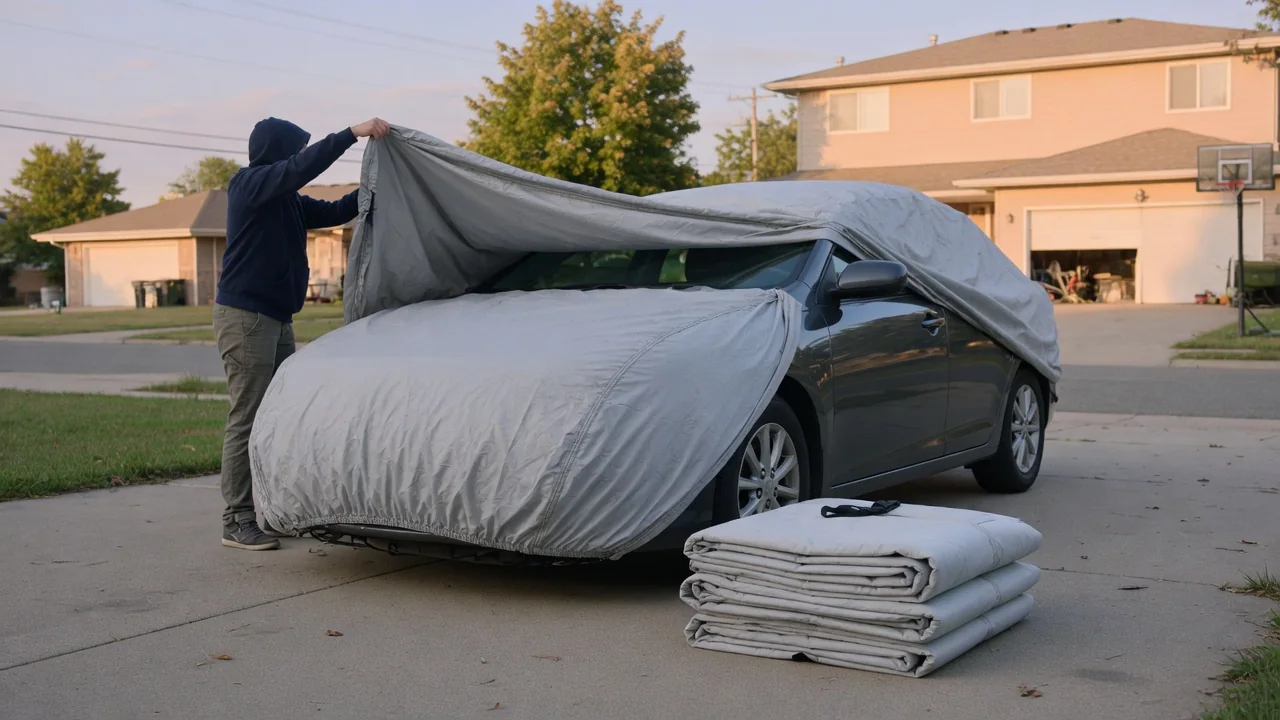
Learning how to choose a car cover for outdoor storage starts with understanding what the cover must do: shed rain, block sun and dust, let trapped moisture escape, and stay put without marking the paint. This guide explains fit, breathability, and surface preparation in practical terms, so you can judge any cover against your own vehicle, climate, and parking conditions.
Fit and fastening
A cover that follows the vehicle's shape behaves very differently from one that merely drapes over it. Loose fabric billows in wind, and every flap drags the inner lining across the paint, especially on fender peaks, door edges, and the corners of the trunk lid. Covers cut for a body style, such as sedan, hatchback, pickup, or SUV, usually leave less slack than universal sizes. Measure overall length, width, and height, and account for roof racks, spoilers, or a fixed antenna before comparing size charts.
Fastening matters as much as the pattern. An elastic hem that tucks under the front and rear bumpers keeps the edges from lifting, while underbody straps or a cable passed through reinforced grommets hold the cover down in gusts. Look for mirror pockets and check whether buckles or metal hardware can touch painted surfaces. Details vary by vehicle: low front splitters, wide mirrors, tow hitches, and long antennas can all change how a cover seats, so test-fit on a calm day and watch for tight spots or loose pooling areas.
Moisture and abrasion
Outdoors, water reaches a covered car from two directions: rain from above and condensation from below as temperatures swing between day and night. A fully waterproof plastic sheet stops rain but also traps that vapor against the body, which can encourage water spotting, mildew on the lining, and corrosion at existing chips. Breathable multilayer fabrics are designed to resist liquid water while letting vapor pass outward. A useful sign is how quickly the surface underneath dries after a damp night once the sun returns.
Abrasion comes from movement combined with grit. Even a soft inner lining becomes abrasive when dust is caught between fabric and clearcoat, and wind does the rubbing. A fleece or non-woven inner layer is gentler than a coarse woven backing, but it cannot compensate for a dirty surface or a slack fit. Inspect high-contact areas such as mirror caps, roof edges, and the tops of the fenders for dull haze or fine swirl marks. Soft tops, matte finishes, and paint protection films may respond differently, so check the vehicle maker's care guidance.
Cleaning routine
Surface preparation begins with a wash. Road film, pollen, and brake dust left on the paint turn into a fine abrasive once fabric settles on top, so rinse, wash, and dry the car thoroughly before covering it. Pay attention to water held in seams, mirror housings, and around the fuel door, because drips trapped under the cover take longer to evaporate. A coat of wax or sealant, where suitable for the finish, adds a slick layer that reduces friction between lining and clearcoat.
The cover itself needs the same care. Bird droppings, tree sap, and grit accumulate on the outside and migrate to the inside if the fabric is rolled up carelessly or dropped on the driveway. Fold it with the outer faces together, store it in a clean bag, and shake off loose debris before reinstalling. Washing methods depend on the material, and some coatings are harmed by harsh detergents or machine drying, so follow the care label. Let the fabric dry completely before storing it to prevent mildew odor.
Everyday Use and Observations
How often the car moves shapes the right choice. A daily driver that is uncovered each morning benefits from a lighter cover that one person can remove and fold quickly, because a heavy, awkward one tends to be left off. A vehicle stored for a season can justify a thicker, multilayer design with stronger tie-downs. Avoid covering a car while the hood and exhaust are still hot, and let rain or dew dry off first whenever conditions allow.
Regular observation tells you whether the setup is working. Lift a corner after wet weather and look for beading that lingers on the paint, damp patches in the lining, or a musty smell. Check after windy days for a shifted hem, loosened straps, or leaves blown underneath. Parking location matters too: beneath trees, expect sap and droppings; near the coast, salt-laden air; in strong sun, gradual fading and stiffening of the outer layer. Faded, brittle, or flaking fabric is a sign the cover is nearing the end of its useful life.
Limits and Next Steps
No cover makes outdoor storage equal to a garage. Hail, falling branches, and standing snow can exceed what fabric absorbs, and a cover does nothing for tire flat-spotting, battery discharge, or stale fuel during long layups. It can also hide developing problems, such as a slow fluid leak or rodent activity, unless the car is uncovered and inspected periodically. On paint that is freshly refinished, ask the body shop when covering is appropriate, since curing finishes may need time exposed to air.
A sensible next step is to list your conditions before comparing products: climate, sun and wind exposure, how long the car sits, and any body features that affect fit. Then match those needs to material weight, breathability, lining softness, and fastening method rather than to marketing claims. Confirm sizing against your exact model and body style, since trim levels and accessories change dimensions. After the first few weeks of use, inspect the paint closely; if hazing or trapped moisture appears, adjust the fit or reconsider the material.