How to Check Wipers Before a Storm
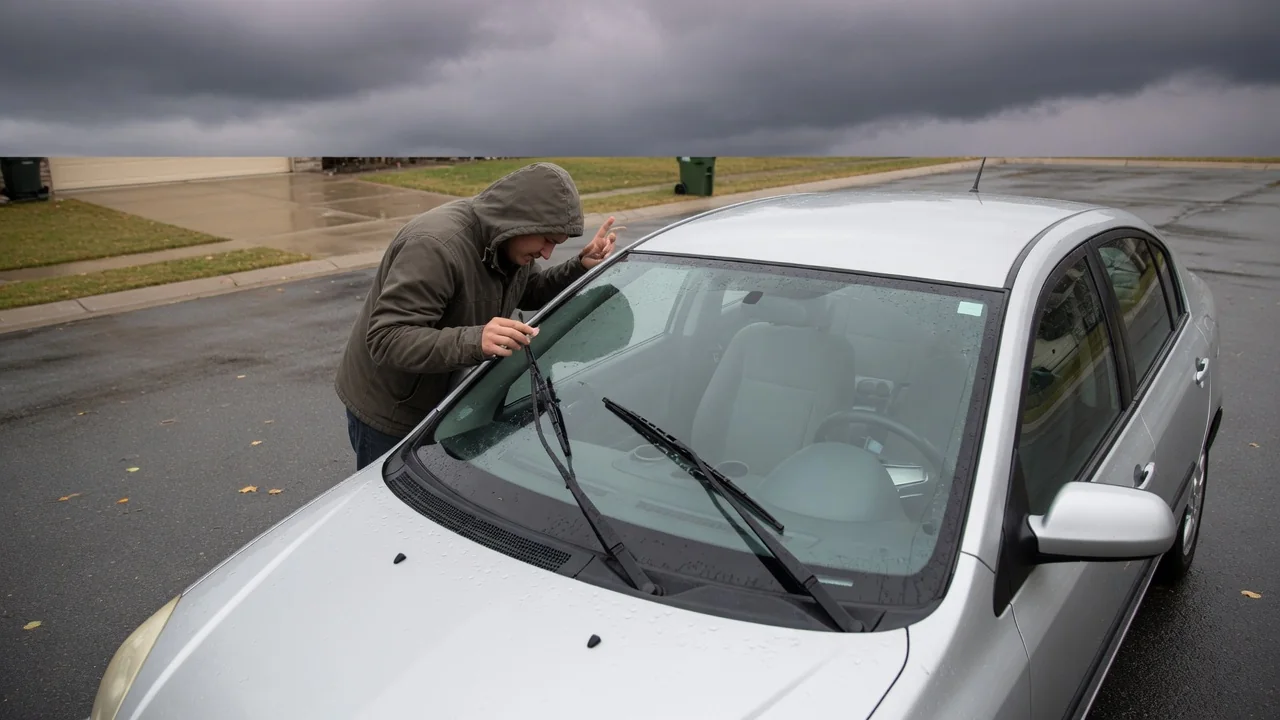
Knowing how to check wipers before a storm takes about ten minutes and requires no tools. A quick look at the rubber, the glass, and the washer system tells you whether the blades will clear heavy rain or smear it across your line of sight. The inspection below works in a driveway or parking lot, well before the first drops fall.
Blade edge
Lift each wiper arm away from the windshield, if your vehicle allows it, and look closely at the thin rubber lip that actually touches the glass. A healthy edge is straight, square, and uniform from end to end. Cracks, nicks, missing chunks, or a wavy, rounded profile mean the blade can no longer squeegee water cleanly. Some vehicles tuck the arms under the hood line, so the wipers may need to be placed in a service position described in the owner's manual before they can be raised.
Run a fingertip gently along the rubber to feel for hardened or brittle spots, which sun and heat tend to create over time. Wipe the edge with a damp cloth as well; dark residue is normal, but grit embedded in the lip can streak or scratch. Check that the blade sits firmly in its frame or beam and that the connector at the arm does not wobble. Rear wipers on hatchbacks and SUVs deserve the same look, since they are often forgotten.
Washer fluid
Storm driving throws road film, mud, and spray from other vehicles onto the glass, and wipers alone tend to smear that mixture. Open the hood and find the washer reservoir, usually marked with a windshield-and-spray symbol on the cap. Many reservoirs are translucent so the level is visible from outside, while others hide low in the fender and offer only a dipstick or a dashboard warning. Top up with proper washer fluid rather than plain water, which cleans poorly and can freeze in cold weather.
Next, operate the washers from the driver's seat and watch where the fluid lands. The spray should reach the middle to upper part of the swept area on both sides, not dribble at the base or shoot over the roof. A weak or lopsided pattern may point to a clogged nozzle, a kinked hose, or a low reservoir, though the cause needs confirming before any part is blamed. Vehicles with nozzles mounted on the wiper arms distribute fluid differently, so judge by coverage rather than by the stream itself.
Visibility test
With the glass wet from the washers or a garden hose, run the wipers through several cycles at each speed and watch the result from your normal seating position. A good blade leaves a clear, even path behind it within one pass. Fine lines suggest a nicked edge, a broad hazy band suggests hardened rubber or a contaminated windshield, and unwiped patches suggest the blade is not following the curve of the glass. Chatter or skipping often means the rubber has taken a set or the glass has a film.
Clean the windshield itself before judging the blades too harshly, because wax residue, tree sap, and oily road film can make even new rubber smear. Wash the inside of the glass as well, since interior haze scatters oncoming headlights badly in rain. If possible, repeat the test at dusk with a light source ahead; glare reveals streaks that daylight hides. Confirm that intermittent, low, and high settings all work, and note that rain-sensing systems may behave differently when the vehicle is parked.
Everyday Use and Observations
The most useful evidence often comes from ordinary driving in the weeks before bad weather arrives. Pay attention during a light shower or a morning with heavy dew: does the driver's side clear completely, or does a streak sit right at eye level? Listen for squeaks, thumps at the end of each stroke, or a blade that slaps the windshield trim. These small signs are easy to ignore in drizzle, yet they become real problems when rainfall is heavy and highway spray is constant.
Climate and parking habits shape how quickly blades age. A car left outdoors in strong sun tends to develop stiff, cracked rubber, while one in a cold region may show torn edges from blades frozen to the glass. Dusty roads load the lip with abrasive grit. Blade designs differ too; conventional framed blades have multiple pressure points that can clog or corrode, whereas beam-style blades rely on a curved spine. Either type can work well, so judge by the wipe quality you actually see.
Limits and Next Steps
A driveway inspection has limits. It can show a worn edge or an empty reservoir, but it cannot fully reveal a weakening wiper motor, worn linkage, or an arm with reduced spring tension. Blades that move slowly, park in the wrong spot, stop mid-stroke, or sweep out of step with each other point toward the mechanism rather than the rubber. Those symptoms deserve a professional diagnosis, because several different faults can look alike from the driver's seat.
If the blades fail the inspection, replace them before the storm rather than hoping they last one more drive. Blade length and attachment style vary by vehicle and sometimes differ between driver and passenger sides, so confirm the correct fitment in the owner's manual or with a parts counter. Chips or cracks in the windshield should also be assessed, since they can damage new rubber and impair vision. After any change, repeat the wet-glass test to verify a clean sweep.