How to Check Tire Pressure Without Relying on the Dashboard
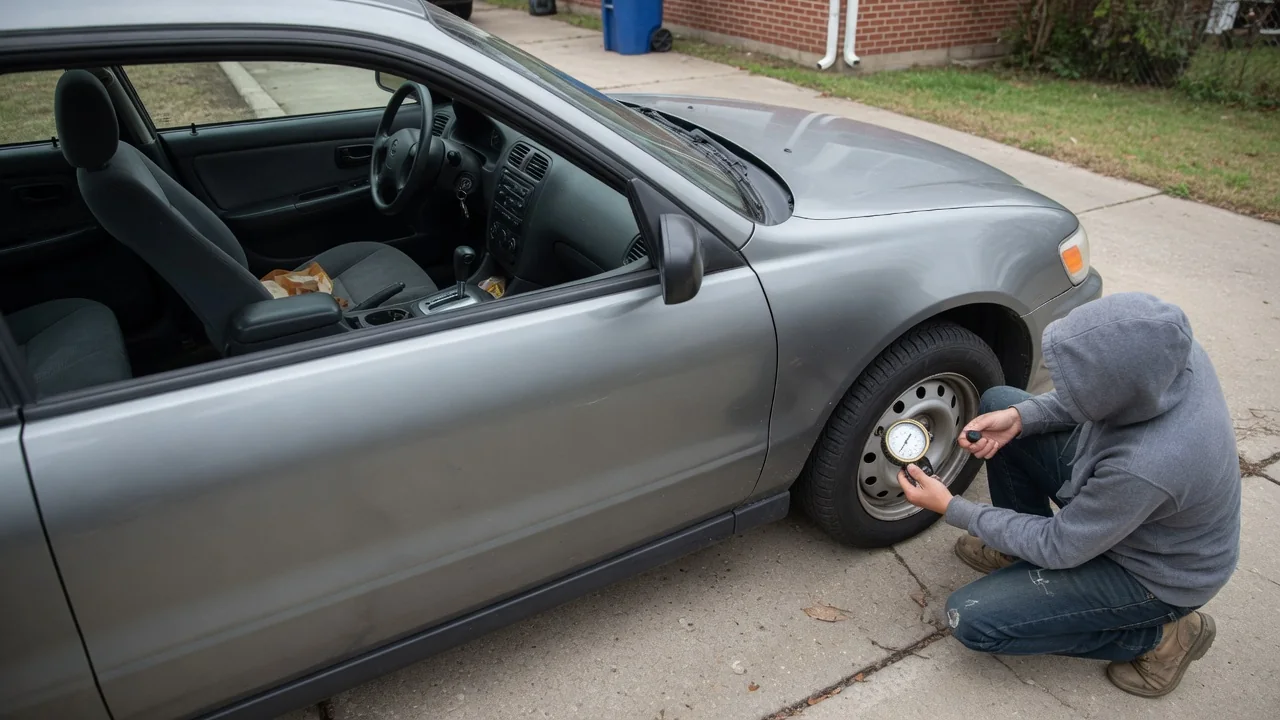
A dashboard warning light is a useful backstop, but it usually stays quiet until a tire has already lost a meaningful amount of air. Learning how to check tire pressure without relying on the dashboard takes a handheld gauge, a few minutes, and tires that have had time to cool. The habit gives you actual numbers instead of a late warning.
Find target
The right pressure comes from the vehicle maker, not from the tire itself. Look for the tire information placard, most often a sticker on the driver's door jamb or the edge of the door; some vehicles place it inside the fuel filler door or glovebox, and the owner's manual repeats it. The figure molded into the sidewall is the tire's maximum rated pressure, which is a limit for the tire and not a recommendation for your car.
Read the placard closely, because front and rear values are sometimes different, and some vehicles list a separate figure for heavy loads or for a compact spare. The numbers are cold inflation pressures, meaning they assume the tires have been sitting for several hours or driven only a short distance. If the tires fitted are a different size from the original equipment listed on the sticker, confirm the appropriate pressure with a tire shop rather than guessing.
Measure each tire
Check the tires before driving, ideally first thing in the morning and out of direct sunlight, since driving and sun both warm the air inside and raise the reading. Unscrew the valve cap, then press the gauge squarely onto the valve stem with a firm, quick push. A brief hiss as it seats is normal; a continuous hiss means the gauge is tilted and leaking air, so reposition it and try again.
Gauges display the result differently. A pencil-style gauge pushes out a graduated stick, a dial gauge swings a needle, and a digital gauge shows a number on a screen. Whichever type you own, take a second reading on the same tire to confirm that the two agree, then note the result before moving on. Work around all four wheels in a set order so none is skipped, and include the spare if your vehicle carries one and its valve is reachable.
Refit caps
Valve caps look trivial, but they keep road grit, moisture, and salt away from the small spring-loaded valve core inside the stem. Dirt lodged in that core can hold it slightly open and create a slow leak that is hard to trace. Before threading a cap back on, glance at the stem opening and wipe away any visible debris, and listen for a faint hiss that would suggest the core did not reseat after the gauge was removed.
Thread each cap on by hand until it is snug; tools are unnecessary and can damage the threads or the stem. Keeping the caps in a pocket or in one hand while measuring prevents them from rolling away under the car. If one is missing, replacements are widely sold, though vehicles with pressure sensors built into the valve stems may call for a particular cap material, so check the owner's manual or ask a parts counter before fitting metal caps.
Everyday Use and Observations
Pressure moves with the weather. Air contracts as it cools, so a set of tires that read correctly on a warm afternoon may measure lower after the first cold night of autumn, without any leak at all. That is why a monthly check, plus one before long trips or when carrying heavy loads, catches drift that a glance at the sidewalls will not. Modern tires, particularly low-profile ones, can look normal while being noticeably underinflated.
Comparing readings over time tells you more than any single number. Four tires that fall by a similar small amount point to temperature change, while one tire that keeps dropping faster than the others suggests a puncture, a leaking valve, or a poor seal at the rim. If you must top up at a gas station after driving, the tires are warm and will read high; avoid bleeding air from hot tires, and recheck once they have cooled.
Limits and Next Steps
A handheld gauge is only as good as its condition. Cheap or dropped gauges can drift, so comparing yours against a second gauge or a shop's equipment from time to time is a sensible sanity check. A gauge also measures pressure and nothing else: it will not reveal a nail in the tread, a bulge in the sidewall, uneven wear, or aging rubber, so pair each pressure check with a quick visual inspection.
When a tire is low, add air to the placard value and measure again with your own gauge rather than trusting the pump's display. If the dashboard warning stays on after all tires are correctly inflated, the monitoring system may need time, a reset procedure described in the owner's manual, or a professional diagnosis, since sensors and their batteries can fail independently of the tires. A tire that repeatedly loses air deserves a shop inspection, not just routine refills.