How to Check and Top Up Engine Oil Safely After Driving
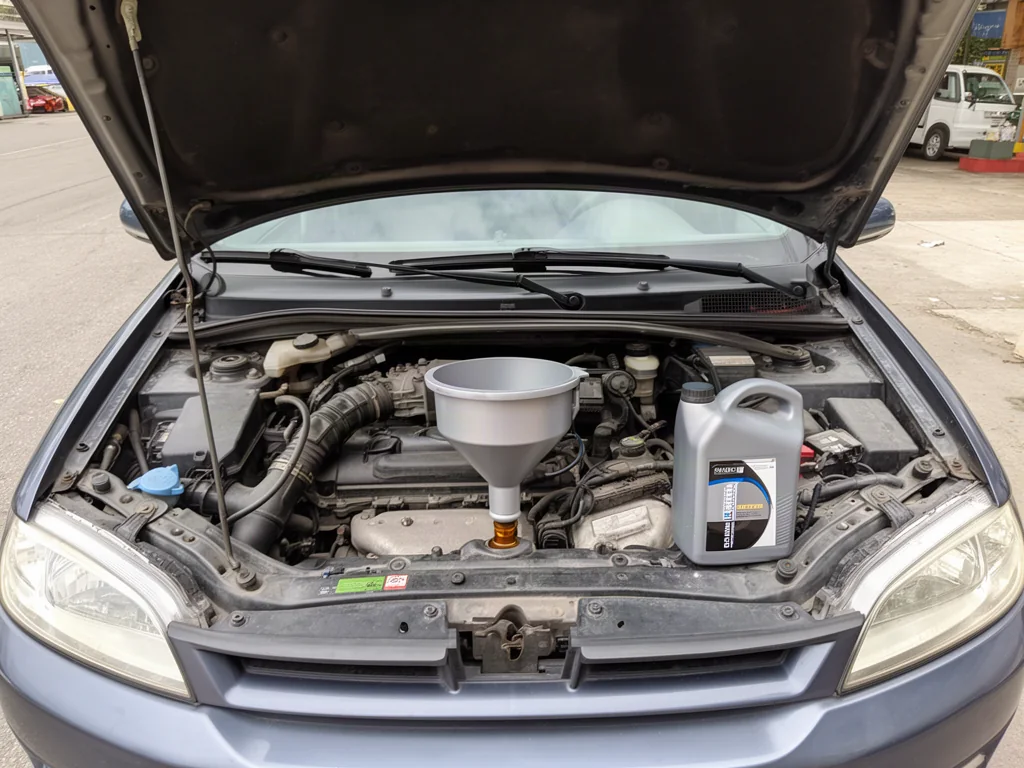
Knowing how to measure engine oil correctly takes only a few minutes, but a rushed reading can lead you to add oil the engine does not need. Many drivers check the level at a fuel stop and wonder whether they can add oil to a hot engine. This guide covers preparing the car, reading the dipstick, using a clean engine oil funnel, and recognizing when a top-up is not the answer.
Prepare the Car for an Accurate Oil Level Check
Start by parking on level ground. Even a gentle slope tilts the oil in the pan toward one end, which can make the dipstick read high or low. Set the parking brake, secure the transmission as the manual directs, and switch off the engine. Before touching anything, open the owner's manual to the section on checking oil. Each manufacturer describes its own procedure, and following it is the simplest way to get a reading that matches how the marks were calibrated.
Checking conditions differ between vehicles. Some manufacturers want the engine at normal operating temperature, while others specify a cold check. Most call for a wait after shutdown so oil can drain back from the cylinder head and passages into the pan. Checking right after switching off can show a falsely low level. The manual also shows where the oil dipstick and oil filler cap are, which helps when an engine bay has several similar handles. Some newer vehicles have no dipstick and use an electronic oil level display instead.
Read the Dipstick and Decide Whether Oil Is Needed
To read a conventional dipstick, pull it out and wipe the blade with a clean, lint-free cloth so the old oil film does not confuse the reading. Push it fully back into its tube until the handle seats. Then pull it out again and hold it level or tip slightly downward while you look at the end. The oil left on the blade shows the level. If the film is smeared, streaked up one side, or broken by gaps, wipe the blade and check again rather than guessing.
The blade has minimum and maximum marks, often shown as holes, notches, lines, or a crosshatched zone. Any level inside that range is acceptable, so oil sitting between the marks may need no top-up at all. The gap between the marks does not stand for a fixed amount of oil; the volume it represents depends on the engine. With an electronic system, follow the on-screen instructions exactly. Many require a level car, a certain engine temperature, and a set wait before they give a valid reading or tell you to add oil.
When It Is Safe to Add Oil After Driving
So, can you add oil to a hot engine? Topping up a warm engine is often fine once it is switched off, the manual's checking conditions are met, and the parts you have to handle are cool enough to touch safely. Adding fresh oil to a warm engine does not harm it. The real concern is your own safety. No single cooling time suits every car, climate, or drive, so judge by how hot the surfaces near your hands actually are.
Can you put oil in a hot engine that is still running? No. Never pour oil into a running engine. Keep hands, sleeves, and rags away from belts and cooling fans, because electric fans can switch on after shutdown without warning. Exhaust manifolds and turbocharger housings stay hot long after other parts have cooled, and oil spilled on them can smoke or catch fire. If you see steam, smoke, or signs of overheating, stop routine work and get help. Never open a hot cooling system cap.
Choose a Clean Funnel That Fits the Oil Filler
A dedicated engine oil funnel makes pouring cleaner and more controlled than tipping a bottle straight into the engine. Choose one made from oil-resistant plastic or metal, with a spout narrow enough to sit securely in the filler neck but wide enough to let oil flow freely. Some funnels have flexible or angled spouts for fillers tucked under covers or hoses. A good funnel for engine oil also leaves room around the spout for air to escape as oil runs in, which prevents glugging and overflow.
Cleanliness matters as much as fit. Grit, dust, or leftover coolant, washer fluid, or fuel on a funnel can contaminate the oil and reach bearings and other precision parts. Use a clean, dry funnel kept only for engine oil. Wipe the area around the oil filler cap before removing it so dirt cannot fall into the opening. Seat the funnel gently instead of forcing it in, and steady it with one hand. Stop pouring right away if oil backs up in the funnel or spills.
Add the Correct Oil Gradually and Recheck
Before opening any bottle, check the owner's manual for the specified oil viscosity and the manufacturer's oil specification. The viscosity grade alone may not be enough, because many engines need oil that meets a particular approval or standard printed on the container. Pour a small amount through the oil filler opening, never the dipstick tube or another reservoir, and then pause. The oil needs time to drain down to the pan, so wait before rechecking under the same conditions as your first reading.
Keep adding small amounts until the level sits within the marked range, stopping short of the maximum. The capacity listed for an oil change is the amount needed to refill a drained engine, often including a new filter, so it is not how much to add during a top-up. When you are done, remove the funnel, screw the filler cap on securely, and push the dipstick fully home. Wipe up drips on the engine and covers, dispose of oily rags safely, and make sure nothing is left in the engine bay before restarting.
Recognize Overfilling and Problems a Top-Up Cannot Solve
An overfilled engine needs as much attention as a low one. If a confirmed reading sits above the maximum mark, fix it before driving. Excess oil can be whipped into foam by the crankshaft and forced into places it should not go. Removing oil safely may take tools and access many owners lack, so get professional help if the job is beyond you. Keep in mind that topping up does not replace scheduled oil changes, because it does not remove the contaminants that build up in used oil.
A top-up also does not explain why the level dropped. Keep track of how often you add oil and how much, and look for fresh spots on the ground under the parked car. Never reach under a vehicle that is not properly supported. If the level keeps falling, the engine may have a leak or be burning oil, and it needs to be checked. An oil pressure warning is not the same as a low level reading. If that warning comes on, stop safely, switch off the engine, and follow the manual. Don't assume adding oil will fix it.