How to Check and Add Power Steering Fluid: Reservoir Location, Marks, and Fill Amounts
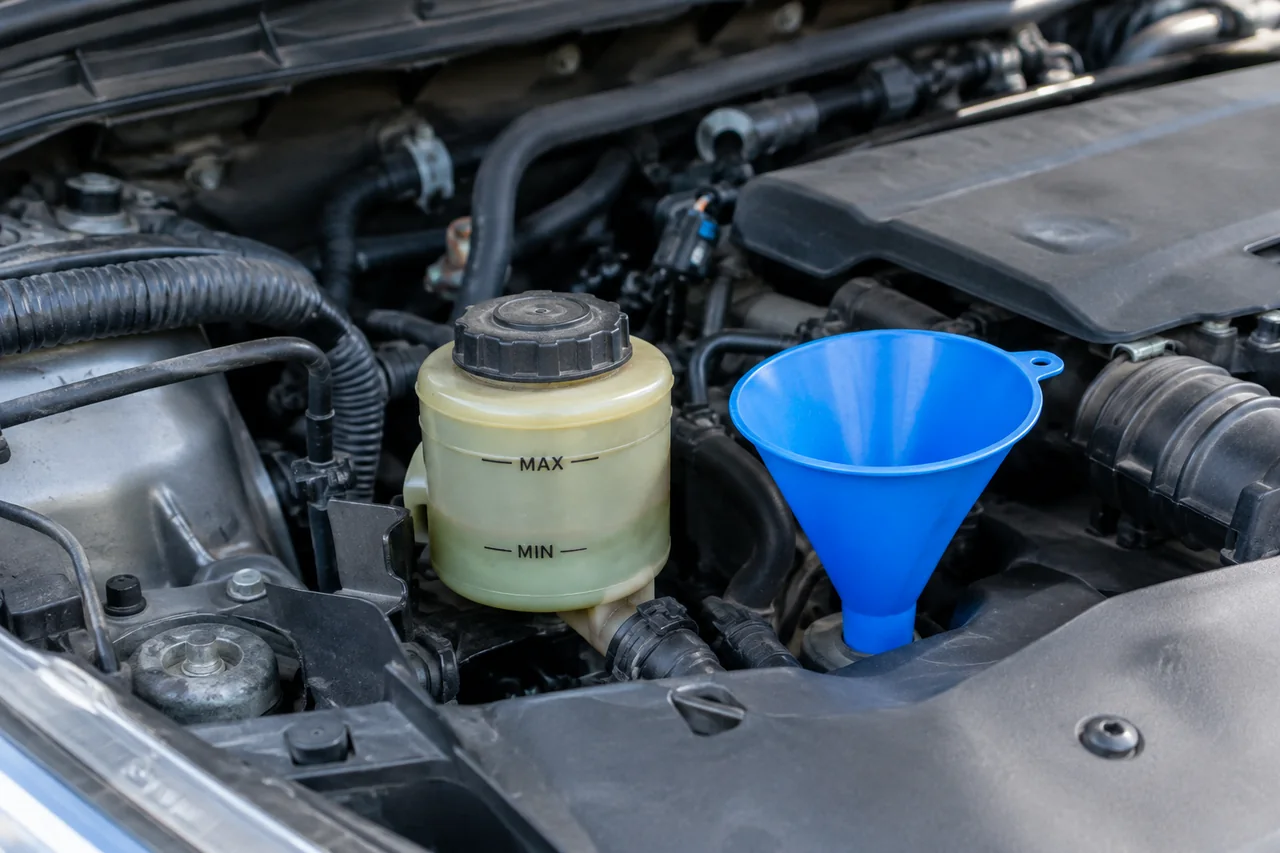
Checking power steering fluid takes only a few minutes, but an accurate reading depends on finding the right reservoir, using the correct temperature scale, and adding only what the system actually needs. This guide covers how to prepare, how to find and identify the reservoir, how to read the marks, and how to top off in small amounts. It also explains when a low level points to a problem that needs professional attention.
Prepare the Vehicle for an Accurate Fluid Check
Before you open the hood, check that your vehicle actually uses fluid for steering assist. Many newer vehicles use fully electric power steering, which relies on an electric motor instead of hydraulic pressure, so there is no reservoir to check or top off. The owner's manual will tell you which system you have. If it is hydraulic, the manual also says whether to read the level hot or cold, whether the engine should run first, and what other preparation the manufacturer requires for a valid reading.
Park on level ground and set the parking brake, because a tilted vehicle can shift fluid toward one side of the reservoir and give a misleading reading. If the manual calls for a warm check, remember that the engine bay will have hot surfaces, and on some vehicles cooling fans can start without warning even after shutdown. Keep hands, loose sleeves, jewelry, and tools well clear of belts and fans. Remove the cap or add fluid only with the engine off and once the reservoir area is safe to handle.
Locate the Power Steering Reservoir and Fill Opening
The power steering reservoir has no universal location, so start with the underhood diagram in the owner's manual instead of guessing. On hydraulic systems the reservoir may be mounted directly on the pump, or it may sit elsewhere in the engine bay and connect to the pump through hoses. Its appearance varies too. Some reservoirs are translucent plastic with marks printed on the side, while others are opaque and rely on a dipstick attached to the underside of the cap.
Once you have matched the reservoir to the diagram, find its designated fill opening. That is where fluid goes. Positive identification matters because several underhood reservoirs look alike, and pouring steering fluid into a brake, coolant, or washer reservoir can create a real safety or repair problem. If you cannot identify the reservoir with certainty, leave the cap closed. If reaching it means removing covers, intake parts, or other components, it makes sense to have a professional do the check.
Confirm the Cap Symbol and Required Fluid Specification
Manufacturers mark reservoir caps in different ways. Some show a steering wheel icon, some use written labels, and others print the required fluid specification directly on the cap. Because these markings vary, no single symbol applies to every vehicle. Also keep the cap marking separate from any steering-related dashboard warning. That light means the system has detected a concern. On its own, it does not show that the fluid is low, and on electric systems it has nothing to do with fluid at all.
Use the owner's manual to confirm both which reservoir is the right one and exactly what fluid the system requires. Cap color and shape are not reliable guides, since similar caps appear on different reservoirs. Some manufacturers specify a particular automatic transmission fluid, while others call for a dedicated power steering fluid with its own specification. Whichever the manual lists, the product you add must meet that exact requirement. Fluid color says nothing about compatibility, and broad "universal" claims on a bottle cannot confirm that a product suits your system.
Read the Dipstick or Reservoir's Hot and Cold Marks
If the reservoir has a scale on its side, view it at eye level and read the marks that match the fluid temperature the manual specifies. Some reservoirs show separate hot and cold ranges, each with its own minimum and maximum. For a dipstick attached to the cap, first wipe away dirt around the cap so nothing falls in. Then remove the cap, wipe the dipstick with a clean lint-free cloth, and reinsert it exactly as the manual describes before you pull it out and read it.
Separate hot and cold scales exist because fluid expands as it warms. A level that sits correctly on the cold range will rise once the system reaches operating temperature, which is why the hot range sits higher. Reading a cold reservoir against the hot marks makes the level look low and can lead you to add fluid you don't need. If the level falls anywhere between the minimum and maximum marks of the correct scale, it generally needs nothing added. Only a reading below the applicable minimum calls for a top-off.
Add Small Amounts and Stop at the Correct Level
How much to add depends on how far the level sits below the correct mark. Total system capacity refers to a full fluid replacement, not a top-off, and pouring in anything close to that volume would overfill the reservoir. With the engine off, use only the specified fluid and a clean funnel, and add a little at a time. Pause so the fluid can settle and drain from the funnel, then recheck against the right scale before deciding whether more is needed.
Stop as soon as the level is within the correct marked range, then secure the cap as the manual instructs. A loose cap can let fluid escape or dirt get in. Wipe up drips with a cloth while staying clear of hot components. Overfilling matters because fluid expands as it warms and can overflow the reservoir, leaving residue on nearby parts. If you added too much, don't try to remove it with improvised methods. Have a service shop or someone with the right equipment remove the excess.
Recognize When Topping Off Needs Professional Follow-Up
A hydraulic steering system is closed and does not use up fluid in normal operation, so a level that keeps dropping means fluid is escaping somewhere. Topping off restores the level for now but does not fix the cause, so repeated loss calls for leak diagnosis. You can safely look for useful clues: wetness or residue around a reservoir you can reach, fresh spots where the vehicle usually parks, or a level that falls between checks. Stay away from belts and moving parts, and never crawl under a vehicle that is not properly supported.
Foamy fluid, whining or groaning while turning, and steering that feels heavier than usual are all worth reporting, but none of them points to a failed part on its own. Trapped air, low fluid, belt problems, or wear in several different parts can cause similar symptoms, which is why professional testing is often needed. If steering assist suddenly disappears, a large leak appears, or the reservoir is empty, stop in a safe place and call for help. Running the system to investigate can cause more damage and makes the vehicle harder to control.