How to Check a Used Car's Engine Before You Buy: A Practical Checklist
Buying a used car starts with understanding what is under the hood, and a focused engine inspection can prevent an expensive mistake. A cold start, visual checks of fluids and belts, and careful observation during a test drive reveal symptoms hidden by a warm, recently driven engine. This practical checklist walks through a pre-purchase screening you can perform yourself, helping you spot obvious problems before deciding whether to pay for a professional evaluation.
Prepare Before the Viewing: Ask for a Cold Engine and Bring Simple Tools
Before you visit the seller, ask them not to start or warm up the car. A cold start is the best moment to hear piston slap, timing chain rattle, or a weak battery that a warm engine would mask. If the car is already hot when you arrive, you lose the chance to see how it behaves from a standstill after sitting overnight, and some wear-related noises only appear when oil has drained back into the pan.
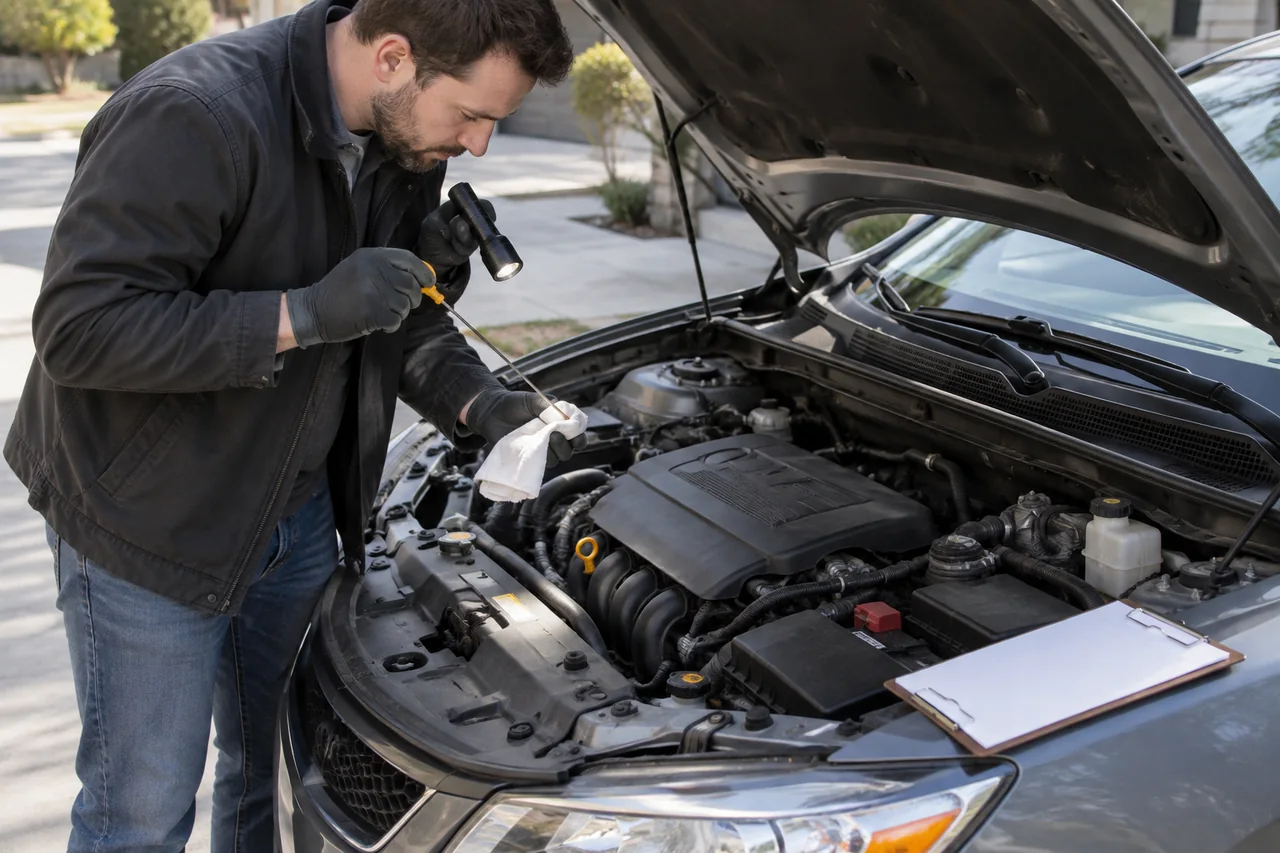
Bring simple tools that support observation without taking anything apart: a flashlight to inspect dark corners of the engine bay, paper towels or a clean white rag to check fluid color, and gloves to keep your hands clean. An OBD-II scan tool is optional but useful on cars that support it, especially 1996 and newer models. Choose daylight and level, dry ground so you can see leaks, fluid colors, and exhaust smoke clearly, and remember this check screens for red flags but cannot replace a professional pre-purchase inspection.
Under the Hood with the Engine Off: Fluids, Leaks, Belts and Hoses
Pull the engine oil dipstick and wipe it on a clean rag, then reinsert and withdraw it to read the level and color. Oil should be between the marks and translucent brown to black depending on age. Milky or foamy oil suggests coolant contamination, while gritty texture or very dark, sludgy oil indicates neglected changes. These are warning signs, not proof of internal damage, but they justify a closer look or professional testing before you buy.
Check the coolant level and color only through the overflow reservoir on a cold engine, never by opening a hot radiator or pressure cap. Coolant should be bright green, orange, pink, or blue, not rusty brown or oily. Look around the engine bay and underneath for wet spots, fresh oil residue, crusted coolant deposits, or drips. A freshly steam-cleaned engine can hide leaks, so wipe suspicious areas with a rag and check again later. Inspect accessible belts and hoses for cracks, fraying, glazing, bulges, or soft spots with the engine off and keys out. Also note corroded battery terminals, mismatched or missing covers, and amateur repairs like tape or loose wiring.
The Cold Start: Sounds, Exhaust Smoke and Dashboard Warning Lights
When you turn the key to the run position without starting, all dashboard warning lights including the check engine light should illuminate briefly and then go out. A bulb that never lights may be disconnected or burned out to hide a problem. Start the engine and listen carefully: prolonged cranking, ticking, knocking, rattling, or squealing are worth noting, but they indicate a need for testing rather than a specific failure. Let the engine idle while you observe from a safe distance.
Watch the exhaust pipe after startup. Brief white vapor on a cold day is normal condensation. Persistent blue smoke suggests oil burning, thick white smoke may indicate coolant entering a cylinder, and black smoke often means too much fuel. Any of these as a steady plume deserves professional evaluation. Inside the car, feel for rough or unstable idle and excessive vibration through the seat and steering wheel. Keep hands, clothing, and tools clear of moving belts and fans, and never lean over the engine while it runs.
Test Drive Cues That Reveal Engine Health
During a test drive, accelerate smoothly on a clear road. The engine should build speed without hesitation, stumbling, surging, or a lack of power. A flat spot when you press the throttle could point to fuel delivery, ignition, or sensor problems. Try a steady highway speed and a moderate hill to load the engine, listening for new knocks or pinging that appear under stress. The temperature gauge should climb to the normal range and stay there; overheating or erratic readings mean stop the test drive safely.
After about 15 to 20 minutes of driving, find a safe place to idle with the parking brake set. Walk around the car and smell for burning oil, a sweet coolant odor, or raw fuel. Look underneath for fresh drips and watch the exhaust for smoke that was not present at startup. Check that no warning lights have come on. Remember to drive only on safe public roads within legal limits, and let the seller or a professional handle anything beyond normal driving.
Service Records, Scan Data and When to Book a Professional Inspection
Service history can show whether the car received regular oil changes and major maintenance like timing belt replacement. Gaps in records, mismatched dates, or repairs done at unusual intervals should lower your confidence, even if the engine looks clean. A complete history is not a guarantee, but it helps you predict future costs. If the seller cannot produce any records, treat the car as having unknown maintenance and inspect more carefully.
An OBD-II scanner can read stored trouble codes and readiness monitor status. If the check engine light is off but the scanner shows incomplete readiness monitors, the codes may have been recently cleared to hide a problem. Do not interpret a code without checking it against the specific make, model, and year because meanings and causes vary by manufacturer. No universal definition should be assumed. If you find any red flags—persistent smoke, knocking, milky oil, or rising temperature—pay for an independent pre-purchase inspection that includes compression or leak-down testing. A seller who refuses an independent inspection is a warning sign. Your own check can flag concerns, but it cannot confirm internal engine condition.
Printable Used Car Engine Checklist
Use this checklist in stages: Before arrival, confirm the engine will be cold and gather a flashlight, rag, gloves, and scan tool. Engine off: check oil level and appearance, coolant in the reservoir only, leaks on the ground and engine, belt and hose condition, and general wiring. Cold start: watch warning lights at key-on, listen for unusual noises, observe exhaust smoke, and feel for rough idle. Test drive: note acceleration response, temperature gauge stability, new noises under load, smells, and any post-drive drips or warning lights.
Add boxes for each item and space for notes such as 'oil dark but not gritty' or 'brief blue smoke at startup.' A short 'walk away or get it tested' section should list findings that call for professional inspection before any money changes hands: milky oil, persistent smoke, knocking or rattling, overheating, incomplete readiness monitors, or fluid leaks that reappear after wiping. Keep the checklist free of repair steps and limited to safe visual, audible, and documentary observations.