How to Check a Stored Car for Rodent Activity: Nests, Wiring and Cleanup
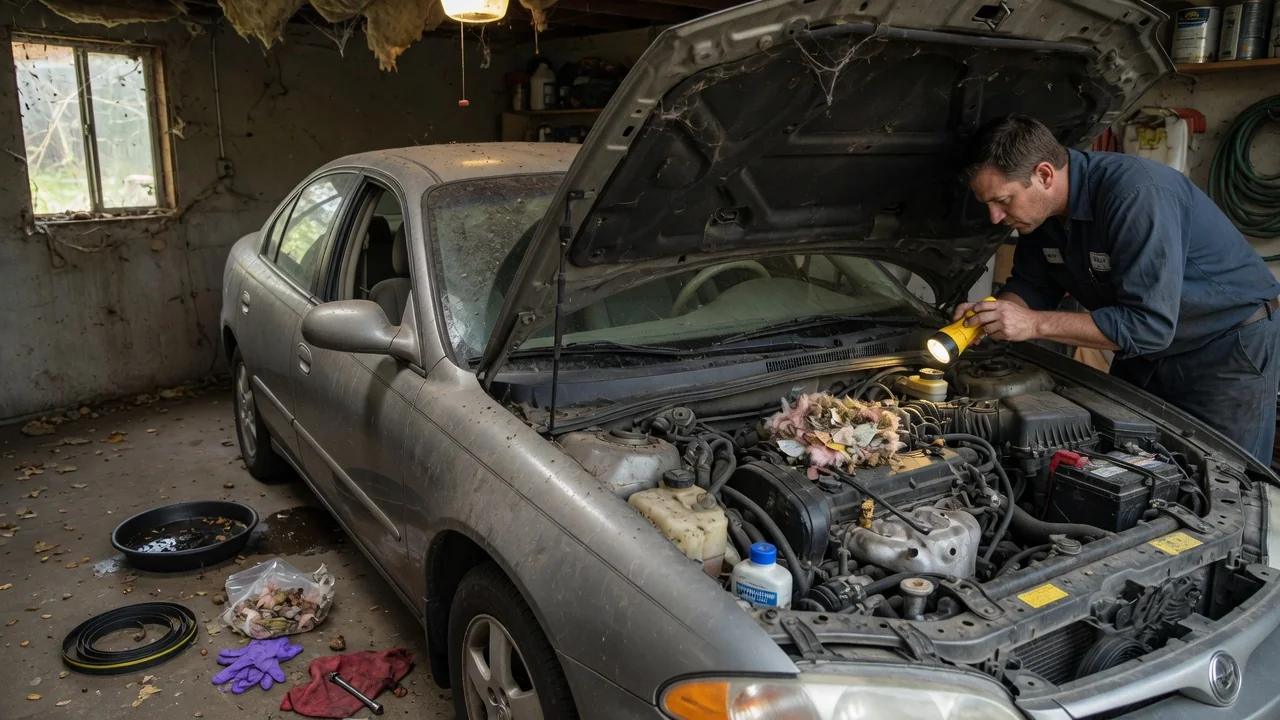
A car that sits for weeks or months in a garage, barn or carport offers rodents shelter, warmth and chewable material. Checking a stored car for rodent activity before driving it again can reveal nests, damaged wiring and contamination early. This guide explains where to look for nesting material, how to inspect wiring and hoses for chew damage, and how to clean up droppings and debris while limiting health risks.
Nesting Material: Where Rodents Hide in a Stored Car
The most common signs of rodents in a stored car are droppings, shredded material and a musty or ammonia-like odor from urine. Nesting material is usually a loose mass of whatever was nearby: shredded paper, fabric, insulation, dry leaves, grass or pieces of foam. Rodents may also leave caches of seeds, nuts or pet food, which suggest they have been visiting regularly rather than passing through. Fresh droppings tend to look dark and moist, while older ones are dry and crumbly, which can help you judge whether activity is ongoing.
Start under the hood. Look on top of the engine, around the battery, along the firewall and in the cowl area at the base of the windshield, where leaves and debris collect. Open the engine air filter housing, because the enclosed box is a protected spot that rodents often fill with nesting material or food. Check the cabin air filter and the area around the fresh-air intake for the heating and ventilation system, since material there can be blown into the cabin when the fan runs. Inside the car, look under the seats, inside the glovebox and console, and beneath floor mats. In the trunk, lift the floor panel and check the spare tire well and any side storage cavities.
Do this inspection before starting the engine. Use a bright flashlight, wear gloves and avoid reaching blindly into dark cavities. Note where you find material, but do not disturb nests or droppings yet; cleaning is safer as a separate, deliberate step. A nest sitting on or near the exhaust system or other parts that get hot is worth flagging, because dry material in those spots can be a fire hazard once the engine warms up.
Wiring: Inspecting for Chew Damage
Rodents gnaw constantly to keep their teeth worn down, and wiring insulation, plastic conduit and rubber are within easy reach in an engine bay. When inspecting wiring, follow the visible harnesses with a flashlight and look for gnaw marks, insulation stripped back to bare copper, frayed tape, broken plastic loom and small fragments of insulation lying nearby. Pay close attention to connectors, sensor leads and wiring routed along the firewall, near the battery and close to any nest you found. Damage is often concentrated where a nest was built, but rodents can travel along harnesses and leave scattered bites some distance away.
Wiring is not the only target. Inspect rubber and plastic hoses, including coolant hoses, vacuum lines and any visible fuel or brake lines, for bite marks, cracks or leaks. Check the underside of the hood insulation pad, which rodents sometimes tear apart for nesting material, and look at seat upholstery and foam for holes. If damage is not visible but rodent signs are, symptoms may appear after startup: warning lights on the dashboard, a no-start condition, erratic gauges, a rattling or burning smell from the ventilation fan, or systems that work intermittently. These symptoms have many possible causes, so they point toward a closer inspection rather than confirming rodent damage on their own.
If you find exposed conductors, chewed fuel lines or heavy damage near the battery, avoid starting the car until the problem is assessed. Bare wires can short against metal, and a damaged fuel line can leak. Disconnecting the battery before working near chewed wiring reduces the risk of shorts, though it may reset some electronic settings depending on the vehicle, so check the owner's manual first.
Cleaning: Removing Nests and Droppings Safely
Rodent droppings, urine and nesting material can carry disease, including hantavirus in some regions, and the main exposure risk comes from breathing in dust stirred up from dried contamination. For that reason, public health guidance generally advises against sweeping, vacuuming or blowing out droppings while they are dry. Before cleaning, open the doors, trunk and hood, and let the car and the storage space air out. Wear disposable gloves, and consider a well-fitting respirator if the contamination is extensive or in an enclosed area.
Spray droppings, urine stains and nesting material with a household disinfectant or a diluted bleach solution prepared according to the product label or local public health guidance, and let it soak for the recommended contact time. Then wipe up the material with paper towels, place everything in a sealed plastic bag and dispose of it with household trash. Be cautious using bleach on upholstery, carpet or painted surfaces, because it can discolor them; an automotive-safe cleaner or enzyme-based product may be a better choice for interior fabrics after the initial disinfection. Replace a contaminated cabin air filter or engine air filter rather than trying to clean it, and remove any debris from the fresh-air intake before running the ventilation fan.
Lingering odor often means contamination remains in carpet padding, seat foam or ventilation ducts that cannot be reached easily. Professional interior or duct cleaning may be needed in those cases. After cleaning, wash your hands thoroughly, and recheck the car a few days later for new droppings, which would indicate that rodents are still getting in.
Practical Implications and Limits
A home inspection has real limits. Much of a vehicle's wiring runs inside looms, behind trim panels and under components that cannot be seen without disassembly, so a clean visual check does not guarantee the absence of damage. Where and how harnesses are routed also varies widely between vehicles, which is why general guidance can only point to common hiding spots. If warning lights appear, electrical systems behave oddly or you found significant chewing, a technician with wiring diagrams and diagnostic tools is better placed to locate and repair the damage correctly. Photographing damage and nests before cleaning creates a record that may be useful if you contact your insurer, although whether rodent damage is covered depends on the individual policy.
Finding rodent activity once usually means the storage space itself is attractive to them. Removing food sources such as birdseed, pet food and trash from the garage, sealing obvious entry gaps and checking the car periodically during storage reduce the chance of repeat problems. Deterrents such as traps, scented products or ultrasonic devices are widely sold, but their effectiveness varies with the setting and the type of rodent, so regular inspection remains the most dependable way to catch new activity before it causes expensive damage.