How to Change Manual Transmission Oil
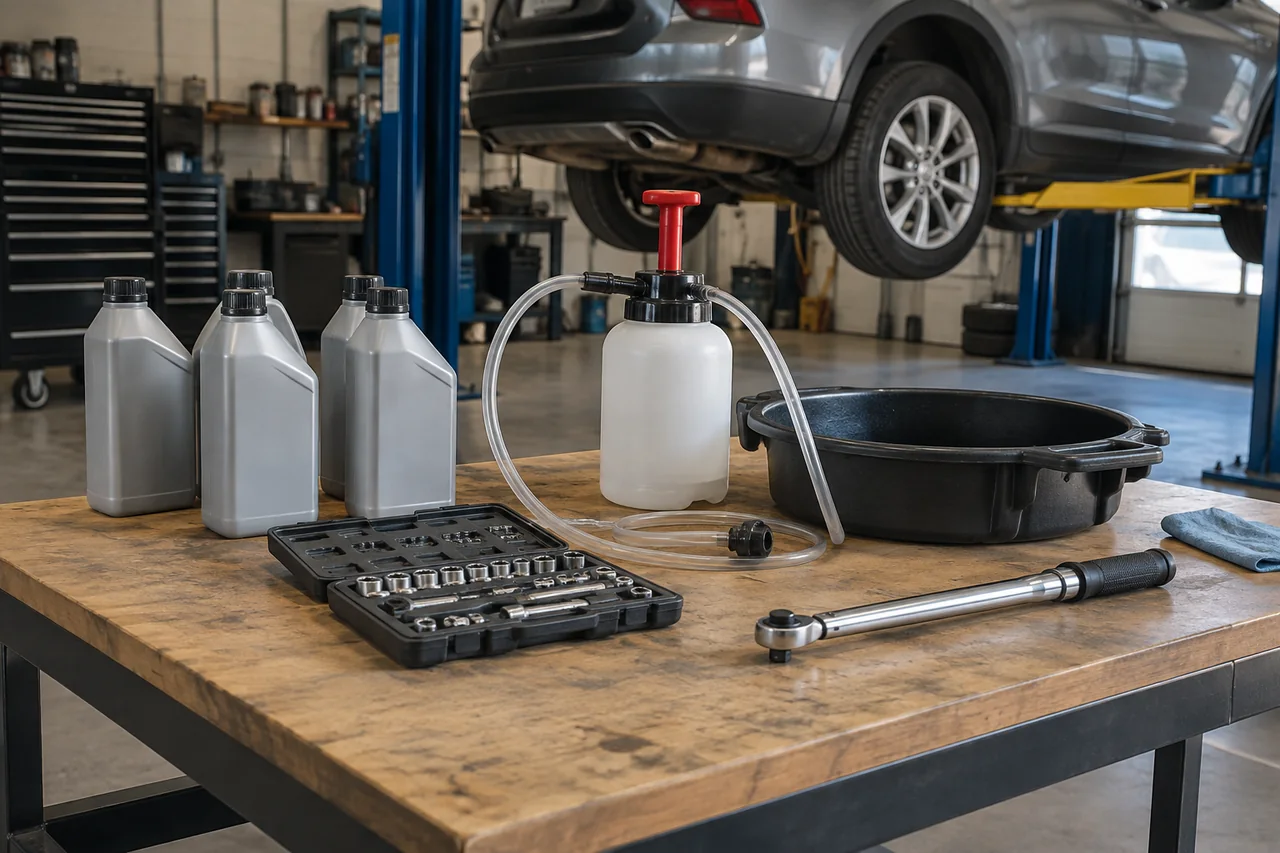
A manual transmission fluid change is a drain-and-fill service that replaces gearbox lubricant before wear, heat, and contamination reduce shift quality. Whether you call it a manual transmission oil change or a fluid replacement, the job depends on the correct specification, a usable fill plug, and a method for setting the fill level. A fluid transfer pump often makes the refill practical. Fresh oil is not a repair for an existing mechanical fault.
Confirm the Gearbox Fluid Specification and Service Schedule
Before changing manual transmission fluid, identify the exact vehicle and transmission variant so the manufacturer's fluid specification and drain-and-fill procedure apply to that gearbox. Manual transmissions may require gear oil, automatic transmission fluid, or a dedicated gearbox lubricant; viscosity on a bottle does not by itself prove suitability. Using the wrong chemistry can affect synchronizer action, seal compatibility, and shift feel even when the oil looks similar. Confirm the documented product family and any listed alternatives before purchasing fluid.
Use the vehicle's maintenance schedule and any severe-service or operating-condition notes to decide when a manual transmission oil change or fluid replacement is due, rather than a single universal mileage figure. Towing, short trips, and high heat can change the recommended interval in the same documentation. Leaks, notchy or difficult shifts, and new noises still warrant diagnosis first. Changing transmission fluid in a manual gearbox refreshes lubricant condition; it cannot be assumed to repair worn synchronizers, damaged bearings, or a leaking case.
Gather the Fluid, Pump, and Plug Service Supplies
Gather the specified gearbox lubricant, a drain pan large enough for the expected volume, the correct plug tools, a torque wrench for documented tightening torque, and gloves plus eye protection. A manual transmission fluid pump, more generally a clean fluid transfer pump with compatible tubing, helps reach a restricted fill opening that a bottle cannot enter cleanly. Keep the pump and hose dedicated to this lubricant so leftover chemicals do not contaminate the refill. Inspect fittings so the tube seals at the fill plug opening.
Confirm whether the procedure calls for a new sealing washer, other seals, or replacement plugs before work starts, because reused hardware can weep after a transmission oil change on a manual gearbox. Distinguish the service refill quantity from total dry capacity after a rebuild; a drain-and-fill leaves residual oil in galleries and the case. The documented level-setting procedure, not a round number on a bottle, determines the final fill. Have extra approved fluid available so you can reach that level without substituting a different product.
Check Safe Access and Identify Both Service Plugs
A transmission fluid change on a manual gearbox needs a stable, level working position so the fill level reading is meaningful and fluid drains completely. If reaching the plugs requires lifting you cannot perform safely, stop and use professional service. No one should work beneath a vehicle supported only by a jack. Park on a firm surface, apply the parking brake, and confirm the vehicle cannot roll before any underbody work. Level stance also matters later, when the fill opening is used to judge lubricant height.
Locate the drain plug and fill plug from vehicle-specific documentation so nearby fasteners, inspection covers, or differential hardware are not mistaken for service plugs. Confirm fill access before draining; if the fill plug will not come out, you cannot refill after emptying the case. Seized plugs, rounded or damaged fasteners, and excessively hot components are reasons to stop rather than force hardware. Replacing manual transmission fluid is postponed until those conditions are corrected, because a gearbox that cannot be refilled is worse than one still holding used oil.
Drain the Old Fluid and Inspect What Comes Out
Only after safe access and fill-plug removal are confirmed should changing manual transmission oil proceed to the drain. Position the catch pan under the documented drain plug, remove that plug, and allow the used gearbox lubricant to flow until dripping slows. Follow any specified fluid-temperature requirement in the procedure, while avoiding contact with hot oil and nearby exhaust or catalytic components. Do not improvise a faster drain by running the engine or rocking the vehicle in ways the service information does not describe.
Record what comes out: color, odor, and any obvious metal fragments or unusual contamination can be useful notes for later diagnosis. Appearance alone cannot diagnose gearbox condition, because dark oil may still be within service expectations and bright oil does not prove the internals are healthy. Clean and inspect the drain plug as directed, fit any required sealing washer or seal, and reinstall it to the documented tightening torque before refilling. A loose or overtightened plug can leak or damage threads once the case is under fluid pressure again.
Pump in the Specified Fluid and Set the Correct Level
Use a clean transfer pump to introduce the approved lubricant through the designated fill opening while keeping dirt, paint chips, and old oil out of the case. A manual transmission fluid change is usually a measured refill rather than a flush, so the pump should add fluid steadily until the documented fill level is approached. Filling to the lower edge of the opening applies only when the manufacturer specifies that method. Some gearboxes require a dipstick, a standpipe, or another check that does not match a simple overflow at the hole.
Vehicle position, fluid temperature, and any settling time in the procedure can change the level reading, so do not treat a quick glance at the hole as complete if the instructions require a wait or a specific temperature. Complete the prescribed check, then install the fill plug with the required seal and tighten it to the specified torque. Overfilling can aerate oil and strain seals; underfilling can starve gears and bearings. Replacing manual transmission fluid is finished only after that level is set, not merely after a guessed volume has been pumped in.
Check for Leaks and Record the Completed Service
Wipe away spilled fluid so you can see whether the serviced plug areas develop a fresh leak before the vehicle returns to use. Check both the drain plug and fill plug, plus any washer or seal you replaced. After the vehicle is safely back in operating condition and no leaks are evident, a brief drive can confirm that shifting feels normal through the usual gears. Skip that check if leakage is still present. A transmission oil change, manual gearbox included, is not complete while lubricant is escaping onto the case or exhaust.
Persistent leakage, new noises, or worsening shift behavior after a manual transmission fluid replacement needs professional assessment; those symptoms are not proof of one specific failed part. Record the date, mileage, and fluid specification so the next service interval has a clear starting point. Take used oil to an appropriate collection facility for used oil disposal, and do not mix it with coolant, solvent, or household waste. Keeping that record also helps if a later diagnosis questions whether the gearbox lubricant was actually changed.