How to Carry a Folded Wheelchair in a Car
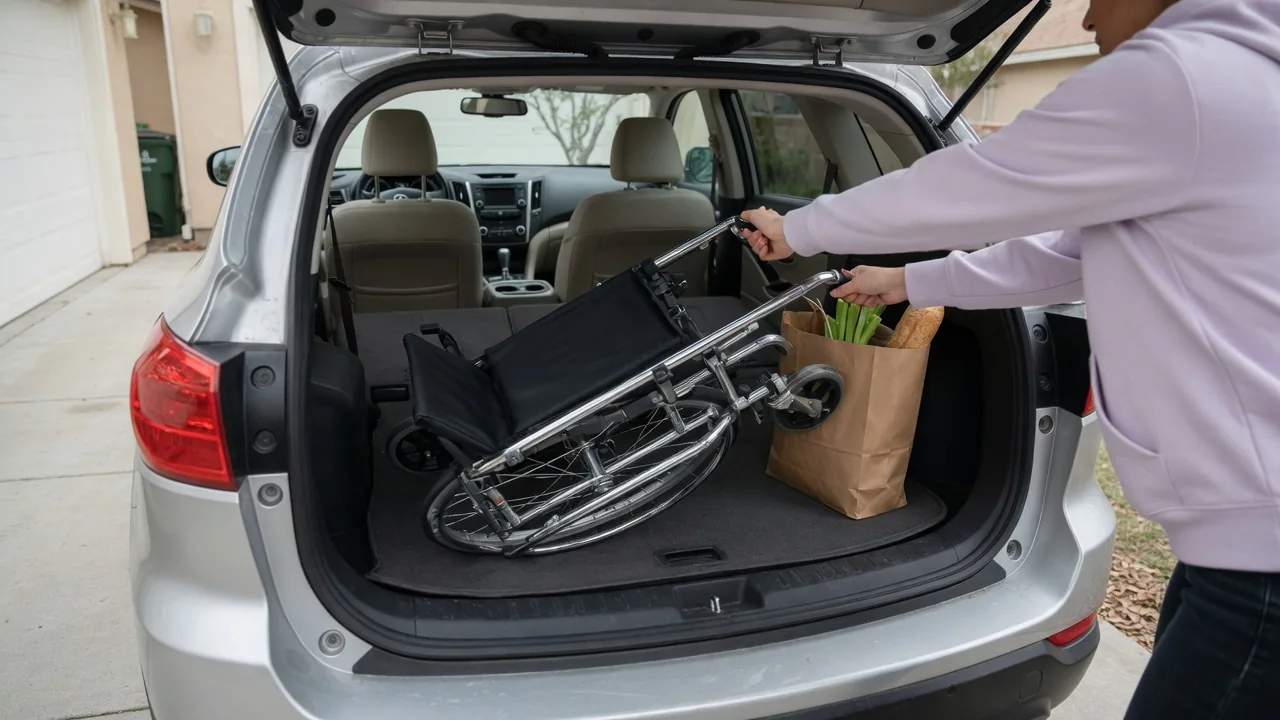
Working out how to carry a folded wheelchair in a car is mostly a cargo question: will the folded frame pass through the opening, where will it rest, and what keeps it from moving once the vehicle is in motion. A tape measure, some padding and a few well-placed straps answer most of it before the first trip.
Measure opening
Start with the chair itself, folded the way it will actually travel. Measure its height, length and folded width, and include anything that protrudes, such as push handles, footrests and the wheel rims. Then measure the vehicle opening at its narrowest points rather than its widest. On a sedan, the trunk aperture is often considerably smaller than the space behind it, and the lip height adds a lift over the bumper. Hatchbacks, wagons and SUVs usually offer a taller opening, but the tailgate angle and latch striker can still intrude.
Interior dimensions matter just as much as the opening. Check the floor length to the rear seatbacks, the width between the wheel housings, and the height beneath any cargo cover or parcel shelf. Folding one section of a split rear seat can add useful length, though the resulting floor may not be flat. A rear door is another option, yet door openings narrow toward the bottom and the gap between seat cushion and front seatback varies widely between vehicles, so measure there before assuming the chair will slide in.
Protect parts
A folded frame has hard metal edges, and the car has soft surfaces that mark easily. The bumper top, the trunk sill, the tailgate trim and the seatback fabric are the usual contact points during loading. A thick blanket or rubber-backed mat draped over the sill prevents paint scuffs, while a cargo liner keeps tire dirt and grit off the carpet. Leather and vinyl upholstery can be dented by concentrated pressure, so a folded towel under any frame member resting on a seat spreads the load.
The chair needs protection too. Removable items such as footrests, cushions and side guards travel more safely when taken off and stowed separately, since they can snag on trim or drop off in transit. Spokes, brake levers and quick-release axles should not bear against the vehicle body or other luggage. Laying the chair on its side is common in shallow trunks, but check which components end up carrying the weight. Where the owner's documentation for the chair describes a preferred transport position, that guidance should take priority.
Restrain cargo
An unrestrained object in a cabin or open cargo area keeps moving when the vehicle brakes or swerves, and a metal frame carries enough mass to cause injury or damage. Many vehicles provide tie-down rings in the cargo floor or side walls, and ratchet or cam-buckle straps routed through the frame rather than around a wheel hold far more reliably. Position the chair low and against a fixed surface, ideally the rear seatback, so that braking forces press it into something solid instead of letting it gather speed.
Anchor locations and strength vary by vehicle, so the owner's manual is the place to confirm what the cargo hooks are intended to hold. Elastic cords stretch under load and are a poor choice for anything heavy. If the chair rides on the rear seat, a seat belt threaded through the frame and latched offers some restraint, though it was designed for occupants and not luggage. In open-cabin body styles, a cargo barrier or net behind the seats adds a second line of defense should a strap loosen.
Everyday Use and Observations
Repeated loading reveals details a single test fit will miss. Notice whether the chair goes in more easily wheels first or handles first, and whether rotating it partway through the opening avoids the latch or trim. Mark the best position mentally, or with a strip of tape on the liner, so the routine becomes consistent. Listen during the first few drives: a rattle, a thud under braking or a creak over bumps indicates movement, and movement means the straps need retightening or the chair needs a firmer contact point.
Consider what else shares the space. Groceries, luggage or a spare tire kit under the floor may all compete with the chair, and items stacked on top of it can shift onto delicate parts. Check that the load does not block rearward visibility through the mirror or interfere with the tailgate closing fully, since a partially latched hatch can trigger a warning light or admit exhaust fumes. Wet or muddy tires also bring moisture inside, so airing out the cargo area and wiping down the liner prevents odors and corrosion.
Limits and Next Steps
Some combinations simply do not work. A rigid or only partly folding frame may exceed the trunk opening of a small sedan no matter how it is angled, and heavier chairs can be awkward to lift over a high sill. Vehicle payload ratings, listed on the door jamb placard, include passengers and all cargo together, which matters on a fully occupied trip. Forcing a tight fit risks bent components, torn trim or a tailgate that cannot seal, so a failed test fit is a clear signal to rethink the arrangement.
When interior space runs out, exterior carriers mounted to a hitch receiver or other approved points are one alternative, but they bring their own considerations, including tongue weight limits, obscured lights or license plates, and exposure to weather. The vehicle manual and the carrier maker's instructions define what is permitted for a given model. If a different vehicle is under consideration, bringing the folded chair along and loading it in person tells far more than published cargo volume figures, which rarely describe the shape of the opening.