How to Care for Perforated Car Seats
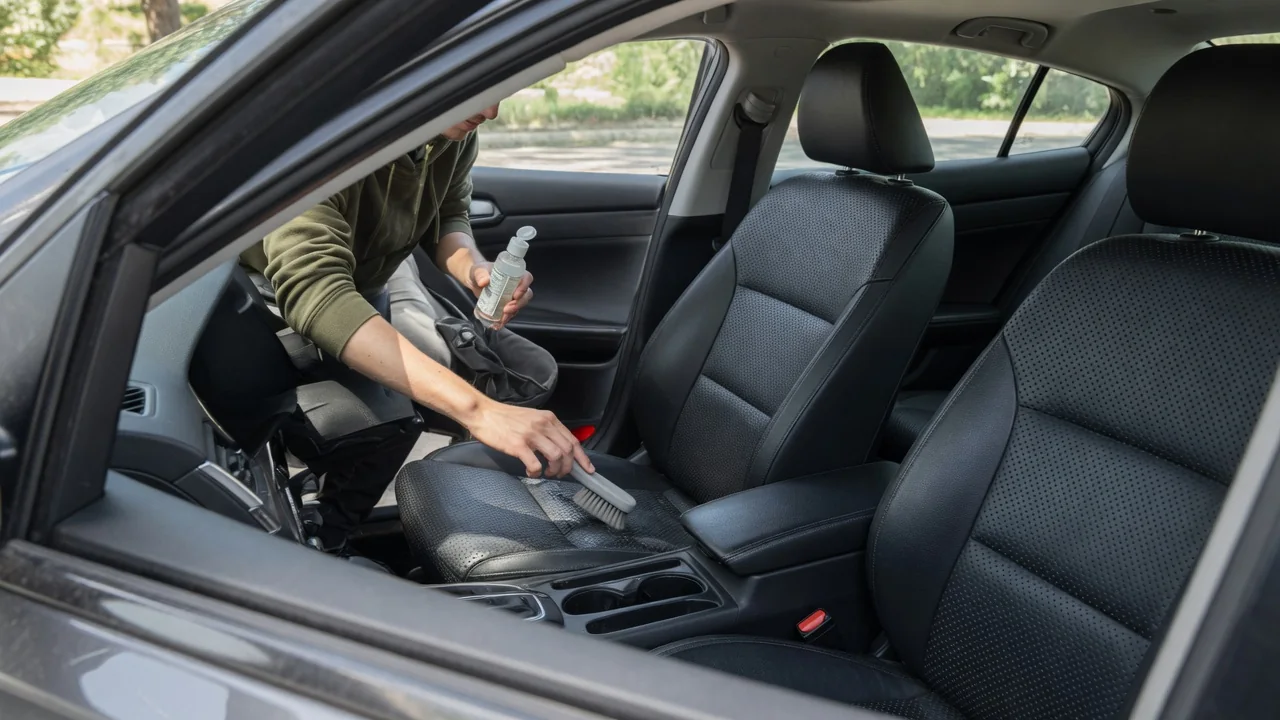
Perforated seats breathe better than solid upholstery, but those tiny holes also collect crumbs, dust, and dried cleaner. Learning how to care for perforated car seats comes down to three habits: lift loose debris before anything wet touches the surface, clean with very little liquid, and let everything dry completely so residue never hardens inside the perforations.
Vacuum first
Dry debris is the easiest contamination to remove and the worst to get wet. Sand, crumbs, and lint sitting in the perforations turn into paste the moment a cleaner touches them, and that paste packs deeper into each hole as you wipe. Running a vacuum with a soft brush attachment over the seat before any other step pulls loose particles upward instead of pushing them down. Work slowly across the perforated panels, usually the center inserts of the cushion and backrest, where the holes are concentrated.
Look closely at the surface under good light after vacuuming. Clear perforations appear as uniform dark dots, while clogged ones look lighter, filled, or uneven. Seams and the crease between the cushion and backrest usually hold the most grit, so spend extra time there. Avoid pressing a hard plastic nozzle directly against the material, because it can scuff the finish or stretch the edges of the holes. Seat layouts vary, and some vehicles perforate only small sections while others cover nearly the whole seating surface.
Gentle cleaning
The central rule for cleaning perforated upholstery is to keep liquid out of the holes. Spraying cleaner directly onto the seat lets it run through the perforations into the foam beneath, where it can linger, leave odor, or reach heating elements and ventilation fans on equipped seats. Instead, apply a small amount of a cleaner suited to the material onto a microfiber towel or soft brush, then work the surface. A foaming product is often easier to control because it stays on top rather than soaking in.
Use light pressure and short passes, wiping away lifted soil with a clean, barely damp towel before it dries. Thick creams and heavy conditioners deserve particular caution, since they settle into the holes and dry as visible white or gray plugs. If a conditioner suits the material, spread a thin film on an applicator first and buff promptly. Real leather, coated leather, and synthetic alternatives respond differently to products, so check the owner's manual for the upholstery type and any cleaners the manufacturer advises against.
Dry thoroughly
Moisture left in perforated seats does more harm than moisture on a solid surface, because it sits out of sight in the holes and the padding below. Damp foam can develop a musty smell, and any cleaner dissolved in that moisture dries into a crust that narrows the openings. After cleaning, blot the panels with a dry microfiber towel, pressing rather than rubbing, so the cloth draws liquid up and out. Change to a fresh section of towel as soon as it feels damp.
Air circulation finishes the job. Leaving the doors or windows open in a shaded, dry place lets the remaining moisture evaporate without baking the material in direct sun. Strong heat from a hair dryer or heat gun can stiffen or shrink leather and is best avoided. The seat is ready when it feels uniformly dry and cool to the touch, with no darker patches around the perforations. Whether running the seat ventilation helps or should wait until the seat is dry depends on the vehicle, so follow the manual's guidance.
Everyday Use and Observations
Daily habits decide how often deep cleaning is needed. Spills are the main threat, since coffee, soda, and sauces flow straight into the holes and leave sticky sugar behind as they dry. Blotting immediately with an absorbent cloth, without scrubbing, keeps most of the liquid on the surface. Sunscreen, body lotion, and dye from dark denim also transfer gradually and collect around the perforation edges, so a quick wipe with a slightly damp towel every few weeks prevents a film from building.
Regular observation catches problems early. Holes that look filled, a pattern that appears patchy, or a tacky feel on the center panels all suggest residue is accumulating. On ventilated seats, noticeably weaker airflow through one area compared with another can point to blocked perforations, though it can equally reflect a fan or ducting issue unrelated to cleaning. Child seats, pet covers, and thick seat cushions trap grit against the surface and restrict airflow, so lift them periodically and vacuum underneath.
Limits and Next Steps
Home care has boundaries worth respecting. Hardened residue in individual holes tempts many owners to reach for a toothpick or needle, yet sharp tools can tear the perforation edges, enlarge the holes, or puncture the layers beneath. A soft detailing brush and repeated light vacuuming are safer, even if several sessions are needed. Steam cleaners and extraction machines introduce far more water and heat than perforated panels tolerate well, particularly where heating or cooling components sit directly under the cover.
Some situations call for professional help. A large spill that has soaked through to the foam, a persistent odor after drying, cracked or peeling material, or dye transfer that will not lift with mild cleaning are all better assessed by an experienced detailer or upholstery specialist. If seat heating or ventilation behaves differently after a spill, have the vehicle inspected rather than assuming a clog is responsible. Warranty terms and approved products differ between manufacturers, so vehicle-specific documentation remains the final reference.