How to Ask Whether a Car Repair Is Urgent
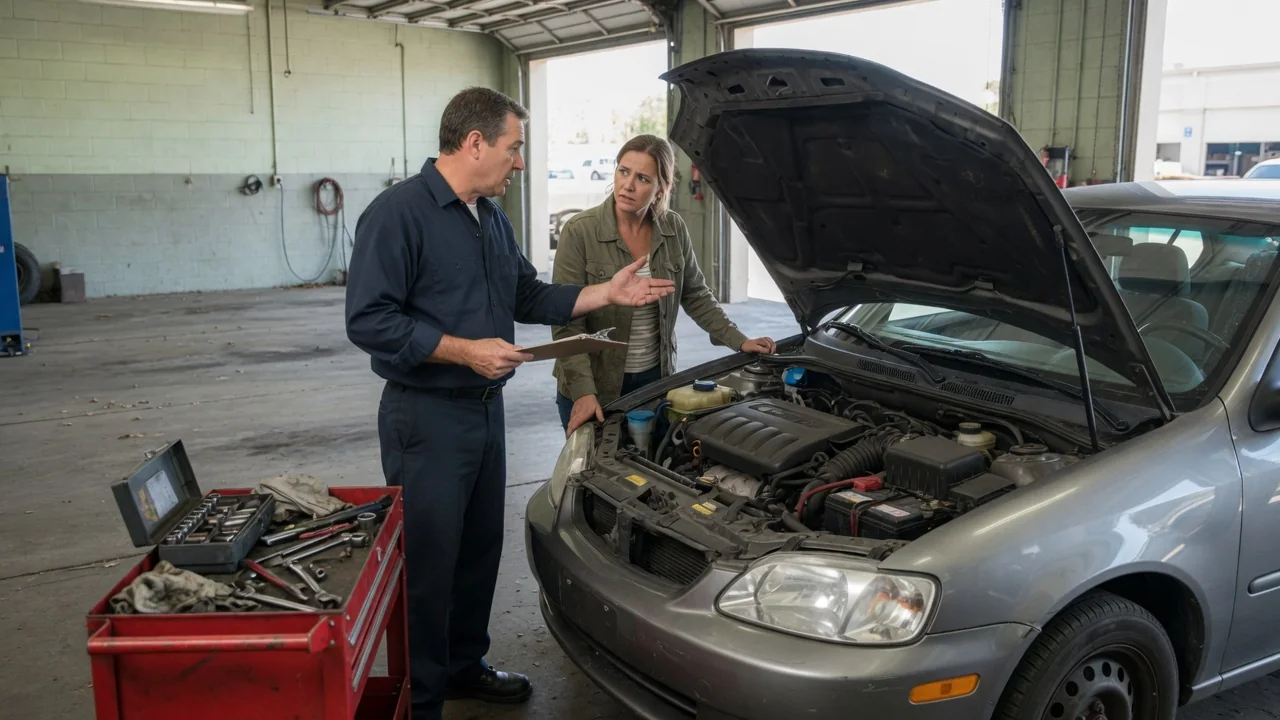
Knowing how to ask whether a car repair is urgent can turn a vague estimate into a clear plan. Instead of accepting a long list of recommendations at face value, you can ask a service advisor which items affect safety, which protect the vehicle from further damage, and which can wait. The right questions make scheduling and budgeting decisions far easier.
Symptom risk
Start by asking what the symptom could lead to if it gets worse. A brake pedal that feels soft, a steering wheel that pulls or shakes, or a tire with a bulge in the sidewall involves the systems that stop and steer the car, so those concerns deserve a direct question about safety. A rattling heat shield or a slow power window is usually an annoyance rather than a hazard. Asking the shop to sort each finding into one of those groups gives you a ranking instead of a single undifferentiated list.
Warning lights deserve the same framing. A stored fault code points a technician toward a system, but it is evidence to interpret, not proof that a particular part has failed, and many codes mean different things on different makes. Ask what testing confirmed the diagnosis and what the likely consequence is if the cause is left alone. A flashing check engine light, a red oil pressure or temperature warning, and a steady amber light generally signal different levels of concern, yet your owner's manual defines exactly what each one means for your vehicle.
Driving limits
Once you understand the risk, ask plainly whether the car is safe to drive and under what conditions. A useful answer is specific: fine for short local trips but not for highway speeds, acceptable without a trailer or heavy load, or not to be driven at all until repaired. A coolant leak, for example, may be tolerable for a few careful miles on one vehicle and a tow-truck situation on another, depending on how fast the level drops and how the engine responds.
Ask too what change should make you stop driving immediately. For worn brake pads, that might be a grinding noise or a longer pedal travel; for a leaking seal, a puddle that grows or a warning light on the dash; for a failing wheel bearing, a hum that becomes a growl or looseness felt through the steering. These thresholds give you something observable to watch. They vary with vehicle design, mileage, and how the car is used, so ask the technician to describe them for your specific car rather than in general terms.
Next appointment
Urgency is also a scheduling question. Ask whether the repair needs to happen today, within the week, or can be combined with the next routine service visit. Shops often describe seeping gaskets, lightly worn suspension bushings, or aging belts as items to monitor, and the phrase is only useful if it comes with a timeframe or a condition to recheck. Request that the advisor write the recommended timing on the estimate so that the plan does not depend on anyone's memory.
Timing can depend on things outside the car itself. If a part must be ordered, ask whether the vehicle can be driven while you wait or should stay parked. If a long road trip, a season of winter driving, or a state inspection is coming up, mention it, because a repair that could wait under gentle commuting may deserve an earlier slot. Asking which jobs share labor can help as well, since doing two related repairs in one visit sometimes makes more sense than splitting them.
Everyday Use and Observations
Your own observations make the conversation sharper. Before calling the shop, note when the symptom occurs: on a cold start, during braking, while turning, over bumps, or only at highway speed. Note whether it is constant or intermittent and whether it has become more frequent. Describe what you hear, feel, smell, or see instead of guessing at the part, since a description such as a burning smell after a long downhill stretch tells a technician more than a self-diagnosis does.
How you use the car changes the answer too. A vehicle that tows, carries a full family, sits in stop-and-go traffic, or covers long distances daily places more demand on brakes, cooling, and tires than one driven a few miles a week. Tell the advisor your typical routine and ask whether it alters the urgency. Between visits, simple checks help: look for fresh spots under the car, glance at fluid levels where your manual shows how, and watch tire pressure and tread, since changes there support or revise the original advice.
Limits and Next Steps
Even a good answer has limits. A technician can describe the condition found today, but cannot promise exactly how long a worn component will last, and an estimate given over the phone without an inspection is only a starting point. If the explanation feels unclear, ask to see the worn part, a photo, or a measurement, and ask how it compares with the manufacturer's specification. A second opinion is reasonable for a costly repair, provided the car is safe to drive to another shop.
When a problem affects braking, steering, tires, or shows signs of overheating or oil pressure loss, treat caution as the default and arrange a tow rather than testing the car's limits. For everything else, leave the shop with three things in writing: what was found, how soon it should be addressed, and what symptoms would move the date forward. Keep that record with your service history, and bring it to the next visit so the same items can be rechecked against an earlier baseline.