How Push Button Start Works: Daily Use, Remote Start, Fobs and Add-On Kits
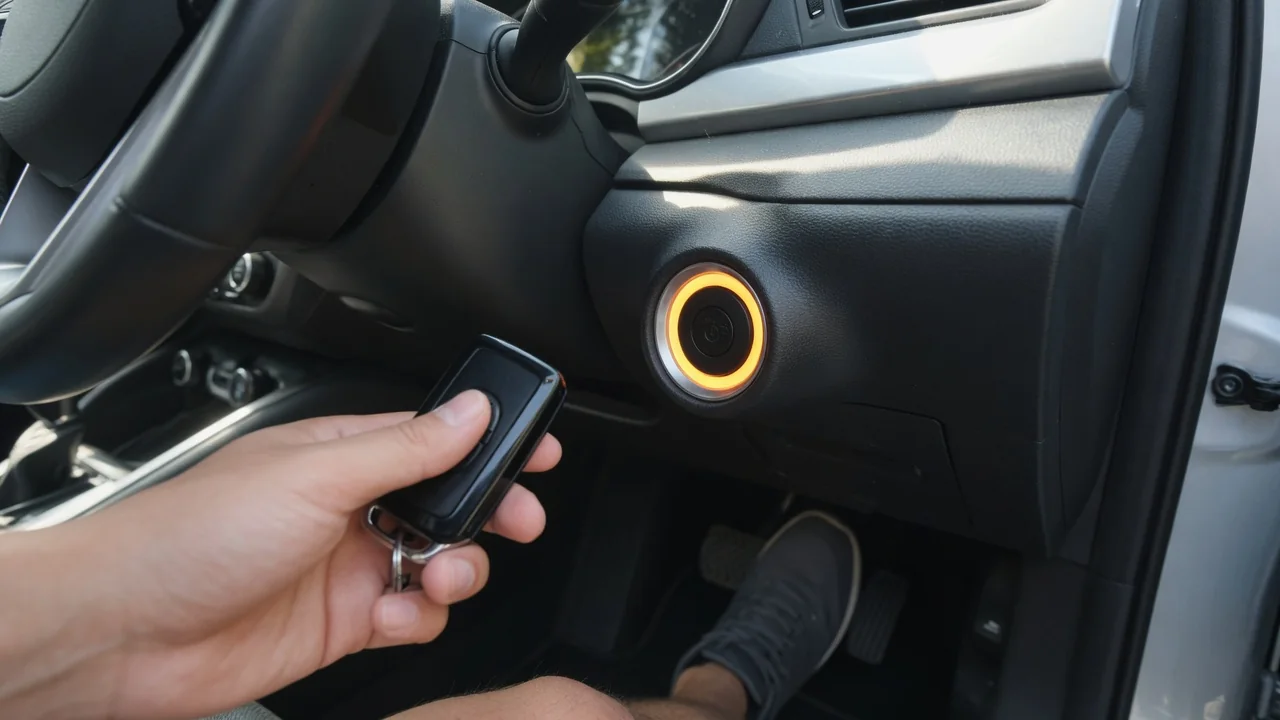
A push button start replaces the metal key and ignition cylinder with a smart key, several antennas and a security computer that decides whether the engine can run. Once you understand how the system works, daily driving makes more sense. It also explains how remote start behaves and helps when a fob, a scanner or a locked steering wheel causes trouble. Finally, it shows what adding a push button start to an older car really involves.
How a Push Button Start System Works Behind the Button
So how does push button start work? When you open the door or press the engine start stop button, the car sends a low-frequency signal through antennas in the cabin and doors. A nearby smart key, also called a proximity key, wakes up and replies with an encrypted code. The keyless ignition module checks that reply. The immobilizer allows fuel and spark only after it confirms that an authorized key fob is inside the vehicle and not just near the bumper.
The button alone rarely cranks the engine. Most automatics require the brake pedal switch to be pressed with the selector in Park, and manuals usually require the clutch to be fully depressed. The exact logic varies by make and model. Without those inputs, the button usually cycles from accessory mode to ignition on mode and then back to off. Keyless ignition moved from luxury cars into mainstream models during the 2000s and 2010s. Your owner's manual is still the authority on how your own vehicle behaves.
Starting an Automatic Car and Turning the Ignition On Without Starting
Learning how to start a push button start car with an automatic transmission takes only a few seconds. Keep the fob in the cabin, make sure the shifter is in Park, press the brake firmly and push the button once. Then check the dash. The warning lights should come on briefly and go out, and the tachometer should settle at idle. To shut the engine off, come to a complete stop, select Park and press the button again. Many vehicles will not shut off, or will show a warning, if the transmission is still in gear.
To turn the ignition on without starting the engine, press the button with your foot off the brake. One press often gives accessory power, and a second press usually switches on full ignition, though the number of presses varies. A key not detected message generally means the car cannot sense the fob, often because of a weak fob battery or radio interference. Many vehicles will start with the fob held against the button or a marked spot shown in the manual. Don't press the button while moving except in a true emergency, and learn your car's emergency shutoff method ahead of time.
Unlocking a Steering Wheel That Is Locked on a Push Button Start Car
Many push button cars have an electrically controlled steering column lock as a theft deterrent. When the car is switched off and a door opens, a lock pin engages the column so the wheel cannot turn freely. If the front wheels were left turned, or a tire is pressed against a curb, tire and suspension forces twist the column against that pin. The pin then binds, and the actuator may not be strong enough to pull it back. The wheel stays stuck, and the start button may seem to do nothing.
To unlock the steering wheel, press the brake, then gently turn the wheel from side to side while you press the start button. Taking the load off usually lets the pin slide free, so never yank or force the wheel. If it stays locked, check whether the fob is being detected, whether its battery is low and whether the shifter is fully in Park. If the lock keeps refusing to release or a steering lock warning appears, the cause is likely an electrical or column lock fault. That needs professional diagnosis, not more force.
Using Remote Start on a Vehicle With Push Button Start
On push button vehicles, factory remote start usually works through a button sequence on the fob, such as pressing lock and then holding a remote start button. Procedures differ by manufacturer, and some cars use a phone app instead. While the engine runs, the car stays locked and the immobilizer stays armed. When you get in, many systems require the fob to be present and the brake and start button to be pressed before the car can leave Park. In short, remote start warms or cools the cabin, but driving still requires a normal authorized start.
If remote start won't engage, possible causes include an open door, hood or trunk, an active warning light, low fuel or a reached run-time limit. These conditions vary by vehicle. Aftermarket remote start modules connect to push button systems through immobilizer bypass or interface modules. These modules imitate an authorized key and a button press. Confirm compatibility for your specific vehicle with the kit maker or installer. Never remote start a vehicle inside an enclosed garage, because exhaust gases can build up quickly.
Key Fob Reprogramming and Using an OBD2 Scanner With Push Button Start
Using an OBD2 scanner with push button start mostly comes down to power. The OBD2 port is usually under the dashboard on the driver's side. Scan tools need ignition power to read diagnostic trouble codes and live data. To reach ignition on mode with the engine off, press the button without the brake, often twice, and then connect the scanner. Run the engine only when you need live data under operating conditions, such as idle fuel trims or charging voltage. Make sure the area is well ventilated.
How you reprogram a push button start key fob depends heavily on the vehicle. Some models let owners program certain functions, but many smart keys need dealer or locksmith equipment and security access to add or replace a fob. Codes from immobilizer or keyless systems can mean different things depending on the manufacturer. Check the meaning for your specific vehicle before you conclude that a part has failed. A used or generic fob may already be locked to another vehicle or use the wrong frequency. Confirm with a qualified locksmith or dealer that it will work before you buy it.
Adding an Aftermarket Push Button Start: What Installation and Wiring Involve
If you want to add push button start to a car, there are two broad types of kit. Basic kits include a push button start switch, a control module and relays. More complete aftermarket ignition kits add a key-bypass or immobilizer interface and sometimes keyless entry. In concept, the switch and relays take over the ignition cylinder's job. They power the accessory, ignition and crank circuits in order, while the starter relay carries the high current. That is how a relay-based push button start works in principle. It is not a wiring guide for any particular vehicle.
Before you try to wire, install or hook up a push button start, weigh the risks. Mistakes in ignition circuits can cause shorts, wiring fires, airbag or immobilizer faults, and warranty or insurance problems. Bypassing security carelessly also weakens theft protection. Get wiring diagrams for your specific vehicle and confirm immobilizer compatibility and any local legal or insurance requirements first. A qualified automotive electrician or installer is the safer choice. Ask whether the kit supports your exact vehicle and how it works with the factory immobilizer. Also ask how the connections are made and what warranty covers the workmanship.