How Often Should You Wax Your Car and How Long Does Wax Last?
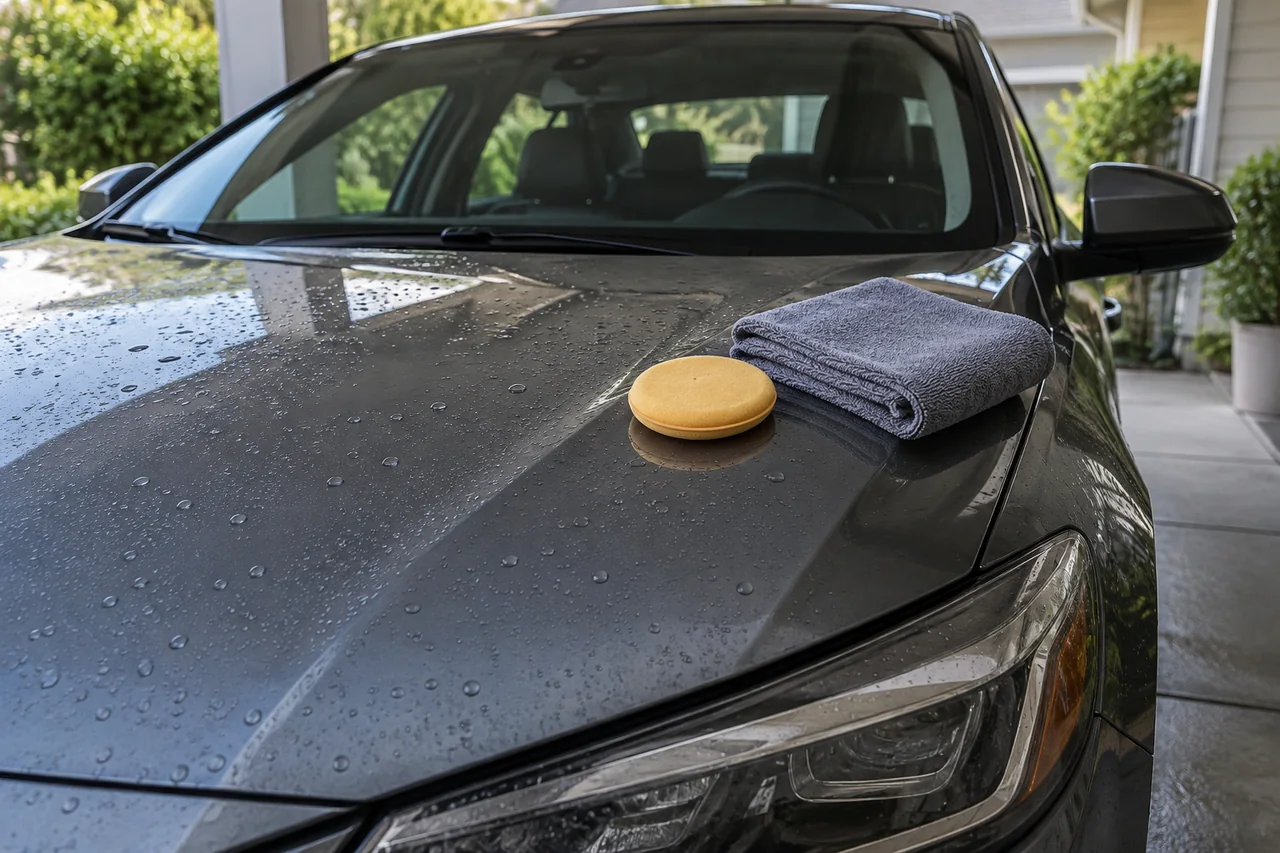
How often you should wax your car depends on the product, storage, and wash habits, not a single calendar rule. Wax durability also varies, so how long wax lasts on a car is confirmed during routine care rather than assumed. A practical schedule comes from watching protection after washes, reading water behavior honestly, and applying wax when remaining coverage actually calls for it.
Set a Waxing Schedule Around Your Car’s Actual Use
There is no single answer to how often to wax a car that fits every wax and every driving environment. How often you wax your car should start with the product's own maintenance guidance, then change with real use: highway miles, outdoor storage, and wash frequency all shorten or stretch useful paint protection. A car kept in a garage and washed gently may go longer between applications than one parked outside and washed often. Treat the label as a starting point, not a promise.
Reassess protection during routine washes instead of waiting for a calendar date. After a normal wash, note whether water still beads or sheets and whether the surface still feels slick and easy to clean. A simple record of application dates, wash habits, and outdoor exposure makes those observations useful, because you can see how long wax lasts on a car under your own conditions. That personal history is the most reliable way to decide how often you should wax your car.
Understand What Determines How Long Car Wax Lasts
How long car wax lasts depends less on the calendar than on formulation, surface preparation, application quality, and later exposure. A wax layer on poorly cleaned paint, or one applied too thick or in the wrong temperature, will not last as long as the same product on a clean, fully cured finish. Sunlight, heat, rain, and surface contamination then wear that layer down at different rates. Those factors explain why two cars using the same wax can show very different durability.
Read maintenance guidance by product type rather than by jar shape. Carnauba-containing waxes, synthetic wax products, and spray waxes often list different refresh windows, and some products labeled as wax also contain sealant ingredients that change expected wax durability. Paste, liquid, and spray formats alone do not establish a reliable lifespan. An advertised durability claim is a marketing range, not a guaranteed reapplication interval under everyday washing, parking, and weather.
Account for Climate, Parking and Washing Habits
Climate and parking habits strongly affect how often car wax needs renewal. Direct sunlight and heat bake a wax film; rain, road film, and bird droppings add surface contamination that washing then has to remove. Repeated washing itself wears protection, so wash frequency is part of the durability equation. Outdoor storage usually shortens the useful life of a wax layer compared with a garage or covered parking, even when the same product is used.
Use garage storage, covered parking, and outdoor parking to inform a personal schedule without treating climate as a fixed interval. Harsh cleaners and abrasive washing can disturb remaining paint protection, while a gentle wash helps keep the surface clean without stripping the layer you just applied. After unusual exposure, such as heavy road film, a decontamination wash, or any wash process intended to remove wax, reassess rather than assuming the previous application is still intact.
Recognize Signs That Wax May Need Renewing
After a normal wash, watch water beading, water sheeting, surface slickness, and how easily dirt lifts. Strong, tight beads that still move freely often suggest remaining protection; water that sits in large, dull patches or wets the surface more readily can mean the wax has thinned. A surface that feels grabby and takes more effort to dry is another clue. These changes are reasons to inspect, not proof that a specific panel needs a full rewax this afternoon.
Water droplets alone cannot prove whether protection remains, because surface contamination and wash-product residue can change beading even when wax is still present. Check several clean areas, including hood, roof, and lower panels, since exposure and wear vary across the vehicle. Dullness, scratches, and paint damage are not reliable measures of how long wax lasts on car paint and may need separate assessment. Renew wax when protection has faded, not because the finish looks tired for unrelated reasons.
Decide Whether to Wax After Every Wash
Should you wax your car after every wash? A full wax application is generally unnecessary after every routine wash when the existing protection is still performing. Washing is the right time to assess the surface: if water still beads or sheets as expected and the paint still feels slick, the current layer can stay. Follow the product's renewal guidance instead of treating each wash as a trigger to rewax the entire car.
An optional maintenance application, such as a light spray top-up when the product allows it, is different from a full rewax. Compatibility and application directions matter, because stacking unlike products or adding another coat over dirty, damp paint can leave residue. Repeatedly adding wax without cleaning and assessing the surface may cause streaking, haze, or uneven water behavior that looks like failure. Clean first, confirm the existing layer, then apply only what the directions support.
Plan Winter Waxing Around Suitable Conditions
Car wax in winter is most useful when you apply it before sustained cold-weather exposure, so paint protection is already in place when road salt and slush arrive. Wax does not make paint immune to salt or contamination; it only adds a sacrificial layer that still needs washing. Winter paint care still depends on rinsing corrosive film when it is safe to do so. Plan to wax a car in winter only as a supplement to cleaning, not as a substitute for it.
A winter application still requires a clean, dry surface and air and panel temperatures within the product's stated range. Moisture, condensation, and incomplete curing can ruin the bond even in a sheltered workspace if panels are cold or damp. If conditions are outside that range, wait rather than forcing a coat that will not last. Through winter, keep up routine cleaning and protection checks, and reapply when conditions and product directions permit.