How Often Should You Replace a Fuel Filter?
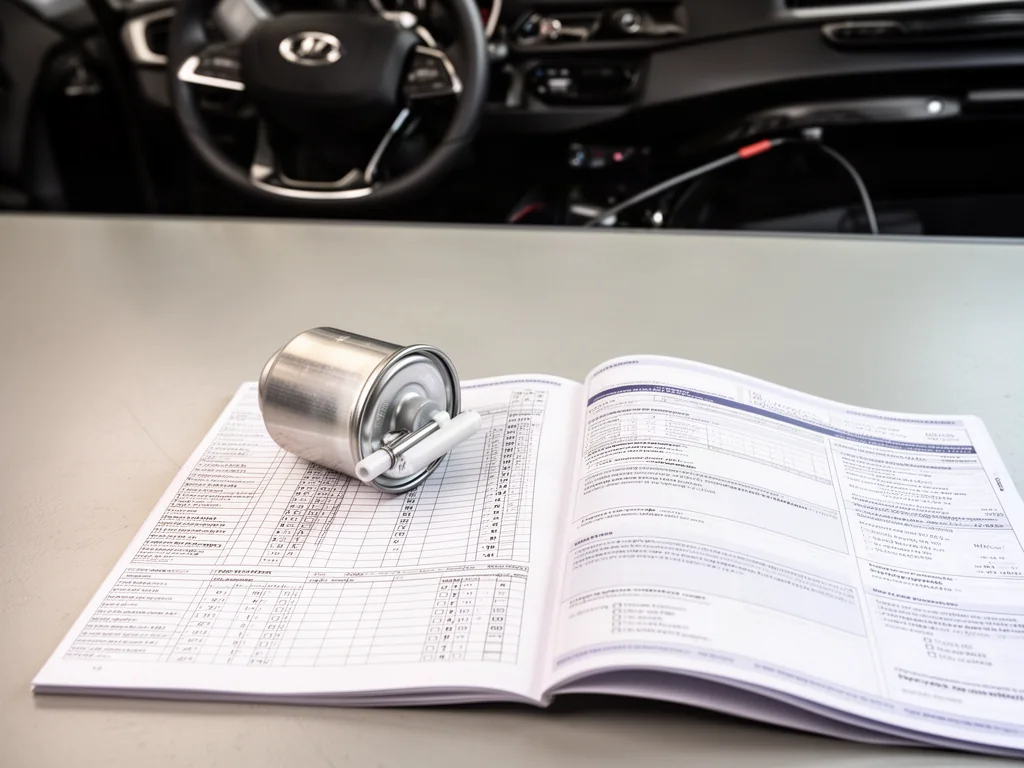
How often you should replace a fuel filter depends on the vehicle, fuel type, and the manufacturer's maintenance schedule, not a single mileage figure. The fuel filter replacement interval may be a listed mileage or calendar limit, an inspection item, or no routine replacement when filtration sits in an in-tank assembly. Use service records to decide when to change it, and treat early symptoms as a reason to inspect, not as proof of failure.
Find the Replacement Schedule for Your Exact Vehicle
When to replace a fuel filter is not the same for every car or truck. The fuel filter replacement schedule is written for a specific model year, engine, and fuel system, so the applicable interval is the one in that vehicle's maintenance schedule, not a generic shop poster. Open the owner's manual or maintenance booklet and find the fuel-system or scheduled-maintenance tables for your exact engine and market specification. Those pages tell you how often a fuel filter should be changed on that vehicle, whether the item is listed as replacement, inspection, or not listed at all.
A scheduled replacement entry means the filter is a serviceable fuel filter with a listed due point. An inspection requirement asks a technician to look for restriction, leaks, or contamination without automatically calling for a new filter. Absence of a routine replacement interval often means the filtration is not treated as a periodic service item on that powertrain. A generic answer to how often you should change a fuel filter cannot establish when a particular vehicle is due, because engines, pump locations, and fuel quality assumptions differ by manufacturer and market.
Understand Scheduled Service for Gasoline Fuel Filters
Gasoline systems may use an externally serviceable fuel filter in the line, or filtration built into an in-tank fuel filter and pump assembly. That design decides whether routine replacement appears in the maintenance schedule. An inline or chassis-mounted canister is often listed with a mileage or calendar interval. Filtration inside the tank module is frequently omitted from replacement tables because the element is not a regular underhood service item. How often to change the fuel filter on a gasoline vehicle must therefore be read from that model's schedule.
If the schedule does not list a gasoline filter change, that omission does not justify preventive replacement of the entire in-tank pump assembly. The module is a larger repair with its own diagnostic path, and swapping it on a calendar guess adds cost without confirming restricted fuel flow. When no routine interval is listed and you still wonder how often you should change your fuel filter, treat a suspected restriction as a diagnostic question. A shop can evaluate pressure, delivery, and contamination before anyone disturbs a sealed tank assembly.
Follow Diesel Filter and Water-Separator Requirements
Diesel fuel filtration is often more elaborate than a single gasoline canister, so the fuel filter replacement schedule on a diesel may list more than one item. Primary and secondary elements, a water separator, and sometimes a sedimenter can each have their own mileage or time service. Identify every scheduled filter element for that particular diesel fuel system by engine and market, because missing one listed element leaves the other due points unchanged. How often a fuel filter should be replaced on a diesel is therefore a set of entries, not a single generic answer.
Draining or servicing a water separator does not automatically fulfill a listed filter replacement requirement. Water separation and particle filtration are related diesel jobs with different due points, and completing one does not reset the other unless the schedule says they are combined. A water-in-fuel warning requires the response specified in the owner's manual and may warrant prompt professional attention if the lamp stays on, returns after draining, or appears with poor running. Fuel contamination can harm diesel injection hardware, so treat that warning as an operating instruction, not a reason to invent an interval.
Use Mileage, Elapsed Time, and Service History Together
To know how often you should replace your fuel filter in practice, start from the last documented service. Subtract that odometer reading from the current mileage and count calendar time from the replacement date in the service records. If the applicable maintenance schedule lists both a mileage limit and a calendar interval, use whichever comes first. Do not apply a whichever-comes-first rule when the booklet shows only miles or only months. That arithmetic answers when to replace the fuel filter for a documented, serviceable element; it does not create a due date the manufacturer never published.
Mileage and time ranges belong only to the documented schedule for that vehicle, engine, and severe-service or normal-service column. Low annual mileage does not cancel a listed calendar interval, because time can still allow moisture and varnish in fuel. A mileage-only schedule does not create an annual replacement requirement. If service records are missing, a shop can inspect, note mileage and condition, and set a baseline without assuming the filter is overdue. That sets how often to change a fuel filter from this point instead of guessing the last service.
Recognize Reasons to Inspect the Filter Before It Is Due
Hard starting, hesitation, reduced power, and stalling can be fuel-delivery symptoms, but they cannot identify a clogged filter by themselves. Restricted fuel flow is only one possible cause among ignition, air, sensor, and pump problems. Those signs may justify looking at the filter before the listed due point, especially after poor-quality fuel, but they do not by themselves answer when to change a fuel filter. If drivability fades before the listed due point, that still needs interpretation rather than an automatic filter swap.
Suspected fuel contamination or a relevant warning message can justify inspection before scheduled service. Note when symptoms began, whether they followed refueling, and any dashboard messages, without deliberately reproducing a loss-of-power event on the road. That history helps a technician decide how often the fuel filter should be changed in this case versus whether another fault is more likely. Altered service intervals should follow applicable manufacturer guidance or a professional assessment of a confirmed problem, not a one-time stumble after a tank of fuel.
Decide Whether to Schedule Replacement or Diagnostic Testing
Schedule routine replacement when a documented serviceable fuel filter has reached its applicable interval, even if the engine still starts and runs normally. How often you should change the fuel filter in that situation is already answered by the maintenance schedule; waiting for a misfire is not required. Symptoms that appear before the interval call for diagnosis rather than assuming a new filter will fix the problem. A clogged element is only one explanation, and replacing it without testing can leave a weak pump, leaking injector, or contaminated tank unaddressed.
A professional inspection can include fuel-pressure and delivery checks and a look at contamination in a sample, without tearing the system down as a first step. If the vehicle stalls, loses substantial power, shows visible fuel leakage, or produces a strong fuel odor, stop safely and seek assistance rather than continuing to drive. After a scheduled replacement, record the date and odometer reading in the service records so you can later see when to replace the fuel filter and whether the last change was mileage or time.