How Often Should You Change Your Cabin Air Filter?
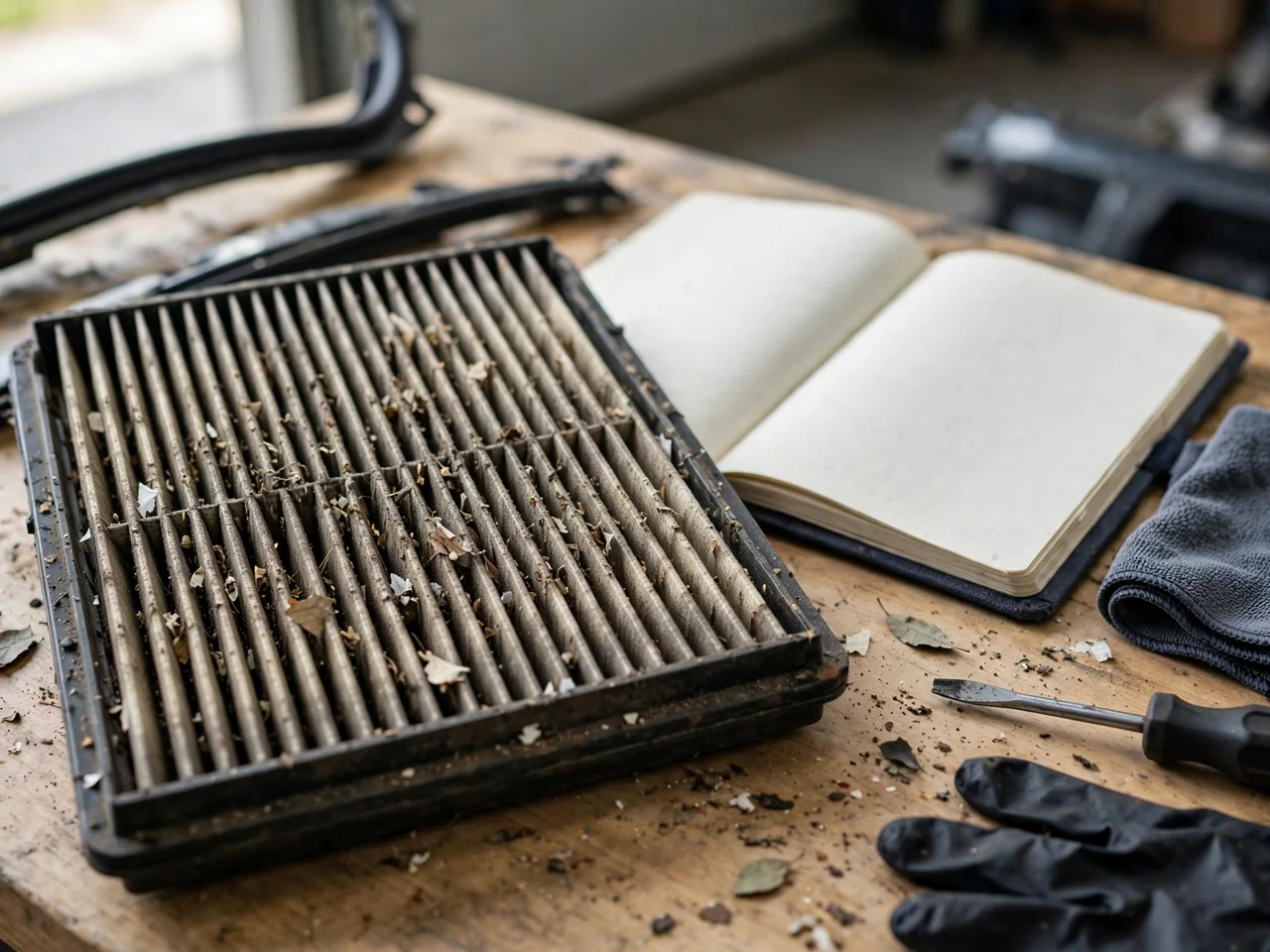
A cabin air filter cleans the outside air your ventilation system pulls into the passenger compartment. How often it needs replacing depends on your specific vehicle, not on one rule of thumb. The sections below explain how to find the schedule that applies to your car, track miles and months, check earlier after dusty or pollen-heavy driving, spot warning signs, and keep a useful replacement record.
Find the Replacement Interval for Your Vehicle
The most reliable answer to how often a cabin air filter should be changed comes from the maintenance schedule written for your vehicle's year, model, and equipment. Manufacturers set these limits based on how the HVAC system is designed, where the air intake sits, and how the filter housing is built, so intervals can differ noticeably between vehicles. Some models also offer different filter types or trim-level variations that affect the schedule. If you treat a figure quoted for another car as universal, you can end up replacing the filter too early or, worse, too late.
Look in the owner's manual or the separate maintenance schedule booklet, usually under periodic maintenance. The cabin filter entry there lists a mileage interval, a time limit in months, or both. Pay attention to the wording. An inspection item means someone should examine the filter and decide whether it needs replacing, so the result of that check decides what happens next. A replacement item means the filter should be changed at that point no matter how it looks. Either way, the goal is to keep the air coming through the vents properly filtered.
Use Mileage and Elapsed Months to Work Out When It Is Due
To work out when the filter is due, start with two facts from the last replacement: the date and the odometer reading. Subtract that mileage from the current odometer reading to find the miles driven since, and count the months since the service date. Compare both numbers against the limits in your schedule. If the manual says replacement is due at whichever limit comes first, the earlier one applies. Use that rule only when the schedule actually states it, because some vehicles list only a mileage figure or only an inspection item.
How much you drive changes which limit matters. A car that covers few miles each year can still reach a stated calendar limit, because the filter keeps collecting airborne debris and moisture while the car sits or makes short trips. A commuter or delivery driver, by contrast, will often hit the mileage limit well before the months run out. If you don't know the replacement history, as with a recently purchased used car, check service invoices and dealer records. Then arrange an inspection so you have a known starting point for future tracking.
Check Earlier After Dust, Pollen, or Heavy Debris Exposure
Some environments clog a cabin filter faster than normal commuting. Unpaved or gravel roads, active construction zones, farm areas, and heavy spring or fall pollen all send more particles toward the fresh-air intake, which is typically near the base of the windshield. Leaves and seeds that collect in the cowl area can also end up against the filter. Running the ventilation on outside-air mode for long periods pushes more of that material through the filter. A vehicle that regularly sees these conditions deserves an earlier condition check.
An earlier check is not the same as a shorter replacement interval. There is no reliable fixed amount to cut from the schedule for dusty or pollen-heavy driving, so go by what the filter actually shows. If your maintenance schedule has a severe or demanding conditions section that covers the cabin filter, follow it when your driving matches the description. Likewise, one trip down a dusty road or a single heavy pollen week does not prove the filter is used up. It simply makes an inspection sensible.
Recognize Signs That Warrant a Filter Check
Weaker airflow from the vents at a fan setting you know well is one of the clearest reasons to look at the filter. A clogged filter limits how much air the blower can pull through the system. Other faults can cause the same symptom, though, including a failing blower motor or resistor, a stuck blend or mode door, or a blockage elsewhere in the ducts. A persistent musty smell can also justify an inspection, but it may come from moisture around the evaporator or contamination inside the ductwork rather than from the filter.
Pay close attention if the windshield takes noticeably longer to defog or clear. Reduced airflow can slow defrosting, and fogged or obstructed glass is a direct safety hazard. Do not drive until you can see clearly, and have the system checked promptly. Symptoms like these can justify attention before scheduled service comes due. The reverse is also true: a vehicle with strong airflow and no odor still needs a new filter when the scheduled interval is reached, because you can't judge how well a filter is filtering from airflow alone.
Inspect Accessible Filter Condition Safely
If you want to look at the filter yourself, use only the access method your owner's manual describes. Many vehicles place the filter behind the glove box or under a cowl panel, but the exact steps vary, so follow your vehicle's instructions rather than guessing. Park on level ground, turn the ignition off, and make sure the ventilation fan is not running before you open anything. If reaching the filter would mean removing trim, panels, or parts the manual does not mention, leave the job to a technician.
Once you can see the filter, look for debris packed between the pleats, leaves or seeds stuck in the material, crushed or torn pleats, a warped frame, or dampness. Any of these needs attention. Color alone is misleading: a gray filter may still have useful life, and a clean-looking one may be past its interval. Don't blow it out with compressed air or wash it unless the filter maker explicitly allows that method. Have a wet filter inspected professionally, because a clogged drain, bad seal, or intake leak may need repair along with replacement.
Record Replacement and Set the Next Check
After a replacement, write down the date and odometer reading in a maintenance log, the service booklet, or a notes app. Keep the receipt showing which filter was installed. Use those figures with your vehicle's schedule to calculate the next due mileage and date. If your car regularly sees gravel roads, construction dust, or heavy pollen seasons, add a separate reminder for an earlier inspection. That reminder only tells you to look at the filter. It is not a new replacement interval of your own making.
Premium filter material, activated carbon layers, or packaging that promises longer life do not by themselves justify stretching the schedule. Stick with the stated limits unless your vehicle's guidance or the filter's own documentation supports a different interval. Also watch for problems that continue after a fresh filter goes in. If airflow stays weak or a musty smell returns, the cause is likely elsewhere in the HVAC system, such as the blower, the air doors, the evaporator drain, or the ducts. A professional diagnosis will do more good than another filter change.