How Much Do Sway Bar Links Cost to Buy?
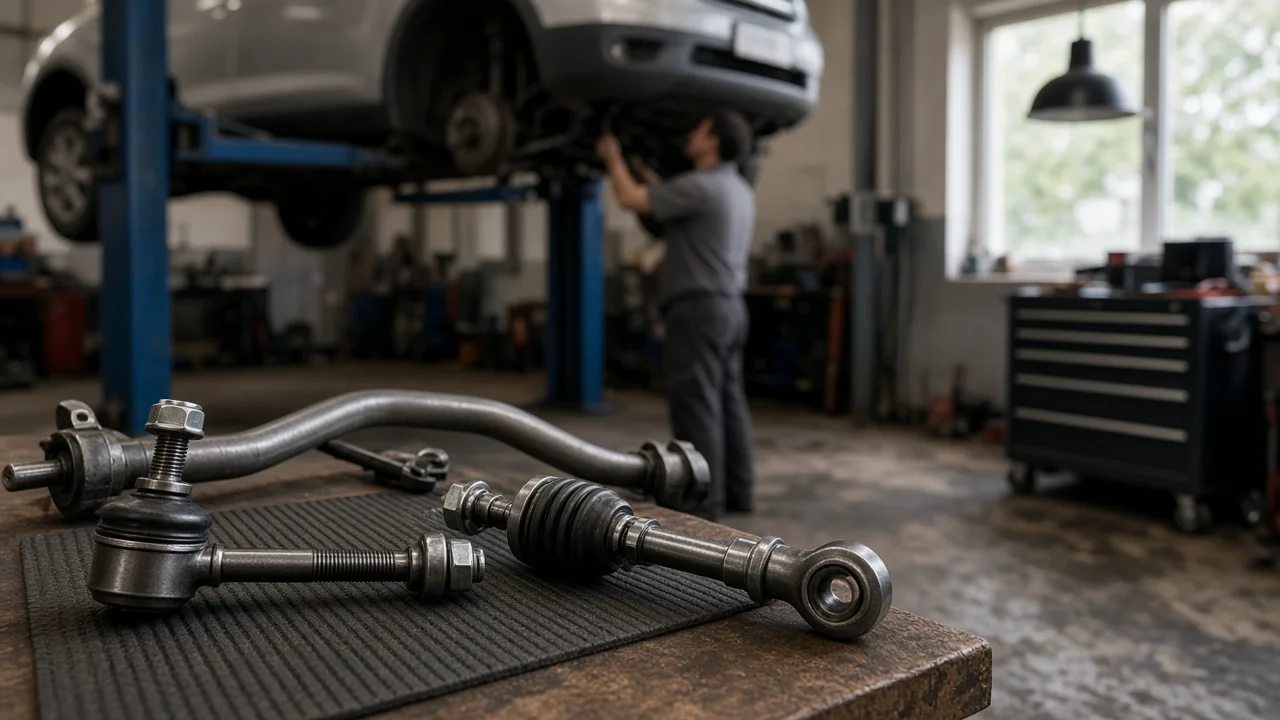
Sway bar links look like small, simple parts, but a quoted price can mean very different things. One figure may cover a single link. Another may cover a matched pair. A third may include parts, labor and hardware for a complete axle. This guide explains what sits behind the cost of sway bar links, which details move the number up or down, and how to compare offers so you pay for the right part and the right amount of work.
What the estimate includes
A sway bar link, also called a stabilizer link or end link, connects the anti-roll bar to a control arm, strut or axle so the bar can resist body roll in corners. When you ask how much sway bar links cost to buy, the answer depends on whether you mean the part alone or the finished job. A parts-only price covers the link itself, and it may or may not include the nuts, bushings or washers the link needs. An installed price adds labor and, at some shops, supplies or a disposal fee.
Check how many links the figure covers. Many vehicles have one link on each side of the front axle, and many also have a rear sway bar with its own pair. Links on the same axle are commonly replaced together because they have the same mileage and operating conditions, so a single-link quote and a pair quote are not comparable. Also note whether the estimate includes an inspection of the sway bar bushings. Worn bushings can produce similar clunks, and replacing them is a separate line item.
What changes the cost
Vehicle configuration is the first driver. The same model can use different links depending on drivetrain, trim, suspension package, front or rear position and sometimes production date, so a part that looks right in a photo may not fit your vehicle. Confirm the fit using the VIN or exact model details rather than the model name alone. Link design matters too. Simple bolt-and-bushing links, sealed ball-joint links, greaseable links and adjustable performance links are built differently and priced differently.
Brand and quality level are the next factor. Original-equipment parts, equivalent-quality aftermarket parts and economy parts can differ in boot material, ball-joint construction, stud coating and included hardware. A lower price is not automatically worse. However, a link sold without new nuts or with a short warranty can cost more over time if the job has to be redone.
Labor depends on access and corrosion more than on the part. On a clean, rust-free vehicle the job can be straightforward. Seized studs that spin in their sockets may need to be held with a hex or Torx bit, heated or cut off, and each of those steps adds time. Labor rates vary by region and by type of shop, and some shops charge a minimum labor amount however quick the job is. Your location, local road salt and the vehicle's service history all affect how smoothly the work goes.
Compare like-for-like options
Put offers on equivalent scope before you compare totals. A dealer quote for original-equipment links on both sides with a full warranty is a different product from an online price for one economy link with no hardware. Compare the same number of links in the same position. Check that the parts are of comparable construction, that the same hardware is included, and that the warranty terms on parts and labor are similar.
Buying the parts yourself and paying a shop to install them can lower the total. However, many shops limit or decline the labor warranty on customer-supplied parts, and a part that does not fit means a second visit. Doing the work at home saves labor, but it still requires proper tools, safe lifting and torque values from the manufacturer specifications. Some bushing-style links must be tightened with the suspension at normal ride height. Repairing a link is rarely possible, because on most designs a worn ball joint or torn boot cannot be serviced separately. The realistic choice is which replacement part to buy and who installs it.
Read an itemized quote
An itemized estimate should list each part with its brand or part number, position and quantity. It should show the labor time or flat labor charge, the hourly rate if labor is billed by time, and any shop supplies, environmental fees and taxes. The parts warranty and the labor warranty should also be stated separately. If the quote shows only a single total, ask for the breakdown before agreeing to the work.
Look for exclusions and conditional charges. Common ones include extra labor if a stud is seized or must be cut, replacement of corroded hardware, and additional parts recommended after inspection, such as sway bar bushings, tie rod ends or strut mounts. These recommendations may be valid, but each one should come with a reason and a separate price so you can decide. Replacing sway bar links does not normally change wheel alignment settings. If the quote includes an alignment charge, the shop should tie it to other suspension or steering work and explain it.
Decide the next step
Before you pay, confirm that worn links are actually the cause. Clunking or rattling over bumps, a loose feel in turns, torn boots and visible play at the joints all point to the links. However, similar noises can come from bushings, struts or other components. A quick inspection with the vehicle raised settles the diagnosis and keeps you from buying parts you do not need.
Then work through a short checklist. Have the VIN and exact vehicle configuration ready. Decide whether you need front links, rear links or both, and plan to replace them in pairs per axle. Get at least two itemized quotes that specify the same parts, quantity and warranty. Ask how each shop handles seized fasteners and what that adds to the bill. If you install the parts yourself, use new hardware and tighten everything to the manufacturer specification. Avoid shortcuts such as reusing old nuts, installing a link that only nearly fits or replacing one side when both show wear. Rather than relying on a fixed mileage, follow the suspension inspection items in your maintenance schedule and replace links when they show wear.