How Mazda Regenerative Braking Works: i-ELOOP and the CX-90 Hybrids
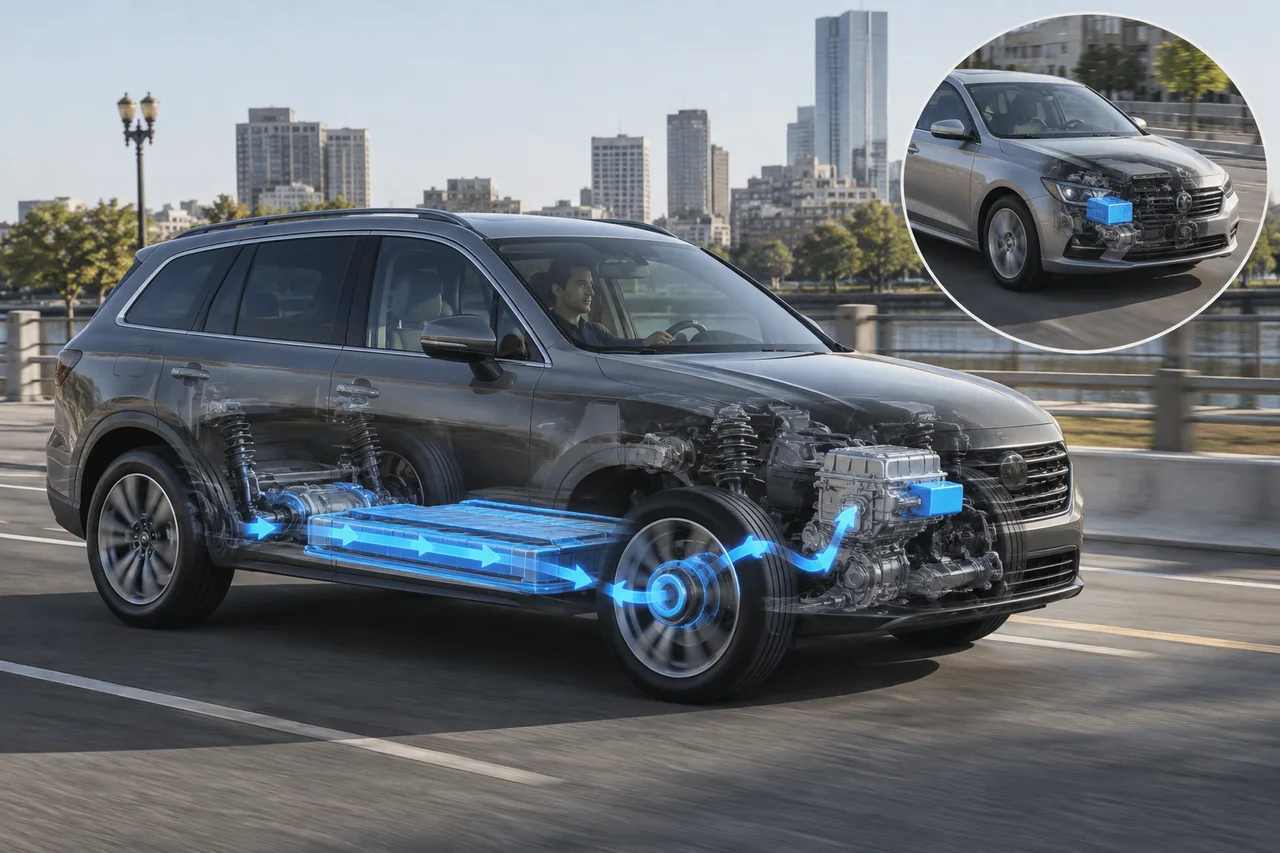
Mazda takes unusual paths to brake energy recovery. Unlike hybrids that send recovered electricity into a large traction battery to help drive the wheels, some gasoline models use a capacitor-based system called i-ELOOP. It captures short bursts of deceleration energy to power accessories. On the larger CX-90 hybrid and plug-in hybrid, an electric motor-generator sends charge back to the high-voltage battery. The result varies by model, but the shared idea is to waste less energy as heat.
What Regenerative Braking Means in a Mazda Context
When a conventional car slows down, its brake pads squeeze the rotors and convert motion into heat that drifts away unused. Regenerative braking intercepts part of that deceleration. The wheels keep turning while the vehicle coasts or brakes, so they can spin a generator or alternator harder than normal. That generator creates resistance and produces electricity, which the car stores for later use. The driver simply feels slightly stronger deceleration when lifting off the accelerator.
Mazda uses two storage methods. In i-ELOOP, recovered electricity goes into a capacitor and is consumed by the 12-volt electrical system for lighting, climate control and infotainment. In the CX-90 hybrid and plug-in hybrid, regeneration charges the high-voltage traction battery, and that stored energy can later move the car at low speed or reduce engine load. Regeneration always supplements the conventional friction brakes; it never replaces them. Availability and behavior differ by model year, trim and market, so owner documentation is the best guide.
Mazda3 and i-ELOOP: Capturing Energy With a Capacitor
i-ELOOP, short for Intelligent Energy Loop, lets the alternator generate more aggressively during deceleration than it does while cruising. The alternator’s load ramps up when the driver lifts off the throttle or presses the brake pedal, converting some of the car’s momentum into electrical output. A variable-voltage alternator can briefly raise system voltage, but the recovered energy does not go into an ordinary lead-acid battery. It flows into an electric double-layer capacitor that accepts charge very fast without the chemical processes used by lead-acid or lithium-ion cells.
The capacitor’s quick charge and discharge behavior suits short braking events. It can absorb a useful amount of energy in a few seconds and then release it gradually to power the car’s electrical loads. That reduces the demand on the engine-driven alternator during normal driving, saving a little fuel. i-ELOOP is not standard on every Mazda3. It appeared on certain trims and model years, especially with the 2.5-liter engine in some markets, so owner’s manual and window sticker details must be checked before assuming a particular car has the system.
Mazda6 and i-ELOOP: How the System Behaves on the Road
On the road, the cycle starts whenever the driver coasts or brakes. As the car slows without the accelerator pressed, i-ELOOP commands the alternator to increase its field strength. This makes the alternator harder to spin and gives the car a mild deceleration feel. The recovered energy is stored almost instantly in the capacitor, reaching a useful state of charge after only a few seconds of braking. Later, as the car cruises, the system feeds that stored energy to electrical components through a DC-DC converter that steps the voltage down for the 12-volt network.
Because i-ELOOP never turns the wheels with an electric motor, the braking feel is much weaker than in a hybrid or EV. Drivers may notice only a slight change in pedal response when the system switches between regeneration and normal friction engagement, and that is expected behavior. Some cars show an energy-flow or i-ELOOP status screen, but displays vary by infotainment generation and market. The Mazda6 offered i-ELOOP on select trims and markets, so a specific car’s build data or owner’s manual remains the most reliable source.
CX-90 Hybrid and PHEV: Regeneration Through an Electric Motor
The CX-90 uses different hardware. In the hybrid and plug-in hybrid versions, a large electric motor-generator sits between the engine and the transmission or on an axle. During deceleration, the control system reverses that motor’s function. Instead of drawing current from the battery to push the car forward, it uses the turning wheels to spin the motor and generate alternating current, which is rectified to direct current and sent back into the high-voltage battery. The plug-in version’s larger battery can store more recovered energy for later electric-only movement.
Like other hybrids, the CX-90 blends stopping force between regeneration and the friction brake pads. The car continuously decides how much brake torque comes from the motor-generator and how much comes from hydraulic pressure. This happens automatically and should feel smooth, although some drivers notice a slight change in pedal travel or firmness. The CX-90 does not necessarily include one-pedal driving or driver-adjustable regeneration levels; those details depend on the specific powertrain and market, so the owner’s manual must confirm what is available.
What Drivers Can Notice and What They Can't Infer
Drivers can observe safe clues during normal driving. The energy-flow screen or efficiency display may show when energy is being recovered and when it is being used. Pedal feel can change slightly as the car blends regeneration with the friction brakes, and a light deceleration sensation when coasting is normal. A warning light for the braking system, a hybrid system message, or a sudden change in stopping performance is not part of normal operation and deserves attention.
Fuel-economy variations alone cannot diagnose the regenerative braking system. Outside temperature, tire pressure, route, driving style, accessory load, air density and engine state all influence consumption. A drop in observed efficiency may be caused by a failing engine thermostat, low tire pressure or winter fuel, not by the regen equipment. Likewise, regeneration amount can vary with battery state of charge and temperature. A fully charged hybrid battery may accept less charge, so the car relies more on friction brakes. These are normal operating behaviors.
Warning Signs and When to Get Professional Diagnosis
Any brake warning lamp, red or amber hybrid-system alert, unusual grinding, pulling, or a longer stopping distance calls for professional diagnosis. The brake by wire style blending used in hybrids can mask a failing brake booster or low brake fluid in subtle ways, and the driver should not wait for a complete loss of stopping power. A scan tool can read powertrain and chassis modules, but the interpretation of hybrid diagnostics is far more complex than an ordinary gasoline vehicle.
High-voltage batteries, inverters, and even the i-ELOOP capacitor can hold dangerous stored energy after the car is switched off. Service procedures require personal protective equipment, insulated tools and a specific shut-down sequence. Fault codes are valuable evidence but they identify circuits and behavioral anomalies, not good parts to throw away. Some codes have different meanings on Mazda gasoline models versus hybrid CX-90s, so manufacturer service information must be consulted to translate them correctly. A dealer or qualified hybrid specialist is the safe route for testing and repair.