How Many Sway Bar Links Does a Car Have?
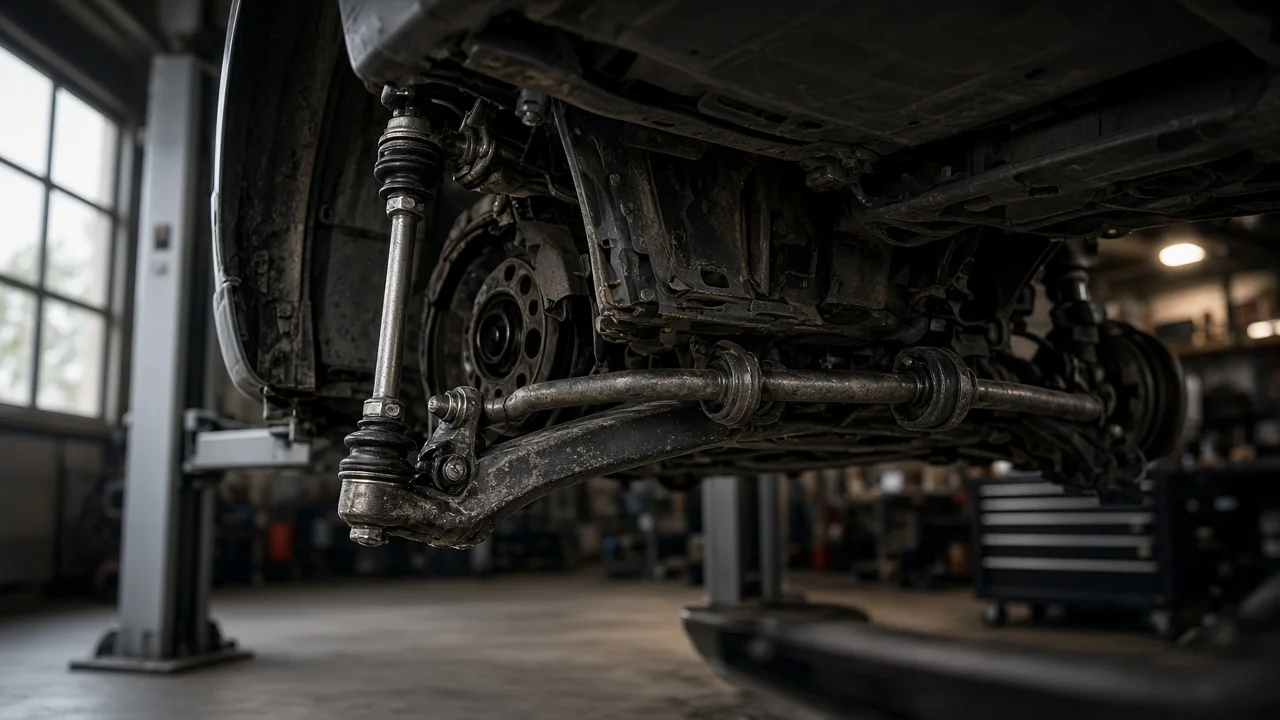
Sway bar links, also called stabilizer or anti-roll bar end links, connect the sway bar to the suspension on each side of an axle. When one starts clunking, the first question is usually how many your car has and whether the others need attention too. For most vehicles the answer is simple, but it depends on the suspension layout, so check your own car before ordering parts.
The Short Answer: Usually Two or Four
Most cars have two sway bar links per sway bar, one on the left side and one on the right. A car with only a front sway bar therefore has two links, while a car with both front and rear bars typically has four. Front bars are standard on the large majority of modern passenger cars, crossovers and light trucks, so a pair of front links is the most common baseline. Whether you also have a rear pair depends on the exact vehicle configuration, including trim level, drivetrain and suspension package.
There are exceptions. Some rear sway bars mount to the suspension through bushings or brackets rather than separate end links, and some vehicles have no rear bar at all. Vehicles with active or electronically controlled anti-roll systems may use different hardware entirely. The only reliable count for your car comes from looking underneath it or checking the manufacturer specifications and parts listing for your exact model, year and trim.
How Sway Bar Links Work
A sway bar is a torsion spring, usually a steel bar or tube, that runs across the vehicle between the left and right wheels. It mounts to the body or subframe through bushings near its center, and its ends connect to the suspension on each side. When the car leans in a turn, one wheel moves up relative to the body while the other moves down. That twists the bar, and the bar resists the twist, which reduces body roll.
The links transfer this force between the ends of the bar and the suspension, typically a control arm or a strut housing. Because the suspension moves through its travel constantly, each link needs a flexible joint at both ends. Many use small ball joints sealed by rubber boots; others use a bolt passing through rubber or polyurethane bushings. Either way, those joints are what eventually wear, producing the knocking or rattling that owners usually notice first.
What Changes the Count on Your Vehicle
The biggest variable is whether the car has a rear sway bar. Many front-wheel-drive economy cars rely on a front bar alone or on the roll resistance built into a twist-beam rear axle, while sport-oriented trims and performance packages often add or stiffen a rear bar. Two cars sharing the same body can differ depending on trim and options, so a parts lookup by model name alone may not be enough.
Suspension design also matters. On some vehicles the front links attach to the strut body, while on others they attach to the lower control arm, and link length and style vary accordingly. Some rear bars attach through links, others directly through bushed mounts. Certain off-road trucks and SUVs have front bars that can be disconnected, manually or through a powered system, and these use dedicated links or actuators. Vehicles with active roll control may replace conventional links on one or both axles with hydraulic or electromechanical components.
Modifications change the picture too. Aftermarket sway bars, lift kits and lowering kits often require different or adjustable links. If your vehicle has a modified suspension, its service history or the installer's documentation is a better guide than the factory parts catalog.
How to Check What Your Car Has
The most direct method is a visual inspection. With the vehicle parked on level ground, and safely supported if you need to get underneath, look behind each front wheel for a thin rod connecting the end of the sway bar to the strut or control arm. Then look at the rear suspension for a similar bar running across the vehicle and see whether its ends attach through separate links. Turning the steering wheel to full lock gives a clearer view of the front links on many cars.
If you cannot see clearly, a parts lookup using your vehicle identification number is more precise than one using model and year alone, because it reflects the options the car was actually built with. A dealer parts counter can also confirm which bars and links your configuration uses.
Signs of Worn Links and What to Do
Worn links commonly cause a clunk or rattle over bumps, broken pavement or driveway transitions, often from one corner of the car. Other signs include a loose or vague feel during quick lane changes and more body lean than usual. During an inspection, look for torn or missing boots, leaking grease, cracked or flattened bushings and visible play. With the suspension loaded at normal ride height, a worn link can often be wiggled by hand when a good one cannot. Similar noises can also come from sway bar bushings, struts, control arm bushings or other joints, so a noise alone does not confirm a bad link.
Links on the same axle see similar loads and operating conditions, so many technicians replace them as a pair when one has failed, although replacing a single link can be acceptable if the other is in good condition. When installing, tighten bushing-style links with the suspension at ride height rather than hanging, which helps avoid preloading the bar, and follow the torque values in the manufacturer's service information. Some ball-joint links require holding the stud with a wrench while turning the nut. There is no universal replacement interval; links are normally replaced based on the condition found during inspection rather than a fixed point on the maintenance schedule.
Limitations and When to Get Help
General guidance can tell you what to expect, but it cannot confirm the layout of your specific car. Trim-level differences, mid-production changes, active suspension systems and aftermarket parts can all change the number and type of links. Treat any typical count as a starting point and verify it against the vehicle itself or the manufacturer's parts and service information.
If you hear persistent suspension noise, notice changes in handling or find damage you cannot identify, have a qualified technician inspect the vehicle on a lift. Suspension components affect stability and control, so a professional inspection is worthwhile when you are unsure whether the problem is a link, a bushing or something more serious. Vehicles with electronic or hydraulic anti-roll systems in particular should be diagnosed using the manufacturer's procedures.