How Long Does Transmission Service Take?
The Short Answer
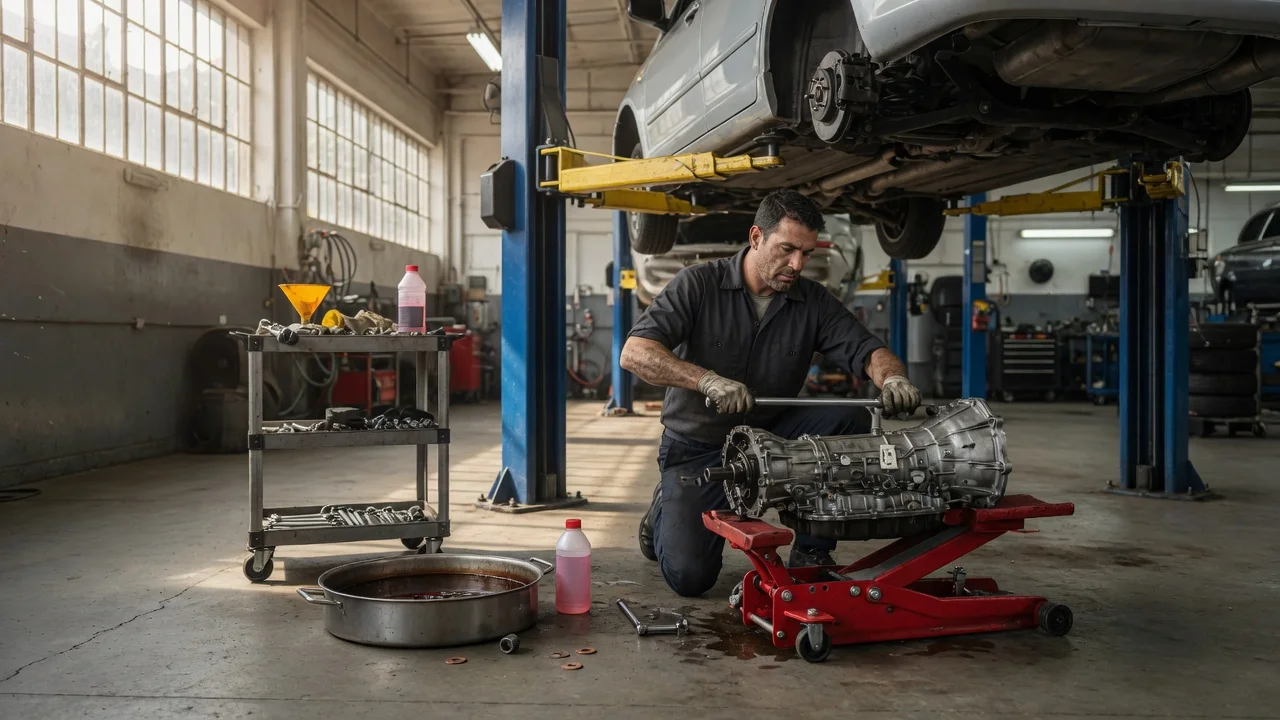
A standard transmission service, which usually replaces the fluid and the filter or screen, takes roughly 45 minutes to about two hours of labor in a professional shop or dealership. The exact time depends on whether the service is a simple drain-and-fill or a full fluid exchange, what type of transmission the vehicle has, and how accessible its service parts are.
What Counts as a Transmission Service?
The label "transmission service" can mean two different jobs, and each has a different time range. A drain-and-fill removes fluid from the pan, replaces the pan gasket or seal, changes the filter when the design allows it, and installs new fluid. A fluid exchange or flush uses a machine or the transmission's own pump to replace more of the old fluid circulating through the torque converter and cooler lines, but a flush does not automatically include changing a filter.
Typical Time by Service Type
Service Type | Typical Labor Time; Drain-and-fill with pan removal | 45–90 minutes; Drain-and-fill with filter replacement | 60–120 minutes; Fluid exchange or flush | 45–60 minutes; Flush plus filter change | 90–150 minutes
How the Transmission Type Changes the Time
The time varies by powertrain and design. A conventional automatic with a serviceable pan and replaceable filter is the most common reference point. A continuously variable transmission, or CVT, has specific fluid requirements and may take slightly different service time, while a manual transmission usually has a shorter drain-and-refill process but may still need the fill level checked at a specific temperature. A dual-clutch transmission is the most variable because some designs share the fluid with the clutch and mechatronic circuits while others keep separate fluids.
Vehicle packaging matters more than the transmission type in many cases. A rear-wheel-drive car where the transmission pan is directly accessible is quicker to service than a front-wheel-drive or all-wheel-drive model where a crossmember, exhaust component, or underbody panel must first be moved. The relevant time for a specific vehicle is best described by its service manual labor estimate rather than by the brand name alone.
What Adds Time to the Job
• Sealed or fill-through-the-dipstick-tube transmissions that require a scan tool and a set temperature to verify the correct fluid level; • Rusted or stuck pan bolts, a damaged pan, or a seized drain plug that needs repair; • A filter located above a crossmember or exhaust section that requires extra disassembly; • Incorrect prior fluid or debris in the pan that calls for extra cleaning and inspection; • Waiting for the transmission to cool to the required fill-check temperature
What to Expect from a Shop
When booking the service, ask what is included: a pan drop, filter replacement, gasket, and fluid, or only a machine flush. A shop may quote a fixed service package that includes its standard time, while a dealer or independent specialist may bill by the manual labor time for your specific model. If a fluid exchange is performed without removing the pan, the filter or screen is generally not replaced, which can shorten the appointment but leaves the original filter in place.
Plan the Visit
Leave room in your schedule beyond the service itself. A car that arrives hot may need time to cool before the technician can check the fluid level accurately. Parts availability can also extend the appointment if the shop does not keep the correct filter, gasket, and transmission fluid in stock for less common models. A realistic expectation is between one hour and three hours at the shop for a routine service, with the shorter end reserved for a prepared vehicle and a readily available parts kit.