How Long Does Transmission Replacement Take?
Direct Answer
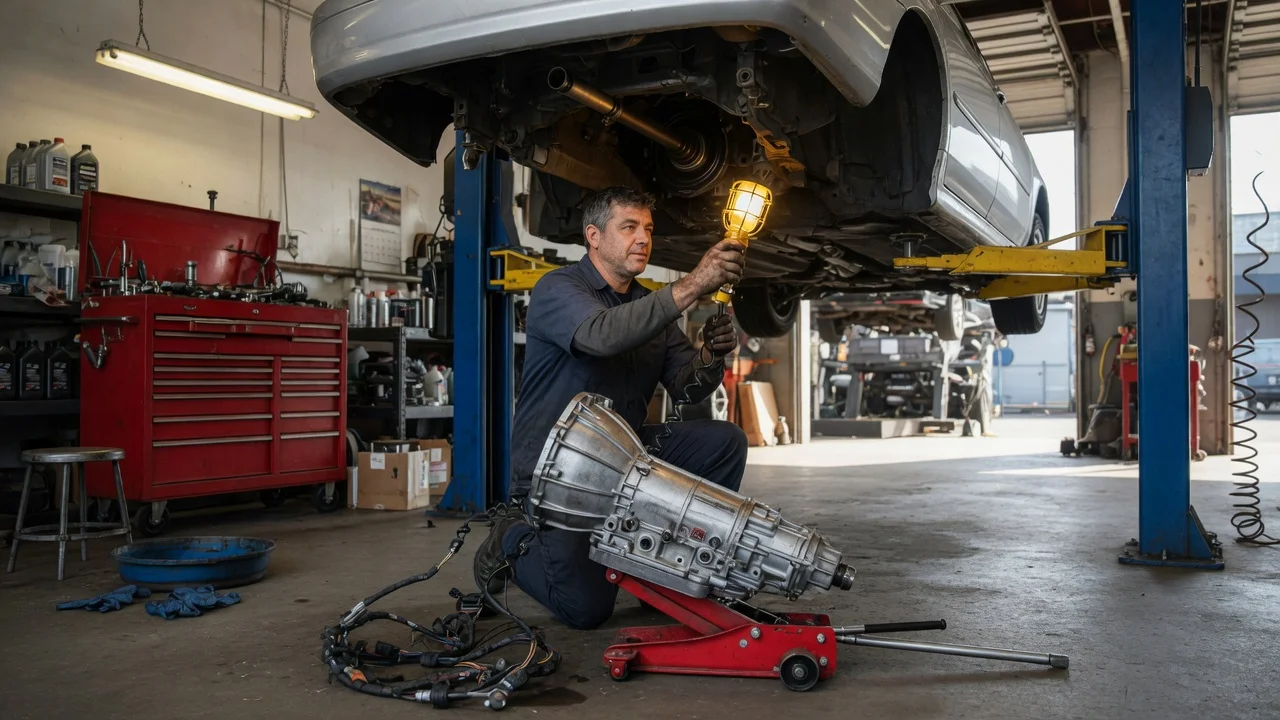
A transmission replacement commonly takes a shop between one and three working days. A straightforward swap on a common vehicle may be completed in a single day, while more involved installations can stretch to four days or longer. The total time includes removal of the failed transmission, installation of the replacement unit, fluid fill, adaptation or relearn procedures where required, and a road test. This is shop labor time, not the amount of time the vehicle is actively being worked on.
What the Time Frame Means
The most commonly cited window is one to three days for the physical labor, assuming parts are already available. The actual hands-on work is usually shorter: many experienced technicians can remove and install a transmission in roughly four to eight hours on a vehicle with normal access. Additional time is often consumed by waiting for parts, cooling or draining intervals, electronic programming, and scheduling around other jobs in the shop.
The estimate changes when the replacement unit is not on hand. If a rebuilt, remanufactured, or used transmission must be ordered or shipped, the total wait can extend from several days to more than a week before the vehicle is back on the road.
Factors That Affect Replacement Time
Vehicle design is the biggest variable. Transverse front-wheel-drive layouts, packaging around subframes, exhaust components, transfer cases, and limited engine-bay clearance can add several hours. A rear-wheel-drive vehicle with a longitudinal transmission and a removable crossmember is often comparatively direct, but specific model packaging still varies. All-wheel-drive vehicles generally require more disassembly because the transfer case and additional drivetrain components must also be separated or supported.
Replacement part source: a remanufactured, rebuilt, or used unit may have different lead times and installation requirements. Electronics: many modern transmissions require control module adaptation, sensor calibration, or software reflashing after installation. Fluid and cooler service: transmission cooler flushing or replacement adds labor and time. Fastener and corrosion condition: seized hardware, rounded fasteners, or rusted mounts can slow removal. Shop workload: an estimate may reflect scheduling rather than continuous labor. Unexpected damage: discovering collateral damage to mounts, lines, or the flywheel or flexplate can extend the job.
Manual vs. Automatic and Modern Electronics
A manual transmission replacement is not automatically faster or slower, but the clutch release system, flywheel inspection, and possible clutch replacement while the transmission is out can add related work. Many shops recommend replacing the clutch at the same time when a manual transmission is removed, which adds parts and some labor to the visit.
Automatic, continuously variable, and dual-clutch transmissions increasingly require software interaction after installation. The replacement control module or existing module may need to be programmed to the vehicle, and the transmission may need a learned-values reset. This step is often described as part of the installation rather than clearly separated from it, and it can account for an extra hour or more when access to the correct diagnostic software is available.
What You Should Ask the Shop
Ask for a written estimate that separates parts delivery time from shop labor time. Confirm whether the quoted transmission is new, remanufactured, rebuilt, or used, and whether the cost includes fluid, filters, seals, and any modules or programming. Ask whether the transmission cooler will be flushed or replaced, since contamination left in the cooler can shorten the life of a replacement transmission.
Also ask about warranty coverage and whether the shop requires a follow-up inspection after a short mileage interval. These questions matter more than a precise hour count because the realistic completion date often depends on part availability and shop scheduling more than on the physical swap itself.
Uncertainty and Model-Specific Limits
Model-specific times are not consistent enough to quote without a repair database reference for a particular year, powertrain, and drivetrain configuration. The one-to-three-day working range is a general planning figure, and an exact labor-time estimate should come from the shop's published labor guide or a documented repair-time source for the specific vehicle. If a shop gives a much shorter or much longer promise, ask what is included in the estimate and whether it covers programming, road testing, and fluid service.