How Long Does Car Suspension Last and When Should It Be Replaced?
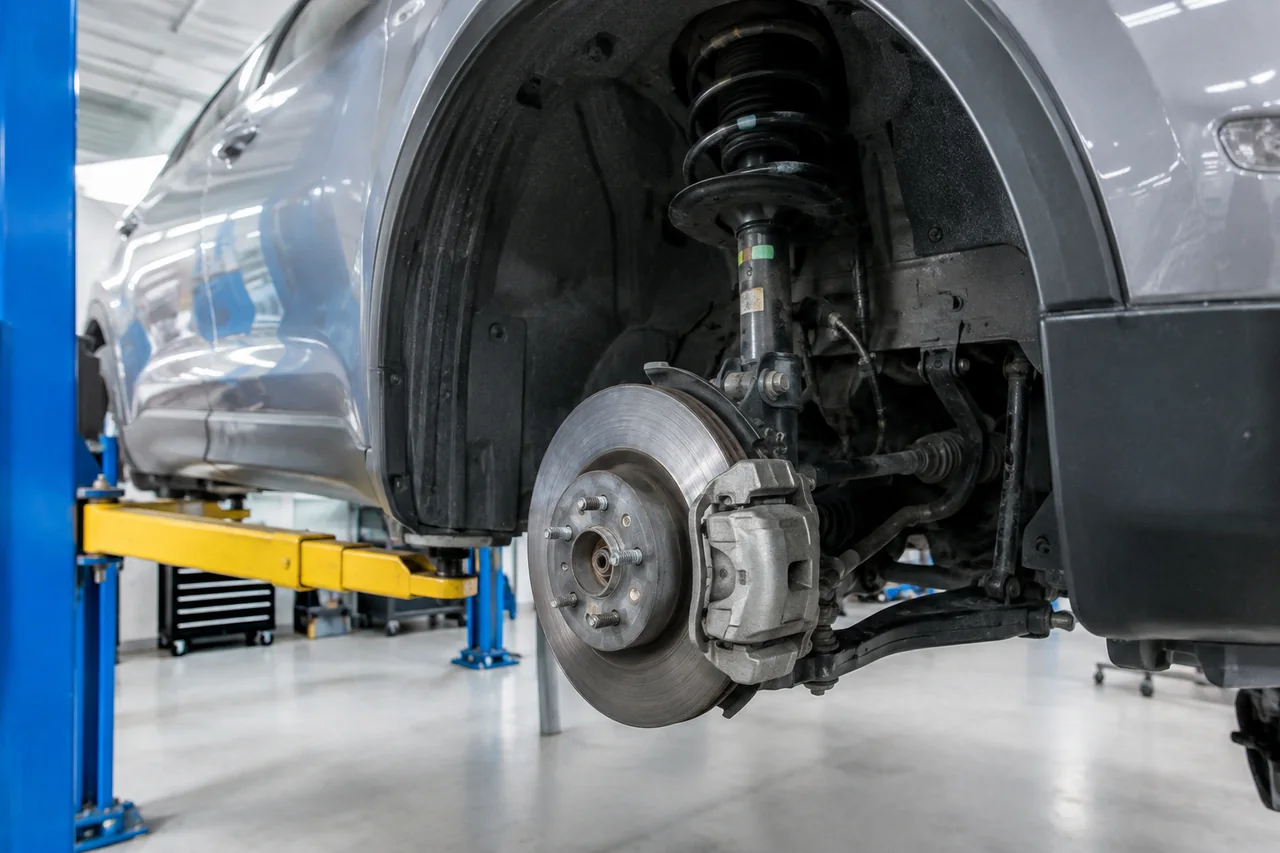
Suspension wear is rarely a single event tied to an odometer reading. How long does a car suspension last depends on shocks, struts, springs, bushings, and joints that degrade at different rates. A vehicle can ride acceptably at 70,000 miles or feel loose at 40,000 depending on roads, loads, and driving style. Because there is no universal lifespan, recognizing wear signals and judging condition by inspection gives a practical answer to when to change suspension of car components without relying on mileage myths.
How Long a Car Suspension Lasts: Why There Is No Single Answer
A suspension is not one replaceable unit but a system: dampers control spring motion, coil springs carry the body, and rubber bushings, ball joints, and sway bar links locate the wheels and absorb minor impacts. Each has its own service envelope. A high-quality damper may still be functional when bushings are cracked, or control arm joints may develop play while the springs hold their height. This is why no single mileage figure defines how long does suspension last on a car; the assembly ages as a collection of parts with different wear mechanisms.
Manufacturers often provide inspection intervals rather than replacement mileages, directing owners to check suspension hardware at each service. The owner’s manual is the most relevant reference because it accounts for the vehicle’s design and intended use. When to change car suspension is therefore a decision based on measured wear—leakage, free play, ride height loss—not a calendar anniversary. A high-mileage vehicle driven gently on smooth asphalt can have suspension parts that outlast a low-mileage one that regularly encounters broken pavement and heavy payloads.
How Shocks, Struts, Springs and Bushings Wear Out Over Time
Shocks and struts are hydraulic dampers that convert suspension motion into heat. Inside, a piston moves through oil, with valves controlling resistance. Over time, seals wear, fluid degrades, and internal clearances open, so the damper provides less resistance. The driver adapts to this gradual loss: the car may float over undulations or take an extra oscillation after a bump. Because the change is incremental, many operators do not notice until a hard stop or a passenger’s comment draws attention to the increased body motion.
Coil springs do not wear by friction, but they can sag from repeated compression, especially when consistently loaded near their limit. A sagging spring lowers ride height, changes suspension geometry, and shifts load onto the damper and tires. Springs can also crack from corrosion or impact, producing a sharp edge that may contact other parts. Rubber components such as control arm bushings, ball joint boots, and sway bar links harden with heat and ozone, then crack; once rubber separates or the ball stud develops play, the affected joint becomes a source of noise and irregular tire wear.
Driving Habits and Conditions That Shorten Suspension Life
The service life of every suspension part depends heavily on where and how the vehicle is driven. Potholes, gravel roads, and curb impacts deliver short, sharp loads that can bend a control arm, blow a strut seal, or cut a bushing. Repeated exposure to rough surfaces works the dampers harder, generating heat that accelerates fluid breakdown. A single severe impact can cause immediate failure even at low mileage; conversely, a car that lives on smooth highways may retain original dampers and joints far beyond any expected replacement interval.
Regular overloading and towing push springs and dampers to their travel extremes. A spring held near full compression for long periods can permanently sag, while dampers working against constant extra mass must dissipate more energy on every bump, leading to fade and leakage. Climate also matters: road salt accelerates corrosion of metal spring seats and strut bodies, while extreme heat hardens rubber bushings and cold makes them brittle. Aggressive cornering, hard braking, and rapid acceleration increase suspension load transfer, wearing sway bar links and control arm bushes faster than gentle operation.
Warning Signs It May Be Time to Change Your Car Suspension
The most obvious sign of weak dampers is uncontrolled body motion. After hitting a bump, the vehicle should settle in about one oscillation; continuing to bob indicates that shocks or struts are not controlling the spring. At highway speed, a floating sensation or the need for constant steering corrections can point to reduced damping authority. In turns, more body roll than usual and the car leaning on the outside front tire suggest the dampers and sway bar components are not resisting weight transfer effectively.
Clunks and knocks over low-speed bumps often trace to worn ball joints, sway bar links, or strut mounts. A metallic rattle from one corner may be a link with a loose bushing; a heavy thud when turning can be a failing ball joint. Nose-dive under braking and rear squat under acceleration are classic damper deficiencies. Visible clues include oil residue on the shock or strut body, uneven ride height when parked on level ground, and cupped or feathered tire wear. These symptoms narrow the search but do not prove which part has failed; a proper inspection is required.
When to Replace Suspension Components and What the Job Usually Involves
Replacement decisions follow from inspection evidence: a damper covered in oil, a torn boot allowing grit into a ball joint, a spring with a visible crack, or a bushing with excessive movement on a pry bar. Because dampers do not wear evenly side to side, shocks and struts are replaced in pairs on the same axle to maintain balanced damping and predictable handling in emergency maneuvers. Installing a new damper on one side only can leave the vehicle with different roll rates left and right, reducing stability.
Any suspension work that changes alignment angles—such as strut replacement, control arm removal, or tie rod work—should be followed by a wheel alignment. The technician can confirm the need based on the parts replaced. During the repair, related components like strut mounts, bump stops, and dust boots are often addressed at the same time because labor to reach them is already incurred; however, compatibility depends on the vehicle design and should be discussed with the service provider. Ignoring worn suspension risks longer stopping distances, vague steering, and accelerated tire wear.
Safe Checks at Home and When to Get a Professional Inspection
A safe visual check begins with the vehicle parked on level ground and the engine off. Look under the front or rear of the vehicle for wetness on shock or strut bodies, cracked rubber boots around ball joints and steering linkages, and any obvious sag at one corner. Inspect the tire tread by hand for cupping or uneven wear across the face. However, many suspension parts are hidden behind wheel assemblies and cannot be fully assessed without raising the vehicle; a jack and jack stands are required for any under-car inspection, and a standalone floor jack is never sufficient support.
The classic bounce test—pushing down firmly on each corner and seeing whether the body returns quickly—can reveal severely worn dampers, but it cannot evaluate springs, bushings, or joints. A car with good shocks but a cracked control arm bushing will pass the bounce test. Therefore, a professional inspection on a lift is advisable when symptoms appear, after an impact with a pothole or curb, or when the vehicle pulls or wanders. Many drivers conveniently combine suspension checks with tire rotations or alignment services, since the wheels are already off and the suspension is accessible.