How Long Do Sway Bar Links Last?
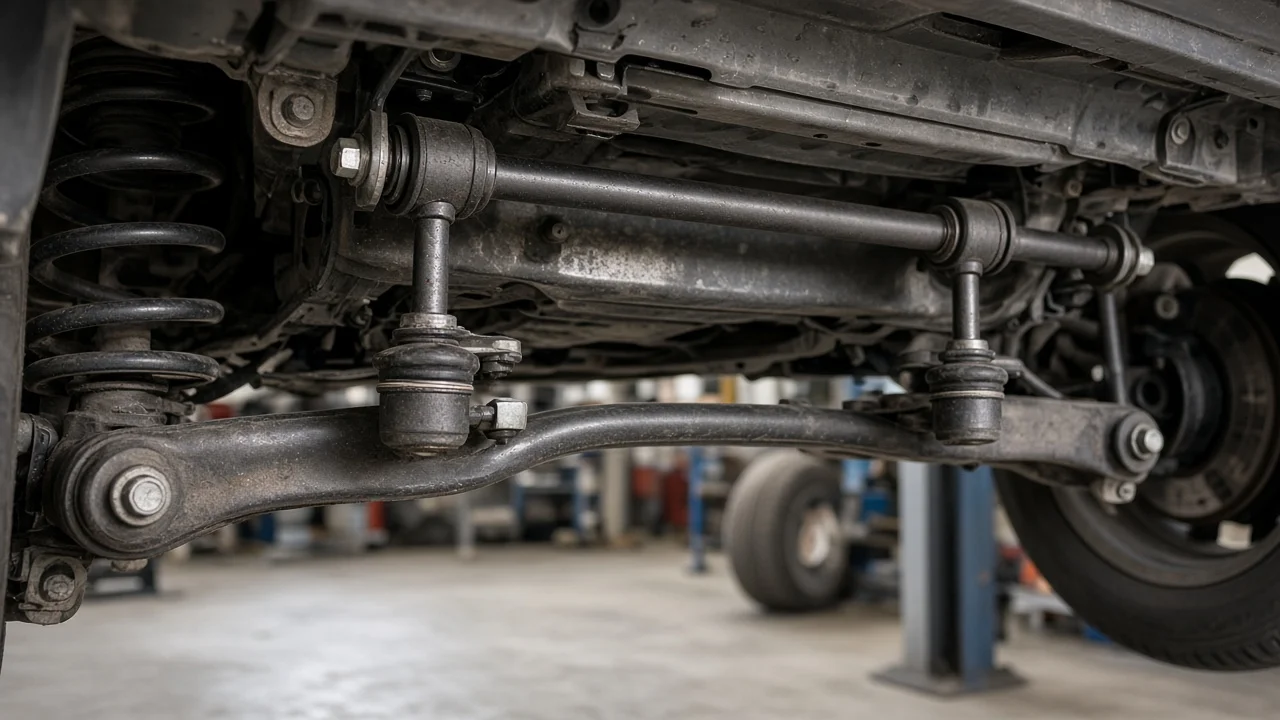
Sway bar links rarely come with a fixed replacement mileage. They are wear parts, and their lifespan depends on design, road conditions and how the vehicle is used, so two owners of the same model can see very different results. This guide explains what determines how long sway bar links last, what wears them out, how to check yours, and when to rely on vehicle-specific service information or a professional inspection instead of a general rule.
The Short Answer
No single mileage or age applies to every sway bar link. Some links stay tight for most of a vehicle's life, and others develop play or noise much sooner. Sway bar links are usually treated as wear items rather than parts with a fixed replacement interval. Where a maintenance schedule covers them, it typically calls for periodic inspection of suspension and steering components. The honest answer is that a link lasts as long as it keeps passing inspection. Your owner's manual, the manufacturer specifications for your exact vehicle configuration and the vehicle's service history are better guides than any universal figure.
In practice, a link is due for replacement when inspection finds any of the following: noticeable looseness at a joint, a torn or missing boot, a bent or cracked body, a damaged stud or thread, deteriorated bushings, or a confirmed knock traced to that link. Age or mileage alone is not a reason to replace a link that is tight and undamaged. On an older vehicle, though, badly corroded hardware may justify replacement once the link has to be removed for other work.
How Sway Bar Links Work and Wear Out
The sway bar, also called a stabilizer bar or anti-roll bar, is a steel bar that connects the left and right sides of the suspension on one axle. When the body leans in a turn, the bar twists and resists that roll. The sway bar links are the short connectors between the ends of the bar and a suspension part such as a control arm or strut. They carry load every time one wheel moves up or down relative to the other. That happens constantly on ordinary roads, not only in corners.
Most links use either small ball joints at each end or rubber or polyurethane bushings held by a bolt. A ball-type joint relies on a sealed socket packed with lubricant and protected by a rubber boot. While the boot stays intact, wear is gradual. Once the boot splits, water, grit and road salt get in and the lubricant washes out. The ball and socket then wear quickly, and the resulting play turns into a clunk or rattle. Bushing-type links wear differently. The rubber or polyurethane can crack, compress permanently or shift, which lets the bolt and washers move and knock. In both designs, corrosion of the stud, nut or link body can also end the link's useful life.
What Changes the Lifespan
Operating conditions have the largest influence. Rough or broken pavement, potholes, speed bumps, gravel roads and off-road use make the links cycle more often and through larger movements. Climates that use road salt, and frequent driving through water and mud, attack boots, studs and fasteners. Carrying heavy loads or towing increases the forces in the suspension, and hard cornering loads the bar further. A vehicle driven mostly on smooth highways in a dry climate is usually easier on its links than one driven daily on rough, salted roads.
Vehicle configuration matters too. Link designs, lengths and materials differ between models, and sometimes between the front and rear axles of the same vehicle, so one end may need attention before the other. Lifting or lowering a vehicle changes the angle at which the links operate. If the original links are kept, the joints can be pushed toward the limit of their travel, which can speed up wear or cause binding. Adjustable or extended links are often used to restore the geometry after such changes. Off-road vehicles with sway bar disconnects have their own hardware and wear points.
Parts quality and installation also affect the result. Replacement links vary in construction, boot quality and fastener finish, and a correctly made link can still fail early if it is installed badly. New parts can be damaged by overtightening or by spinning a stud with an impact tool when it should be held with a wrench. Bushing-type links can also be damaged if they are tightened with the suspension hanging rather than in the position the manufacturer specifies. Worn sway bar bushings, struts or control arm bushings elsewhere in the suspension can change how loads reach the links.
How to Check Your Sway Bar Links
The most common sign of a worn link is a clunk, knock or rattle from one corner at low speed over uneven surfaces, driveway ramps or small bumps. It is often more noticeable when only one wheel hits a bump. Some owners also notice more body lean, a less settled feel in turns or a loose sensation when changing direction. Other suspension parts can cause the same symptoms, so treat them as a reason to inspect rather than as a diagnosis.
Start the inspection with a visual check. Look at each link for torn, cracked or missing boots, grease flung onto nearby parts, a bent body, heavy rust on the studs and nuts, and split or flattened bushings. To check for play, park on a level surface and support the vehicle safely on proper jack stands or a lift; never rely on a jack alone. When one wheel hangs, the bar can preload the links and hide play, so play is easier to judge with the suspension loaded or both sides at the same height. Grip the link and try to move it, or watch the joint while a helper rocks the vehicle or gently pries at the bar. A knock you can feel or visible movement inside a joint usually means the link is worn. Comparing the left and right sides helps you judge what is normal.
Replace a worn link with a part that matches your vehicle configuration, including any lift or lowering, and tighten the hardware to the manufacturer's torque specification. Many technicians replace links in pairs on the same axle, especially when both are the same age, but a single failed link can be replaced if the other one inspects well. After the repair, drive over the same surface that produced the noise to confirm it is gone. Record the date, mileage and part in the service history so future inspections have a baseline. If the vehicle is already in for suspension, alignment or tire work, ask the shop to look at the links at the same time.
Limitations and When to Get Help
A general guide cannot predict how long the links on your particular vehicle will last. Noises that sound like a sway bar link can also come from: • sway bar bushings; • strut mounts; • ball joints; • tie rod ends; • control arm bushings; • exhaust hangers; • loose heat shields; Replacing links based on sound alone can leave the real fault in place. Published lifespan estimates are not guarantees for any specific car or part.
For vehicle-specific information, use the owner's manual and maintenance schedule, a service manual for your exact model and drivetrain, and the parts catalog for your configuration. Have a qualified technician inspect the suspension and steering if you cannot support the vehicle safely or the noise continues after a repair. The same applies if the noise comes with loose steering, wandering or uneven tire wear. Those symptoms can involve components that affect control of the vehicle, so a professional inspection is the right next step.