How Long Do Control Arm Bushings Last?
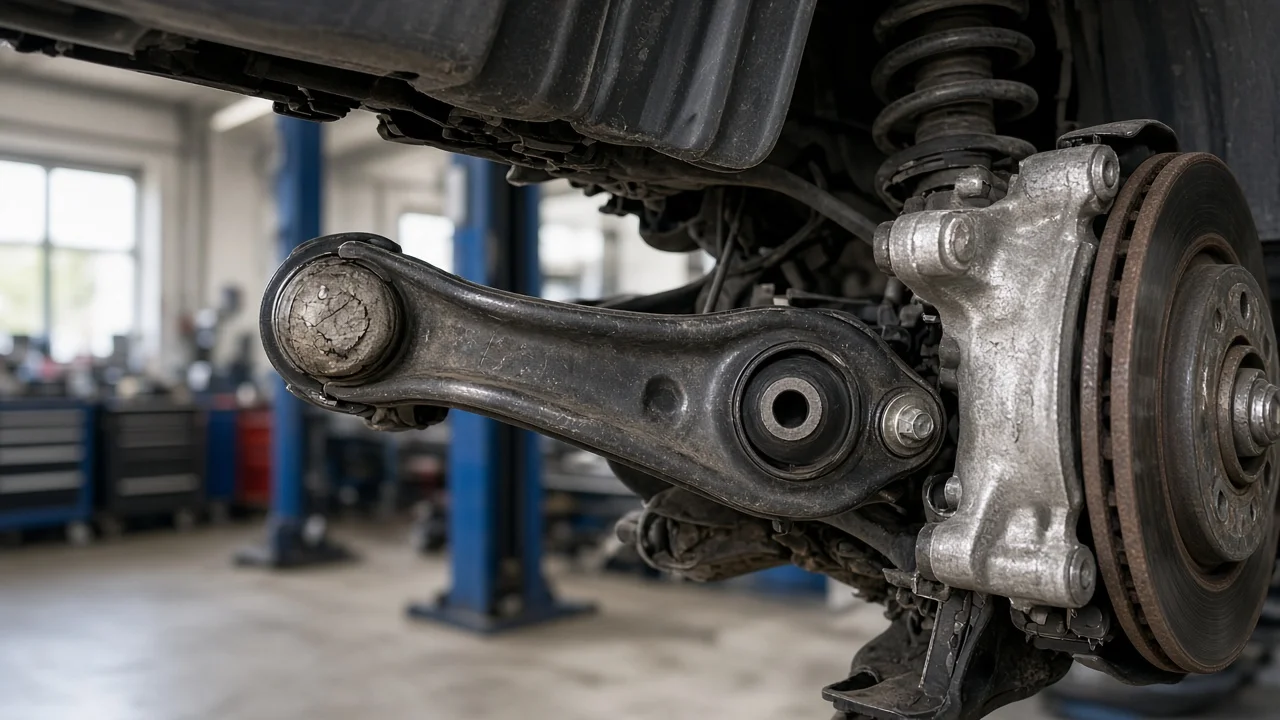
Control arm bushings rarely get attention until a clunk shows up over a speed bump or the car starts wandering on the highway. These rubber or polyurethane parts locate the suspension and absorb road shock every mile you drive. This guide covers how long control arm bushings tend to last, what wears them out faster, and how to tell when yours need attention.
The Short Answer
There is no fixed replacement interval for control arm bushings, and most maintenance schedules do not list one. They are replaced based on condition, not mileage. In everyday driving, many original rubber bushings last somewhere around 50,000 to 100,000 miles. Some last considerably longer on vehicles driven gently on smooth roads. Others crack or develop excess movement much sooner, especially on heavy vehicles, on rough roads, or in hot climates.
Age matters as much as distance. Rubber degrades over time from heat, ozone and contact with oil. A car that is ten or fifteen years old can have hardened, cracked bushings even if it has covered relatively few miles. Treat the mileage range as a rough expectation, and let an actual inspection decide whether replacement is due.
How Control Arm Bushings Work and Wear Out
A control arm connects the wheel's steering knuckle to the vehicle's subframe or body. Bushings sit at the mounting points where the arm pivots. A typical rubber bushing is a metal inner sleeve and an outer shell with rubber bonded between them. As the wheel moves up and down, the rubber twists instead of sliding, so it needs no lubrication. It also filters vibration and noise and holds the arm in a precise position. That position keeps alignment angles consistent during braking, acceleration and cornering.
Every bump flexes the rubber a little. Over years and many thousands of cycles, the rubber fatigues. It can crack, tear, or separate from its sleeve. Some vehicles use fluid-filled bushings for better damping, and these can leak and lose their damping. Once a bushing loses its grip, the arm can shift under load. That changes the wheel's alignment while you drive, which shows up as clunks, vague steering or uneven tire wear. Installation also affects lifespan. A bushing tightened while the suspension hangs at full droop is twisted at normal ride height, so it carries constant stress and tends to fail early.
What Changes How Long They Last
Bushing position and design make a large difference. On many front suspensions, the lower control arm bushings absorb braking and acceleration forces, so they usually work harder than upper arm bushings. Larger bushings with voids or fluid chambers ride more comfortably but can wear differently from solid rubber designs. Multi-link rear suspensions have many bushings, and they may not all wear at the same rate.
Operating conditions matter just as much. Extra weight from towing, heavy payloads or a heavier vehicle increases the load on every bushing. Potholes, gravel roads, off-road use and hard driving add sharp impacts and large deflections. Heat near the exhaust or engine speeds up rubber aging. Road salt can corrode sleeves and brackets. Engine oil or power steering fluid leaking onto a bushing softens and swells the rubber, which can shorten its life dramatically.
Modifications change the picture too. Lifting or lowering a vehicle moves the bushings away from the neutral position they were designed around, which adds constant twist. Aftermarket polyurethane bushings are stiffer and often resist tearing, but they transmit more noise and vibration. Many designs rotate on their sleeve and need periodic lubrication to avoid squeaking. Their durability varies widely from product to product.
Signs Your Bushings Need Attention
Common symptoms include a clunk or knock over bumps, steering that wanders or needs constant correction, a pull or shimmy under braking, and vibration felt through the steering wheel. Uneven tire wear on the inner or outer edge is another sign. Worn ball joints, tie rod ends, sway bar links and struts can cause the same symptoms, so symptoms alone point you toward an inspection rather than a diagnosis.
For a visual check, use proper vehicle support. Park on level ground, chock the wheels, and place jack stands at the manufacturer's lift points. Never work under a vehicle held only by a jack. Then look for deep cracks, rubber torn away from the sleeve, an inner sleeve sitting noticeably off-center, missing chunks, or wet residue around fluid-filled bushings. Shiny rub marks where metal parts have contacted each other are also a warning sign. Fine surface cracking on old rubber is often cosmetic. Deep splits and separation are not.
To check for movement, have a helper rock the steering wheel or apply gentle pressure while you watch the arm at each bushing. Excess movement, or metal moving visibly within the rubber, suggests wear. Be careful to separate bushing movement from ball joint joint play by noting exactly where the motion happens. Some voided bushings are designed to flex noticeably in one direction, so compare what you see against the vehicle's service information.
Replacement Choices and Installation
You can either press new bushings into the existing arm or replace the complete control arm. A complete arm usually comes with new bushings and often a new ball joint, which saves labor and avoids the need for a press. Pressing bushings costs less in parts but needs the right tools. Voided or fluid-filled bushings must also be installed in the correct orientation.
Proper installation largely decides how long the new bushings will last. Many manufacturers require the pivot bolts to be fully tightened with the suspension loaded at normal ride height, not hanging free. Use the fastener specification from the service manual for your exact vehicle. Some bolts are designed for one-time use and must be replaced. Because control arm position affects alignment on most vehicles, schedule a wheel alignment after the job. When both sides show wear, replacing them as a pair keeps handling balanced.
Limitations and When to Get Help
Typical lifespans describe broad patterns, not your specific vehicle. Nobody can reliably say how many more miles a worn bushing has left. Wear can progress slowly for a long time or quickly after a hard impact. Worn bushings also add stress to ball joints and tires. A badly torn or separated bushing that affects steering or braking stability should be inspected promptly rather than monitored indefinitely.
Professional help makes sense if you lack safe lifting equipment, a bushing press or vehicle-specific service information. It also makes sense if you cannot pin down the source of a clunk. A suspension specialist can separate bushing wear from other worn parts, and an alignment check will confirm whether the geometry is holding. A practical next step is to have the bushings looked at during your next tire rotation, especially if the vehicle is older or you have noticed any of the symptoms above.