How Long Can an EV Charging Cable Be? Choosing the Right Length
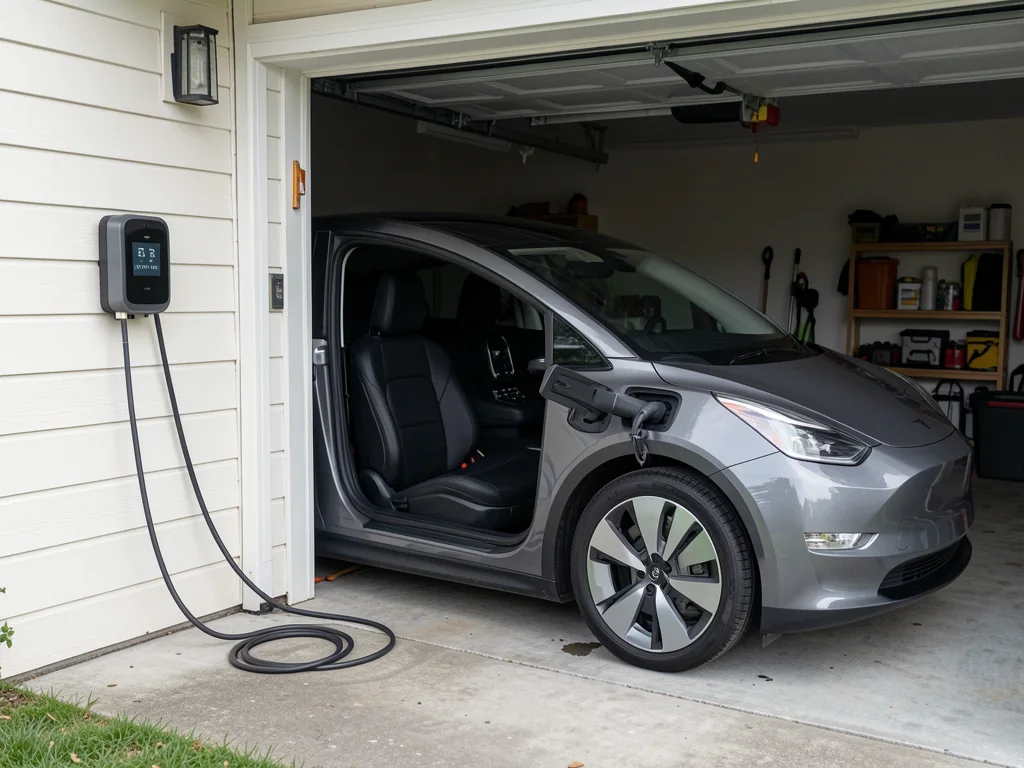
Choosing an EV charging cable length means matching the distance between charger and car without leaving the lead stretched or coiled dangerously. A long EV charging cable can provide flexibility, but only if the usable cable reach suits the charge port location and installation. The longest EV charging cable in a catalog may be far more than ordinary parking requires. Before buying an extra long EV charging cable, consider connector type, voltage drop, and how you will handle and store the heavier lead.
What Determines an EV Charging Cable’s Usable Length?
There is no single worldwide maximum for every EV charging cable because connector systems, charging equipment, and installation rules vary. Many residential charging units are supplied with a tethered charging lead from roughly 15 to 25 feet, but the exact length must be checked for the particular equipment. Some products are detachable charging cable assemblies that plug into both the vehicle and a charging station, while other units have permanently attached cables.
The vehicle charging lead is the flexible cord fitted with a connector for the car's inlet. It is distinct from the power-supply cord that feeds the charging station from the building wiring. Advertised cable length does not equal straight-line parking reach. Mounting height, required bends around the bumper or garage wall, obstacles, and the slack needed for connecting and disconnecting all consume usable length. A 20-foot cable may only comfortably serve a car parked 12 feet away.
Measuring a Parking Space for a 2–8 Meter Cable
Measure the actual safe route from the charger outlet or the point where the cable exits the equipment to the vehicle’s charge port with the car in its normal parking position. Follow the cable’s path around corners and over or under obstructions rather than measuring a straight line. Short EV charging cables such as a 2-meter type can work when the vehicle inlet is adjacent to the wall unit, but the same length may be useless if the port is on the far side of the car.
Useful metric conversions for this range are: 2 meters equals about 6.6 feet, 5 meters is approximately 16.4 feet, 7 meters is about 23 feet, and 8 meters is about 26.2 feet. Allow gentle slack for connecting and disconnecting without pulling on the charge port or forcing tight bends near the connectors. A 5m EV charging cable or Type 2 EV charging cable 5m generally requires confirmation of the vehicle inlet, charging-station socket, and electrical current rating. Type 2 terminology commonly refers to equipment used outside North America.
Planning the Route for a 30-Foot or 10-Meter Cable
Converting the queried lengths shows why a 30-foot or 10-meter cable is popular for driveways and garages where the charger is not close to the car. Thirty feet is about 9.1 meters, and 10 meters is roughly 32.8 feet. If a wall charger is mounted near the garage door but the car must park nose-in with the port at the rear left fender, a straight measurement might be only 18 feet. Running the cable safely along the wall and around the rear bumper can require the extra reach.
For a detachable 10-meter Type 2 cable, check both connector ends: the plug that fits the charging station and the connector inserted into the vehicle. Supported electrical ratings, including current capacity, must match the equipment’s output and the cable’s certification. Review the charging equipment’s instructions for any recommended maximum lead length. A 10m EV charging cable or 10m EV charging cable Type 2 should also be stored without tight kinks when not in use, as repeated sharp bending can damage conductors.
Checking a 15-Meter or 50-Foot Charging Cable
A 15-meter cable is approximately 49.2 feet, while a 50-foot cable is about 15.2 meters. These are often considered extra long for home charging. Before selecting one, confirm that the complete charging setup supports the proposed cable length. Some portable charging units have limits on extension cord use, and the vehicle’s inlet and onboard charger operate within voltage ranges that a longer cable can reduce. Manufacturer instructions or installers may specify a maximum permitted lead length for a given station.
Practical handling demands increase significantly at this size. A 15m EV charging cable or 15m EV charging cable Type 2 weighs more, takes longer to coil, and needs a storage location that avoids tight bends. When connected, the cable must not hang unsupported from the vehicle inlet, as this strains the connector pins. For 15-meter Type 2 products, documented connector and electrical suitability is required. Do not assume that because a product is sold, it is approved for every vehicle, station, or local installation.
What Sets the Practical Maximum at 20, 30, or 50 Meters?
Searches for the longest EV charging cable or an extra long EV charging cable often arise when parking is far from an outlet. Converting lengths: 20 meters is about 66 feet, 30 meters is about 98 feet, and 50 meters is about 164 feet. These are not common residential charging cable lengths and may exceed the design limits of standard equipment. A product listing showing a 50m EV charging cable or 30m EV charging cable does not by itself prove safe or permitted use with a particular charger and vehicle.
Exceptional lengths require verification of the complete equipment design, certification scope, manufacturer support, and applicable local installation requirements. For example, a 20m EV charging cable or 20m Type 2 EV charging cable might be intended for a specific high-power station or a commercial setting. When a cable of this size is being considered because the charger cannot be moved closer, a qualified installer must assess charger placement and the intended route. Exclude field modification or splicing of cables to make them longer; this introduces dangerous resistance and failure points.
How Cable Length Affects Voltage Drop and Handling
Conductor resistance causes voltage drop along any cable, and this drop increases with length. Heat also rises with charging current and small conductor cross-sectional area. A longer cable with insufficient conductor size can become warm and reduce the voltage reaching the vehicle. However, charging speed cannot be predicted from cable length alone. Vehicle charging limits, supply voltage, station output, and temperature all affect the final charge rate, so a 30-foot cable does not automatically charge slower than a 15-foot one if both are designed correctly.
Any complete charging cable assembly must have documented electrical ratings verified for the installation. Do not attempt conductor sizing or alteration without proper engineering. Safe observation matters: after charging, run a hand near the cable and connectors. Visible damage, discoloration, a burning odor, or repeated charging interruptions are warning signs. If any of these occur, stop using the cable and arrange professional assessment. Unusually hot spots indicate excess resistance, often at a damaged or poorly connected termination.
Routing the Cable in a Garage, Driveway, or Street Parking Space
In a garage, route the cable around storage and the vehicle, but keep the connectors off the floor and supported. If the charger is mounted high, the cable should not hang with a tight bend at the station or the car. Follow the manufacturer’s cable-storage instructions when coiling a detached lead; hanging it from a hook can distort the cable if the bend radius is too small. Never let the cable lie where a garage door or wheel can crush it.
For driveways, consider parking orientation and the actual charge port position. A rear-mounted port on a car parked nose-in may need a longer route than a front port. Outdoor equipment must be suitable for weather exposure, and the cable should stay clear of tires and pinch points. For street parking, sufficient reach does not authorize crossing a public sidewalk. Local permission and an approved accessible routing arrangement, such as an overhead cable support, may be necessary. When selecting, check measured reach, connector fit, electrical ratings, equipment approval, safe routing, and manageable storage.