How Lane Keeping Assist Works: Sensors, Warnings, Symbols and Limits
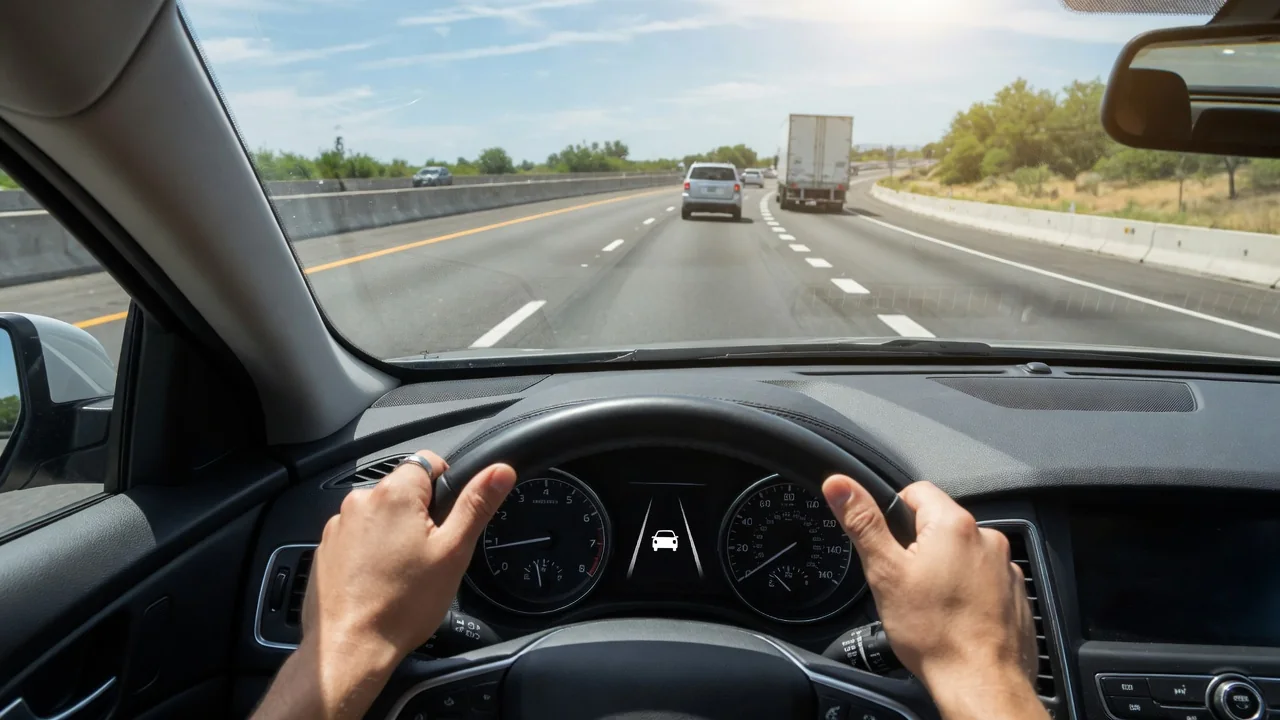
Lane-keeping assist is one of the most common advanced driver assistance systems on newer vehicles. Still, many drivers aren't sure what it actually does, what its dashboard icon means or why an inoperative message suddenly appears. It helps to know how the camera reads lane markings, how steering correction is applied and where the system's limits are. Then you can use it with confidence and respond sensibly when it stops working.
What Lane Keeping Assist Is and What It Is Designed to Do
So what is lane keeping assist? It is a driver assistance feature that helps stop the vehicle from drifting out of its lane by accident, such as during a moment of distraction or fatigue. Lane keeping assist is a safety feature that can warn the driver. On many vehicles, it can also apply a gentle steering correction that nudges the car back toward the lane. It does not steer the car for you, and it is not a self-driving system.
Active lane keeping assist usually means a version that can apply corrective input instead of only giving a lane departure warning. The exact meaning depends on the manufacturer, because automakers use different feature names, activation speeds and correction styles for similar technology. One brand's lane keeping assist may behave like another brand's lane centering. The owner's manual is still the best source for how the system in your vehicle is meant to behave.
How the System Reads the Road and Corrects a Drift
Lane keeping assist starts with a forward-facing camera, usually mounted near the rearview mirror behind the windshield. The camera watches painted lane lines and, on some vehicles, the road edge where pavement meets grass or gravel. Software estimates where the vehicle sits within the lane and which way its path is heading. If the car moves toward a line with no turn signal on, the system treats the movement as an unintended drift rather than a planned lane change.
Correction methods vary by vehicle. Many systems apply light steering torque through the electric power steering motor, which the driver feels as a gentle push on the wheel. Some vehicles use selective braking on individual wheels instead, which turns the car slightly back toward the lane. Most systems also need certain operating conditions before they will step in at all. These include a minimum vehicle speed, clearly visible markings and hands-on-wheel detection.
Lane Keeping Assist Symbol, Icon Colors and Acoustic Warnings
The lane keeping assist symbol often shows a car between two lane lines, sometimes with a steering wheel or curved arrows added. The exact design varies by manufacturer. The icon often changes color or appearance to show what state the system is in. A gray or white icon may mean standby, green may mean the system is active and detecting lines, and amber or yellow may mean a fault. Check these meanings in your owner's manual, because the conventions differ between brands.
Warnings can take several forms. Depending on the vehicle, the lane keeping assist system warns you with acoustic signals such as chimes or beeps, steering wheel vibration, or visual alerts on the instrument cluster. Hands-on-wheel reminders appear when sensors detect little or no steering input for a period of time. If the driver ignores these reminders, the system usually escalates its alerts and may eventually switch off assistance until the driver holds the wheel again.
How Lane Keeping Assist Relates to Lane Following and Road Departure Features
Several related features are often confused. Lane departure warning only alerts the driver when the vehicle approaches or crosses a line. Lane keeping assist goes a step further by reacting near the lane edge with a corrective nudge. Lane following assist, often called lane centering, works differently. It tends to keep the car centered all the time and usually works together with adaptive cruise control on highways.
Road departure mitigation deals with a different risk: leaving the road surface entirely. These features may use road edge detection and, in some cases, braking as well as steering to help keep the car on the pavement. The main difference from lane keeping assist is which boundary the system protects, although definitions vary by brand. For model-specific questions, such as how lane keeping assist works on a Mercedes-Benz GLE 350, check that vehicle's owner's manual and driver assistance settings menu.
Why Lane Keeping Assist Shows an Inoperative or Unavailable Message
A lane keeping assist inoperative or unavailable message is not always a sign of a broken part. The camera needs a clear view of the road. Faded or missing lane lines, low sun glare, heavy rain, snow or fog can turn the feature off temporarily. A dirty, iced or blocked windshield area in front of the camera has the same effect. So can driving outside the operating speed range or going through a sharp curve.
When an active lane keeping assist inoperative message persists, an underlying problem becomes more likely. A camera knocked out of alignment by a windshield replacement or a collision may stop the system from trusting what it sees. Wiring problems, control module faults and steering system faults can also disable it. Get the system professionally diagnosed if the message stays on in clear driving conditions, or appears alongside other driver-assist warnings such as adaptive cruise control alerts.
Safe Checks to Try and When Professional Testing Is Needed
If you want to know how to fix a lane keeping assist inoperative message, start with some safe checks. Clean the windshield area in front of the camera, inside and out where you can reach, and remove any ice or stickers. Make sure the feature is turned on in the driver assistance settings, since it may have been switched off. Then park somewhere safe, turn the vehicle off and restart it normally to see whether the message clears.
Lane keeping assist fuse location varies by vehicle, so use the owner's manual to find the correct fuse panel and diagram rather than guessing. Calibrating the camera after a windshield replacement or a collision usually needs specialized targets, equipment and procedures from a qualified shop. Stored diagnostic codes must be read with a suitable scan tool and interpreted with manufacturer-specific information. A code is evidence, not proof that a part has failed. Until repairs are done, drive attentively without the feature, and never modify or bypass it.
Is Lane Keeping Assist Dangerous? Limits and Driver Responsibility
Is lane keeping assist dangerous? The system is designed to help, but trusting it too much or not understanding its limits can create risk. The camera may struggle in construction zones with shifted lanes, where lanes merge, on worn markings, or where tar seams, pavement repairs and shadows look like lines. Bad weather and wet roads that reflect light can also confuse it. The result can be a missed drift or an unexpected correction.
Unexpected steering input can be startling, but you can usually override it by steering normally, because the correction is designed to be light. The driver stays responsible for steering and lane position at all times, no matter how capable the system seems. If the assistance feels intrusive, you can usually adjust the sensitivity or warning type, or turn the feature off, as described in the owner's manual.