How Key Fob Programming and Pairing Work, and Why It Can Fail
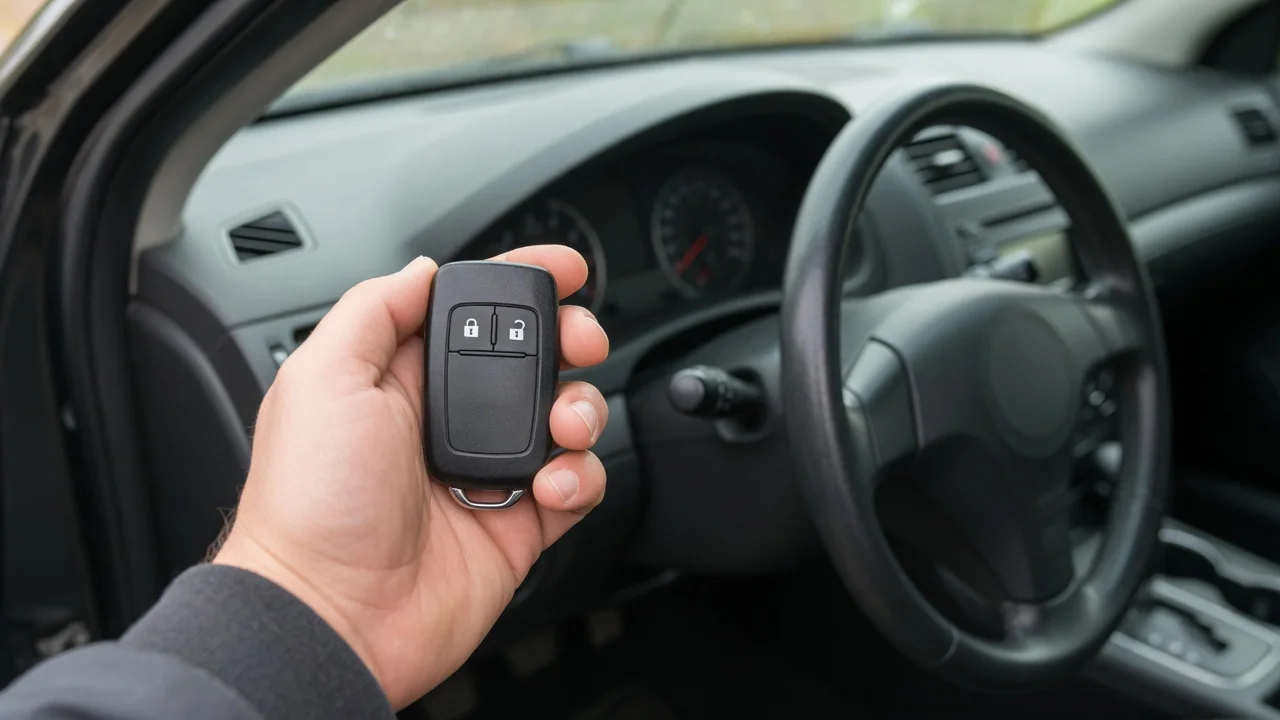
A new or replacement key fob is only useful once the vehicle recognizes it, and that process can be more involved than it looks. Remote keyless entry, the engine immobilizer, and push-button start may each rely on separate programming. Here's how pairing works, why Ford key fob programming sometimes doesn't work, which checks are safe to make, and when professional help makes sense.
What Key Fob Programming and Pairing Actually Do
Most modern fobs do two separate jobs. The remote keyless entry side sends radio signals for lock, unlock, trunk release, and panic. The transponder key side is often a small chip in the key head or fob body. It talks to the engine immobilizer so the engine is allowed to start. Because these functions may be stored in different modules, a fob can unlock the doors and still fail to start the engine. It can also start the car while its buttons do nothing.
Pairing means the vehicle's module learns and stores the fob's unique identity. After that, it accepts that fob's signals and ignores all others. Not every key learns the same way. A traditional key with a remote head, a flip key with a folding blade, and a proximity key used with push-button start often follow different programming paths. A proximity fob usually has to be registered for both its remote button functions and its passive entry and starting role.
Owner Programming vs. Dealer or Locksmith Programming
On some vehicles, owners can add a remote without tools by using an onboard programming procedure. Others need diagnostic or key-programming equipment that communicates directly with the vehicle's modules. Whether onboard programming is possible depends on make, model, year, and key type. Confirm it in the owner's manual or with a dealer. A common way to waste effort is assuming a method exists because it worked on a similar vehicle.
Where onboard programming is supported, it often needs one or more already working keys to authorize the new one, and the number varies by vehicle. The general pattern starts with putting the vehicle into programming mode through a specific series of ignition, door, or button actions. You then press a button on the new fob within a set time and watch for a confirmation, such as the locks cycling. The exact order matters, so use instructions written for your specific vehicle.
Why Ford Key Fob Programming Might Not Work
Ford programming procedures differ by model, year, and key type. Instructions written for one Ford vehicle may not work on another, even within the same lineup. When programming fails, there are four usual causes. The procedure may be wrong for that vehicle, or the steps may have been done too slowly or out of order. A required working key may be missing. Or the fob battery may be too weak to send a strong signal while the vehicle is trying to learn it.
An aftermarket or used fob adds more uncertainty. It may use a different frequency or chip, or it may already be locked to another vehicle and impossible to reprogram. Confirm compatibility with the seller or a professional before buying instead of guessing. A programming attempt can also time out quietly, and the vehicle may give little or no sign that pairing failed. Check the owner's manual or a Ford dealer for the correct method rather than relying on generic online steps.
Safe Checks to Make Before Trying Again
Start with the fob itself. Most fobs run on a coin cell battery, and the owner's manual usually lists the correct type and explains how to open the case. While it's open, look for corrosion, a loose battery clip, worn button contacts, or cracks that could let moisture in. Then try any other fobs you already have. If they all work normally, the problem is probably the new fob rather than the vehicle.
Check the vehicle's 12-volt battery too. A weak battery or low system voltage can disrupt communication between modules during programming, so it's reasonable to have the battery tested before trying again. During each attempt, write down exactly what happens: whether the locks cycle, chimes sound, a message appears on the dash, or nothing happens at all. A detailed record like this gives a technician a useful starting point if the job ends up in a shop.
Symptoms That Point Beyond the Fob Itself
Some symptoms suggest the problem goes beyond the fob. The vehicle side may be involved if no fob works, if range comes and goes, or if a security or key warning appears on the dash. Pairing can be blocked by radio interference from nearby transmitters, a damaged receiver or antenna, or a fault in a body control or security module. An owner can't confirm any of these just by watching how the car behaves.
Dash warnings and stored diagnostic codes are evidence to interpret, not proof that a particular part has failed. They need to be read with proper equipment and interpreted for that exact vehicle, because code meanings and module behavior often depend on the manufacturer. A generic definition may not apply. Avoid disconnecting modules, probing wiring, or trying to bypass the immobilizer. These shortcuts can create new faults, weaken the vehicle's security, and make the original problem harder to diagnose.
When to Call a Dealer or Automotive Locksmith
Professional equipment is usually needed in four situations: no working keys remain, immobilizer key programming is required, the fob is a proximity key for push-button start, or repeated onboard attempts have failed. Before the appointment, gather proof of ownership, such as the registration or title. Also have the vehicle identification number (VIN) ready, and bring every key and fob you have. Some systems may relearn all keys during a programming session.
Both dealers and qualified automotive locksmiths may offer key programming. The better choice depends on the vehicle and the type of key. Before booking, confirm that the shop supports your exact make, model, year, and key type. Also ask whether it will program a fob you supply or only one it provides. Costs vary by vehicle, key type, and provider, so a quote based on your VIN is more useful than a general estimate.
Keeping New and Spare Fobs Working
It's worth keeping at least one working spare key fob. Some programming methods are much easier, or only possible without special equipment, while a working key still exists. Watch for signs of a weak fob battery, such as shorter range, needing to press buttons repeatedly, or a low-battery message on vehicles that display one. Replacing the battery at the first signs can keep you from being stranded with a fob that doesn't respond.
Physical care matters too. Protect fobs from water, drops, and extreme heat, such as being left on a dashboard in summer. Keep spares in a safe place outside the vehicle. It also helps to record how many fobs are programmed to the vehicle. If one is lost, ask whether the vehicle or a professional can erase it from memory so it can no longer unlock or start the car.