How Is a Panoramic Roof Glass Panel Built?
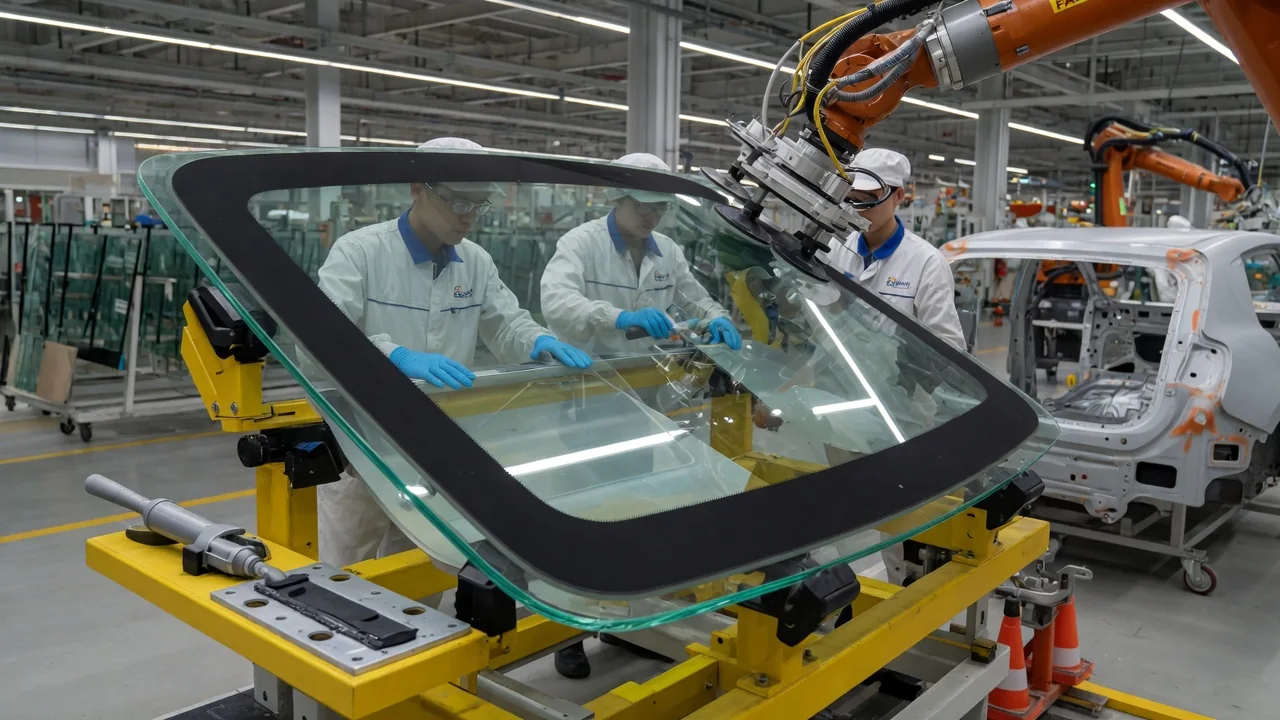
A panoramic roof looks like one large sheet of glass, but it is actually an engineered assembly. So how is a panoramic roof glass panel built? It combines shaped safety glass, layers that control heat and light, a printed border, and a mounting system that ties the panel to the body or to a sliding module. This guide explains panoramic roof glass construction in general terms. Exact materials and layouts vary by manufacturer and model.
Glass Layers: Tempered and Laminated Construction
Roof glass starts as flat float glass. It is cut to an outline and edge-ground to remove sharp, weak edges. Then it is heated until it softens enough to take the roof's curvature. Shaping is commonly done by gravity sag bending, where the softened glass slumps onto a mold, or by press bending for more complex shapes. What happens next depends on whether the panel will be tempered or laminated, and both approaches are used in production roofs. Tempered, or toughened, glass is a single ply that is rapidly cooled with air jets after heating. This puts the surfaces in compression and the core in tension. The result is a pane much stronger than ordinary annealed glass, which breaks into small granular pieces rather than long, sharp shards.
Laminated roof glass uses two thinner plies, usually bent together as a matched pair so their curves line up exactly. A plastic interlayer, most often polyvinyl butyral (PVB), goes between them. The stack is de-aired to remove trapped air and then processed in an autoclave under heat and pressure, which bonds the plies into one clear unit. If the glass cracks, the interlayer tends to hold the fragments in place, so the panel stays largely intact. The interlayer can also add functions. Tinted versions reduce visible light, acoustic grades damp sound transmission, and some designs embed films for solar control. Body tint is a separate tool: metal oxides added to the glass batch give the glass itself a gray or green shade before any coating is applied.
Coatings and Printed Layers
A roof faces the sun directly, so managing solar heat is a central design task. Tint in the glass or interlayer absorbs part of the incoming energy. That absorbed heat still warms the glass, which then radiates some of it into the cabin. Reflective solar-control coatings work differently. They are extremely thin multilayer stacks, often based on silver and metal oxides, deposited by vacuum sputtering. In laminated glass they are typically placed on an inner surface of the sandwich, where the interlayer protects them from scratches and moisture. These coatings are designed to reflect much of the infrared portion of sunlight while passing a chosen amount of visible light. Some panels also carry a low-emissivity coating on the surface facing the occupants, which limits how much heat the glass radiates toward people below it.
Most roof glass has a black ceramic enamel band around its perimeter, often called the frit. It is screen-printed onto the glass and fused to it during the heating step, so it becomes part of the surface rather than a paint layer. The frit does two jobs: it hides the adhesive and mounting hardware from view, and it shields the urethane bond from ultraviolet light, which would otherwise degrade it. The dot pattern at its inner edge softens the visual transition and helps manage uneven heating across the glass. Some vehicles also use switchable glazing, with liquid crystal or suspended particle films inside the laminate that change opacity electrically. This is a specific feature, not standard construction.
Mounting to the Roof Structure
A fixed panoramic panel is usually bonded rather than bolted. The frit area is cleaned and primed, and a bead of polyurethane adhesive is applied. The glass is then set onto the roof flange or onto a separate frame, with spacers or setting blocks controlling height and gap. Many panels are encapsulated first: a polymer edge molding is injection-molded directly around the glass, incorporating trim lips, seals, and sometimes studs or clips that locate the panel during installation. Once cured, the adhesive forms a continuous, sealed joint that transfers loads between glass and body. Because the bonded glass works together with the surrounding structure, roofs designed for large glass areas generally rely on reinforced side rails and cross members to keep the body stiff.
Opening sections are handled differently. The movable glass is attached to a carrier or bracket, often by bonding or encapsulation, and that carrier rides in guide rails within a roof module. The module typically combines a frame, rails, drive cables, an electric motor, a separate sunshade, seals, and a water management system. Seals are not perfectly watertight, so channels around the opening collect water and route it to drain tubes that exit through the body. The complete module is generally installed into the roof opening as a unit, then fastened and sealed to the body structure. As a result, repairs to the mechanism or drains may involve the module rather than the glass alone.
Practical Implications and Limits
These construction choices show up in everyday use. The coating and tint package determines how warm the cabin feels under strong sun and whether a sunshade is still needed for comfort. A dark appearance alone does not show how much infrared heat the glass rejects. Breakage behavior depends on the glass type. Tempered panels tend to fail all at once into granules, while laminated panels usually crack but stay in place. Tempered glass can occasionally break without an obvious impact, from causes such as edge damage, hidden chips, installation stress, or rare inclusions in the glass. A sudden failure is therefore not necessarily evidence of abuse.
For service, the main limits come from the bond and the coatings. Replacement glass should match the original specification for tint, coatings, frit, and encapsulation. The adhesive also needs proper surface preparation and cure time before the vehicle is driven or washed. Aftermarket films applied to coated or tinted roof glass can change how the glass absorbs heat, so check the manufacturer's guidance first. Leaks in a sliding roof are more often caused by clogged drains or worn seals than by the glass itself. Exact procedures, cure times, and part numbers are vehicle-specific, so use the owner's manual or service information for the model in question.