How Is a Classic Car Bumper Straightened?
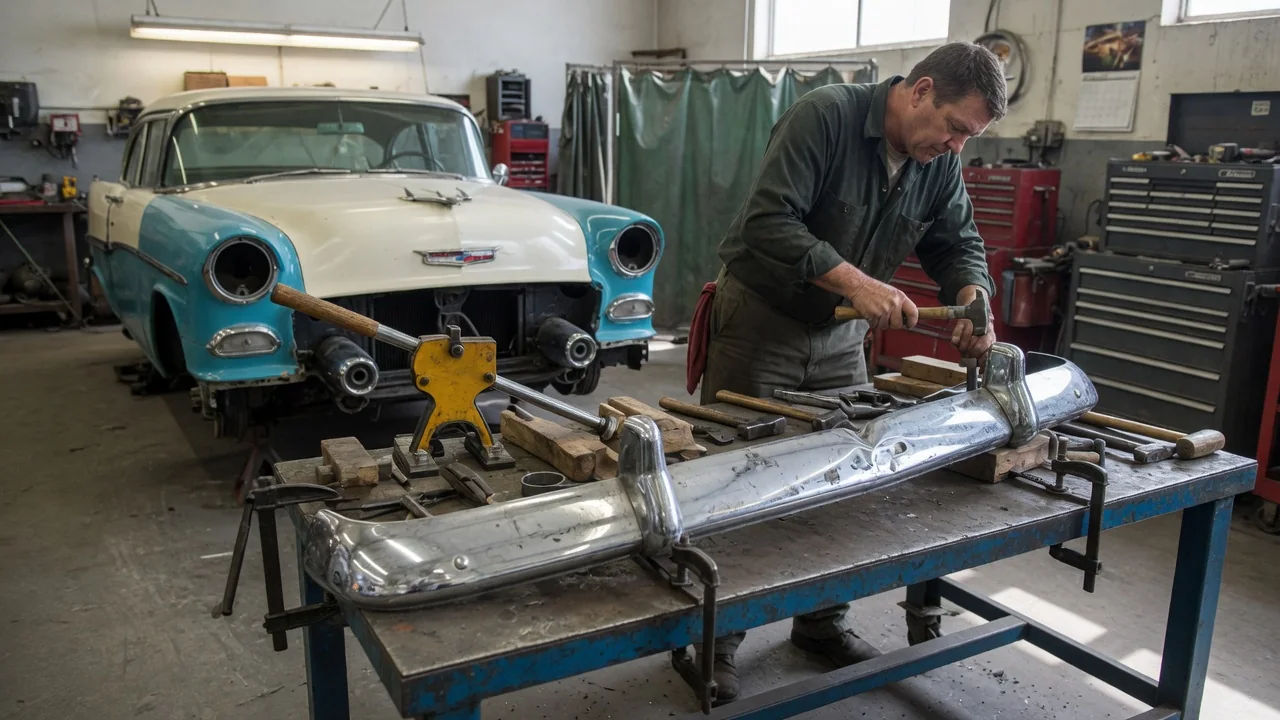
A bent classic car bumper is usually straightened off the car. The old finish is removed, the metal is reshaped and repaired, and the surface is refinished before the bumper goes back on. This differs from modern plastic bumper repair because most older bumpers are formed metal, often chrome-plated steel, and plating cannot survive significant bending. The classic bumper repair process has three stages: assessing the damage, doing the metalwork, and producing the final finish. Each stage has limits worth knowing before you commit.
Damage assessment
Assessment starts with identifying the material, because the material decides the method. Many classic bumpers are chrome-plated steel. Others are polished stainless steel, aluminum, or painted steel. A magnet separates steel from aluminum, but it will not reliably tell stainless from plated steel, since some stainless alloys are magnetic. Wear at edges and corners can reveal copper, nickel, or bare steel under the chrome, which confirms a plated part. Construction and mounting vary by vehicle, so the factory service manual or parts catalog for the specific car is the reliable reference.
Next, the shape of the damage is classified. A broad, gentle sweep usually responds well to straightening. A sharp crease means the metal has been stretched and folded, which takes more work and may leave traces. Tears, twists, and pushed-in ends are harder still. The bumper is compared with its own opposite side, a known-good example, or a template, and mounting holes are checked for alignment. Brackets and their attachment points on the body or frame are inspected too, because an apparent bumper bend sometimes starts at a bent bracket.
Hidden problems often decide whether repair is sensible. Rust tends to collect on the back side, inside rolled edges, and around bolt holes. Pitting under the chrome usually shows up as fine blistering or dull spots. Earlier repairs may include brazing, lead, or body filler, and plating will not adhere properly to filler. Repeated polishing over the decades can also thin the steel in high spots. Weighing these findings against the visible bend is how a restorer or plater judges whether the bumper is worth saving.
Metalwork
The bumper is removed from the car along with its brackets, guards, bolts, and any trim. On a plated bumper, the existing chrome, nickel, and copper layers are usually stripped chemically or electrolytically, typically by a plating shop. Media blasting may follow to clean out rust. Straightening a plated bumper with the chrome still on risks cracking and flaking the plating. Many shops therefore straighten after stripping, though the order varies from shop to shop. Stainless and aluminum bumpers skip the stripping step but are cleaned thoroughly first.
Major bends are corrected with controlled force, commonly a hydraulic press or portable hydraulic rams working against shaped blocks, dies, or a dedicated bumper fixture. Pressure is applied in small increments, and the shape is checked against the reference after each push. Damage is generally reversed in the opposite order to how it happened: the last bend made in the impact is undone first. Metal springs back, so a slight overbend is sometimes needed. Smaller dents and ripples are worked out with hammers, dollies, spoons, and shot bags. Heat is used sparingly and locally, because careless heating can distort the part. Stretched areas may need shrinking to remove oil-canning.
Once the shape is right, structural and surface defects are repaired. Cracks and tears are welded, often with TIG for its control on thin, curved sections. Rust holes are cut out and patched or built up with weld. The weld must be dense and free of porosity, because plating highlights pinholes rather than hiding them. Weld beads and high spots are then ground, filed, and sanded back to the original contour. The bumper is often trial-fitted to the car or a fixture at this point to confirm the shape and hole positions before finishing begins.
Finish
For chrome-plated steel, the finish depends mostly on preparation. The base metal is polished through progressively finer abrasives until scratches and file marks are gone. The bumper then receives a layer of copper, which helps fill minor imperfections and is buffed smooth. Some platers apply and buff more than one copper layer on heavily worked parts. A nickel layer follows; it provides much of the brightness and corrosion resistance. A thin layer of chromium goes on top for hardness, color, and tarnish resistance. Because plating reproduces the surface beneath it, waviness or scratches left at the polishing stage remain visible in the final chrome.
Other materials follow different paths. Straightened stainless steel is not plated. Small flaws are worked out, then the surface is sanded through finer grits and buffed with compounds until it shines. Aluminum is polished similarly, but some aluminum parts originally had an anodized or coated finish that must be removed and reapplied. Painted steel bumpers are the most forgiving: thin skim filler is acceptable, followed by an epoxy primer and a color topcoat. This is one reason a painted bumper tolerates imperfect metalwork better than a chrome one.
Before reinstallation, the back side is protected with paint or a rust-preventive coating, since plating there may be thin or minimal. New hardware is commonly fitted, and the finished face is masked with tape to avoid scratches during handling. The bumper is then hung on its brackets and adjusted until its gaps and height line up evenly with the body.
Practical implications and limits
The effort a job demands rises with crease severity, rust, prior filler, and how much of the surface must be rebuilt by welding. A broad bend on a sound bumper is straightforward. A torn, heavily pitted, or thinned bumper may take more work than it is worth. Replacement options include used parts and reproductions, but reproduction fit and plating quality vary, so inspect them before choosing. An original bumper that fits the car correctly is often worth saving even when repair is labor-intensive.
Owners can reasonably handle removal, assessment, cleaning, and mild straightening of painted or unplated bumpers. Stripping and plating involve hazardous chemicals and regulated waste, so they are specialist work. Many plating shops also do the straightening in-house, which keeps responsibility for the final result in one place. Hydraulic equipment stores considerable force, so eye protection and secure fixturing matter whenever a bumper is under load.
Some later classic-era bumpers mount on energy-absorbing units rather than solid brackets. After an impact, those units deserve inspection in their own right, and some contain pressurized gas or fluid, so follow the service manual before you disassemble them. Straightening restores a bumper's shape, fit, and appearance. Its protective role still depends on sound brackets and mounts, so those should be checked and repaired along with the bumper itself.