How Hybrid e-CVT Transmissions Work
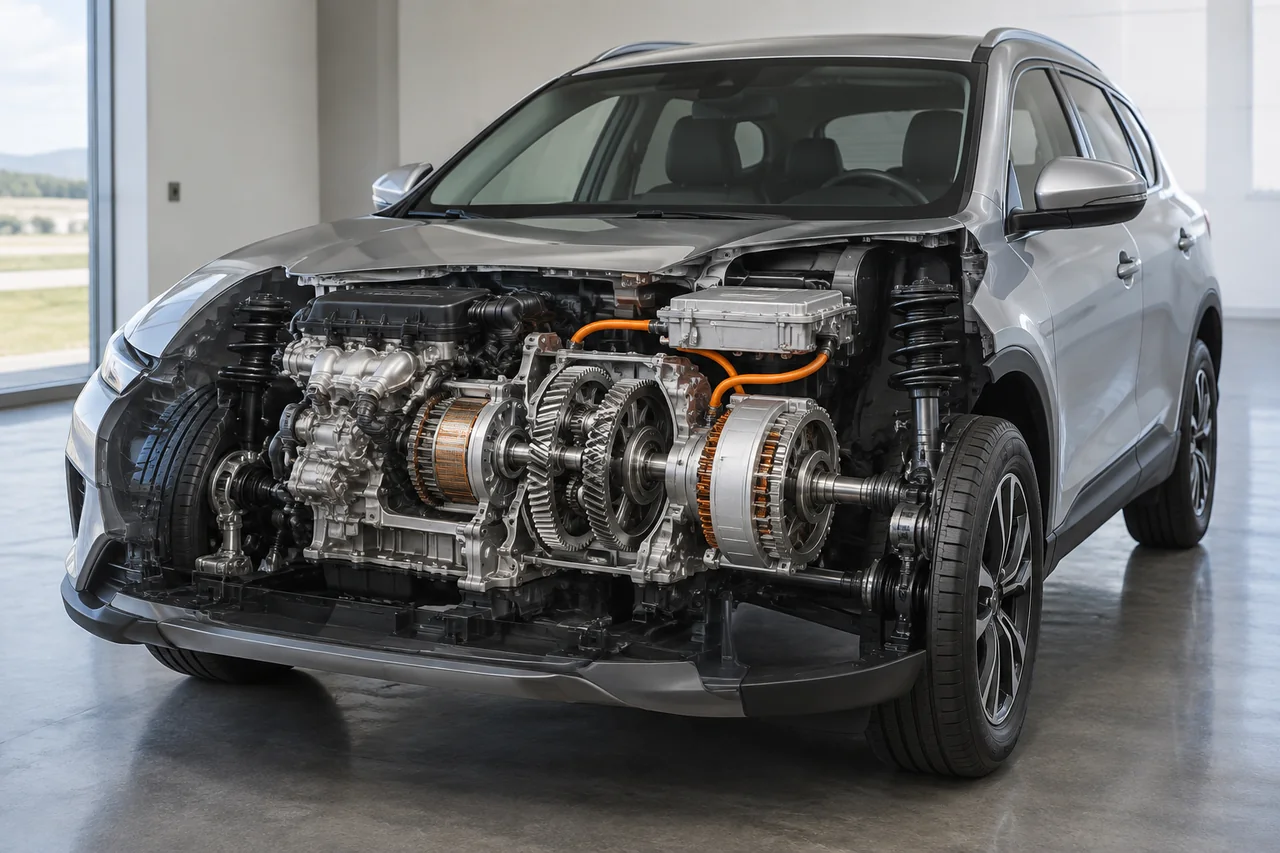
An e-CVT transmission, also called an electronic CVT transmission, is the hybrid transaxle used in many Toyota hybrids and similar power-split designs. Unlike a belt-driven continuously variable unit, a Toyota e-CVT transmission uses a planetary power-split device and motor-generators to blend engine and electric drive. Understanding that layout explains why engine speed, driving feel, and service concerns differ from a conventional CVT.
What e-CVT Means in a Hybrid
The e-CVT, or electronically controlled continuously variable transmission, coordinates the gasoline engine with electric propulsion so the vehicle can move on motor power, engine power, or both. Control software manages motor-generator output and engine operation so road speed can change without the stepped gear changes of a conventional automatic. In this role, the hybrid transaxle is less a traditional gearbox and more a continuously managed coupling between the engine, electric machines, and the driven wheels.
The name describes continuously variable operation, not one universal mechanical layout. Some vehicles labeled with an electronic CVT transmission still rely on a pulley-and-belt assembly, while a Toyota e CVT transmission typically uses a planetary power-split arrangement. Apply that Toyota-style description to another hybrid only after checking the specific vehicle's documentation, because different manufacturers can use similar names for unrelated hardware and control strategies.
How Toyota’s Planetary Power-Split System Works
In a typical Toyota e-cvt transmission, a planetary gearset sits at the heart of the hybrid transaxle. The engine connects to one member of that gearset, a motor-generator connects to another, and the remaining member feeds drive output toward the wheels. A second motor-generator can add torque at the output or generate electricity. This assembly is commonly called a power-split device because it can divide engine output between mechanical drive and electrical generation at the same time.
Motor-generator control lets engine speed vary in relation to road speed within the system's operating limits, so the engine can hold an efficient speed while the vehicle accelerates. Mechanical power can flow through the planetary gearset toward the wheels while electrical power moves between the motor-generators, inverter, and high-voltage battery. Engine output does not have to pass through the battery to reach the road. This mechanism does not use a variable-diameter pulley and belt assembly, and the exact member arrangement is not identical on every Toyota hybrid.
What Happens During Acceleration, Cruising, and Braking
When operating conditions permit, the vehicle can move on electric propulsion with the engine stopped. Battery charge, temperature, and power demand all affect whether the engine stays off. A cold high-voltage battery, a steep grade, or a firm accelerator request can bring the engine in even at modest speed. During light cruising, the system may keep the engine running in a narrow speed band or shut it down again as load and charge allow.
During stronger acceleration, engine and motor power can work together without conventional stepped shifts, so there is no upshift pause as road speed rises. Regenerative braking recovers some energy through a motor-generator that acts as a generator, sending charge toward the high-voltage battery, while friction brakes remain necessary for harder stops, low speed, and backup. The engine may still operate when the driver requests little propulsion, supporting battery charging, cabin heat, emissions control, or other vehicle needs rather than extra wheel torque.
Why Engine Speed Can Sound Unusual
Because motor-generator control decouples engine speed from a fixed ratio to road speed, the engine may rise and remain steady while the vehicle continues to gain speed. That held engine speed is a normal way for a power-split device to deliver more power or to stay in an efficient operating region. Drivers accustomed to a conventional automatic often hear this as a drone rather than a rising note that tracks the speedometer.
Smooth power delivery is expected from this layout, and engine sound alone cannot establish transmission slip or a fault. A new grinding noise, strong vibration, a warning message, or loss of propulsion is a better reason to arrange inspection. If a symptom appears, note from a safe driving position when it occurs, including speed, temperature, and acceleration demand. Do not attempt distracting road tests or recreate a problem in traffic simply to gather more detail.
What the Design Tells You About Reliability
The absence of a pulley belt removes that particular wear item from the power-split mechanism, which is why a Toyota e-CVT transmission is often discussed as mechanically different from a belt-driven CVT. That difference does not establish a guaranteed service life. Gears, bearings, motor-generators, lubrication, and associated electrical controls still determine the hybrid transaxle's condition, and those parts age with heat, load, contamination, and neglected fluid care.
A drivability complaint is not automatically a transmission failure. Battery, inverter, engine, or cooling faults can also reduce hybrid propulsion or change how engine speed tracks road speed. Diagnosis should separate those systems; a stored code is evidence to interpret, not proof a part has failed. Vehicle history, inspection findings, and professional testing matter more than blanket reliability promises, mileage guarantees, or claims about how often these units fail.
Fluid Care and When Professional Testing Is Needed
Transmission fluid specifications and service requirements belong in the exact model and model year's maintenance documentation. An e CVT transmission label alone cannot establish fluid compatibility, because hybrid transaxles can require different formulations than belt-driven units or conventional automatics. Avoid treating any single fluid type or replacement interval as universal. Use the owner's manual or service information for that vehicle rather than a generic CVT product chosen by name.
If a leak is visible, record warning messages and observe the fluid only from a safe position. Do not open components or go beneath an unsupported vehicle. High-voltage work and internal testing belong to qualified professionals, because motor-generators and the high-voltage battery remain hazardous even when the car appears off. If propulsion is lost or an urgent warning appears, stop safely and follow the owner's manual rather than attempting roadside diagnosis of the hybrid transaxle.