How Ford Trailer Sway Control Works
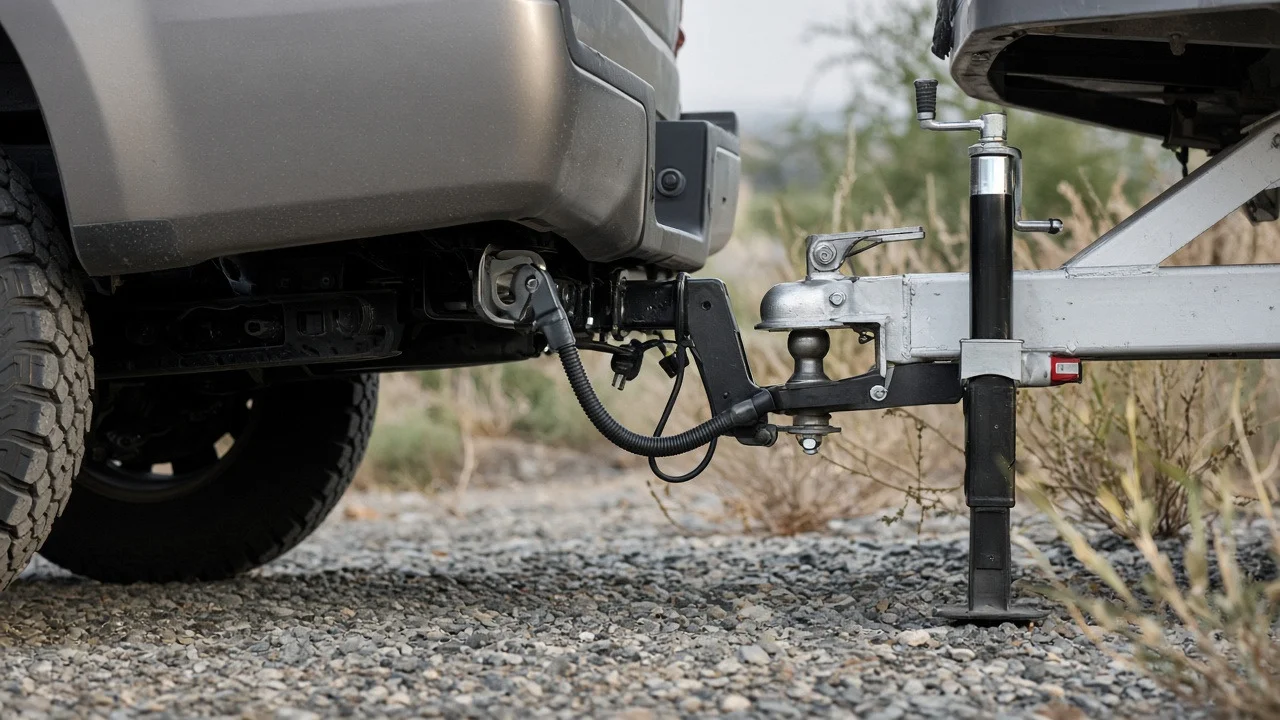
Trailer sway can turn a stable highway drive into a fast, frightening steering correction. Ford addresses this with a stability feature that watches for yaw oscillation in the truck and applies selective braking to help the driver regain control. The system works through the existing electronic stability control hardware, so it does not require an aftermarket sway control device. Understanding the operating logic, its limits within payload and combined weight rating, and what the driver should do when it activates helps make towing decisions safer and more predictable.
Essential answer
Ford trailer sway control is an integrated function of the vehicle's stability control system. It detects the rhythmic side-to-side motion that occurs when a trailer begins oscillating around the hitch, then responds by reducing engine torque and braking individual wheels. The feature is designed to support the driver during a sway event rather than to prevent every possible instability caused by poor weight distribution or excessive speed.
The feature is normally active when the truck is running and works with the factory trailer brake controller when present, but it does not replace proper trailer loading. The system's scope is limited by trailer configuration, axle rating, tongue weight, and gross vehicle weight rating. A trailer that is loaded outside its design envelope can still overwhelm available stability correction, so the feature is best understood as an electronic aid layered on top of sound towing practice.
How it works
The system uses the vehicle's yaw sensor, steering angle input, and wheel speed data to identify a trailer sway pattern. When the controller recognizes the signature side-to-side yaw that is out of step with normal cornering, it commands brief brake pressure at the front wheels on alternating sides. This creates a straightening moment that works against the oscillating motion instead of amplifying it.
At the same time, the powertrain control module may reduce torque to lower speed and give the braking pulses more authority. The intervention feels like a quick series of deceleration tugs, often before the driver fully registers the sway. Because the correction depends on the truck's hydraulic control unit and factory calibration, its timing and intensity vary with vehicle configuration and the trailer's effective tongue weight and axle loading.
Strengths, limitations and suitability
The major strength is response speed. A stability controller can begin correction in a fraction of a second, earlier than many drivers can manually apply the trailer brake. This is particularly useful when a passing truck or a sudden crosswind starts the oscillation. It also requires no extra hardware, which means there is nothing to mount, wire, or adjust on the trailer itself.
The limitation is that electronic correction cannot fix a fundamentally unstable trailer. Excessive payload behind the trailer axle, very light tongue weight, or operating above the practical combined weight rating can create sway that exceeds the brake system's ability to settle. The system suits drivers who tow conventional trailers and want an added safety layer, but it is not a substitute for matching trailer dimensions and hitch setup to the tow vehicle.
Procedure
Before towing, confirm the trailer is loaded so that roughly enough weight rests on the ball to keep the coupler planted, and verify that the truck, trailer, occupants, cargo, and accessories remain within the applicable gross vehicle weight rating and combined weight rating. The trailer should sit nearly level when coupled. A nose-up or nose-down attitude shifts axle loading and changes how the stability controller interprets motion.
During a sway event, keep steering inputs small and avoid stabbing the brakes. The Ford system may already be pulsing the brakes; the driver's job is to ease off the accelerator and let the truck settle. For trailers with electric brakes, the manual trailer brake lever can be applied smoothly in a controlled squeeze if conditions allow, but sharp trailer-only braking can tighten the hinge between truck and trailer and make the oscillation worse.
Diagnosing a problem
If the stability system activates often on a route that feels otherwise calm, treat the warning-like behavior as a loading or setup problem rather than a controller fault. Check whether the trailer is level, whether heavy items have migrated rearward, and whether the hitch height is creating poor weight transfer. A recurring sway pattern often points to insufficient tongue weight or a trailer that is too tall for the tow vehicle's wheelbase and track width.
A warning light for the stability system may indicate reduced function, but it is not proof that a specific sensor or hydraulic part has failed. The condition requires diagnosis through a scan of the vehicle's network. If the truck sways with no trailer attached, if the stability warning is accompanied by unusual brake behavior, or if the trailer begins a severe oscillation that does not settle after reducing speed, stop and inspect the setup before continuing.