How Electronic Stability Control Works and What the ESC Light Means
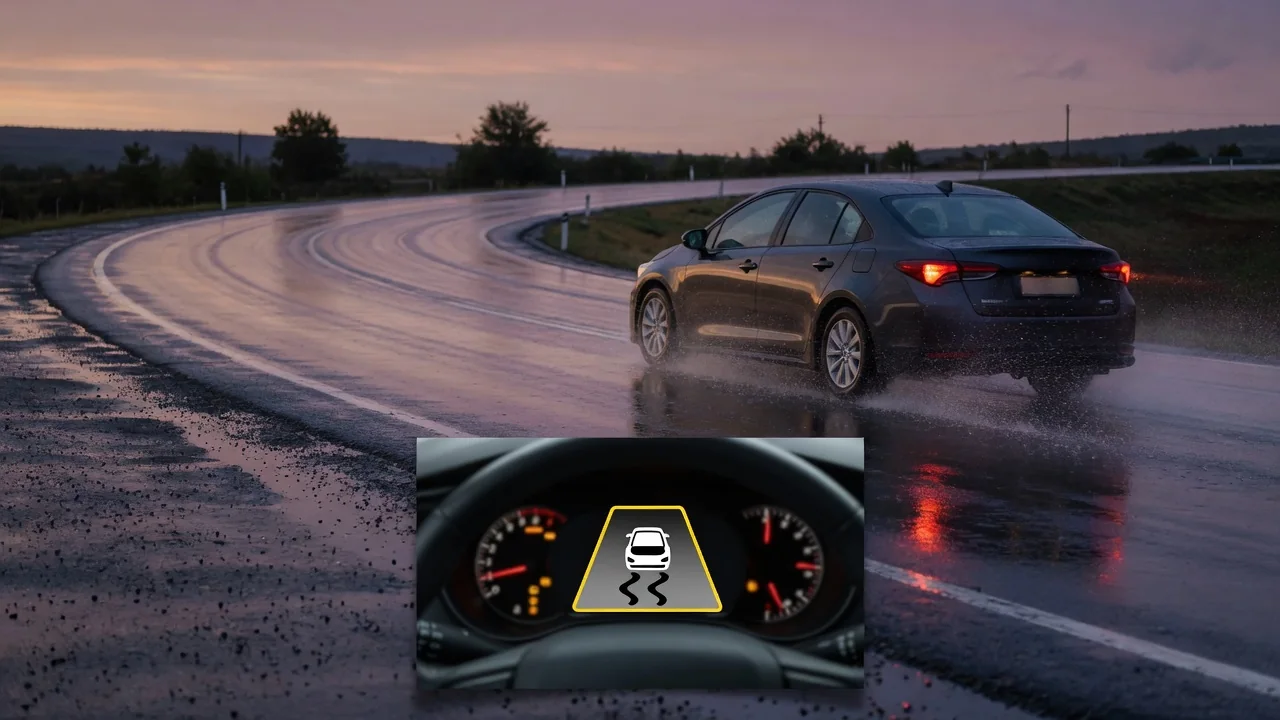
Electronic stability control, usually shortened to ESC, is one of the most important safety systems in a modern car. Most drivers only notice it when a dashboard warning light comes on. This guide explains what electronic stability control means, how the system works, how it helps drivers avoid loss of control, what the ESC light and off button indicate, and how a fault is diagnosed and repaired.
What Electronic Stability Control Means in a Car
In plain terms, electronic stability control is an automated system that helps keep a car going where the driver is steering once the tires reach the limit of grip. If the vehicle starts to slide, spin or plow wide in a corner, ESC steps in within fractions of a second to restore directional control. The technology first reached production cars in the mid-1990s. Today many passenger cars, SUVs, pickups and heavy trucks carry some version of it, but exact equipment depends on the vehicle and the market it was sold in.
ESC is the generic name, and automakers often use their own labels, such as StabiliTrak, VSC or DSC, so check your owner's manual to confirm what your car calls it. ESC builds on the anti-lock braking system and usually works alongside traction control, but the three are not the same. ABS stops the wheels from locking under braking, traction control limits wheelspin under acceleration, and stability control manages the vehicle's rotation and direction. In normal driving ESC stays in the background and acts only when it detects a loss of directional control.
How the ESC System Works: Sensors, Control Module and Brake Intervention
How electronic stability control works starts with its inputs. Wheel speed sensors report how fast each wheel is turning, and a steering angle sensor reports where the driver is pointing the front wheels. A yaw rate sensor, usually paired with lateral acceleration sensing, measures how quickly the vehicle is actually rotating and how hard it is being pushed sideways. The electronic stability control module, which often shares hardware with the ABS unit, constantly compares the path the driver intends with the motion the car is actually producing.
When those two pictures disagree, the physics of the correction is straightforward. If the car understeers and pushes wide, the system may brake the inside rear wheel to help pull the nose into the turn. If it oversteers and the tail swings out, braking the outside front wheel creates a counter-rotating force that helps straighten the car. ESC may also cut engine power at the same time. Branded systems such as StabiliTrak follow the same principle, but calibration and intervention thresholds vary by manufacturer and model.
How ESC Helps Drivers and the Crash Conditions It Targets
Electronic stability control systems help drivers by reducing skids and sideways slides at the moment a car begins to spin out or push wide in a turn. The crash-causing condition it targets is loss of control. A spinout can send a vehicle off the road or into oncoming traffic, and a taller vehicle can roll over if its tires dig into a soft shoulder. ESC typically steps in during a sudden swerve around an obstacle, a curve on wet pavement, black ice, loose gravel or an abrupt highway lane change.
Its limits matter as much as its benefits. ESC can only use the grip the tires provide, so it cannot overcome physics, worn or mismatched tires, or a speed that is too high for the corner. It does not replace careful driving, safe following distances or slowing down for conditions. That is why driver education material, including theory test questions, describes it as an aid rather than a safety net. Trailers and caravans can also get their own stability systems, but those are separate products with their own controls.
ESC Warning Light, Indicator and Symbol Meaning
The electronic stability control symbol is most often a small car with two wavy skid lines behind it, sometimes with the word OFF underneath, although icons and labels differ between manufacturers. If the indicator flashes briefly on a slippery road, the system is usually working, braking individual wheels or cutting power to keep the car stable. Treat that as a cue to ease off. A light that stays on means something different: either the system has been switched off, or it has detected a fault and may have disabled itself.
The ESC light often comes on together with the ABS or traction control light. These systems share wheel speed data and often the same hardware, so a single problem can disable all of them. On some vehicles a check engine light can appear alongside it too, because ESC relies on engine control to reduce power. Either combination calls for diagnosis rather than guesswork. The car may still drive normally, but stability assistance may be unavailable, so drive cautiously and get it checked. A red brake warning needs immediate attention.
Using the ESC Off Button and When the System Should Stay On
Most vehicles have an ESC or traction button, often marked with the same skid icon. Pressing it reduces intervention, but what it actually turns off varies. Some cars disable only traction control, some loosen the stability thresholds, and some need a long press to switch off more of the system. The owner's manual may suggest reducing intervention when you are rocking a car out of deep snow, mud or sand, because some wheelspin helps the tires dig in and clear. Performance models may also offer track modes with relaxed settings.
For normal driving the system should stay on. If you wonder whether ESC matters on dry roads, the situations where it helps most, like an unexpected swerve, rarely come with any warning. To turn electronic stability control back on, press the button again or restart the vehicle, since many cars re-enable it automatically at startup. In everyday use, that mostly means leaving ESC on and paying attention when the light flashes. Button behavior differs between vehicles, so follow your owner's manual instead of assuming one method works for every make and model.
Diagnosing, Resetting and Repairing an ESC Fault
When the ESC light stays on, start with some safe checks. Make sure the off button was not pressed by accident. Then park somewhere safe, switch the car off and restart it, since a temporary glitch may clear after a key cycle. Note any other warning lights that came on at the same time. Reading stored trouble codes requires a scan tool that can access ABS and chassis modules, not just engine codes. Code meanings depend on the manufacturer, so verify the definition for your specific vehicle, and treat a code as evidence rather than proof that a part has failed.
Common causes include a faulty wheel speed sensor or its wiring, steering angle or yaw rate sensor faults, brake system issues, and module or power supply problems. Clearing codes to reset the ESC light is unreliable, because the light usually comes back if the cause is still there. Some repairs also need steering angle calibration or system testing with professional equipment. Repair cost depends entirely on the diagnosis and the vehicle, and it can range from a simple connector repair to a major component. Get a diagnostic estimate before approving any parts.