How Electric Car Charging Works: The Basics Explained for Beginners
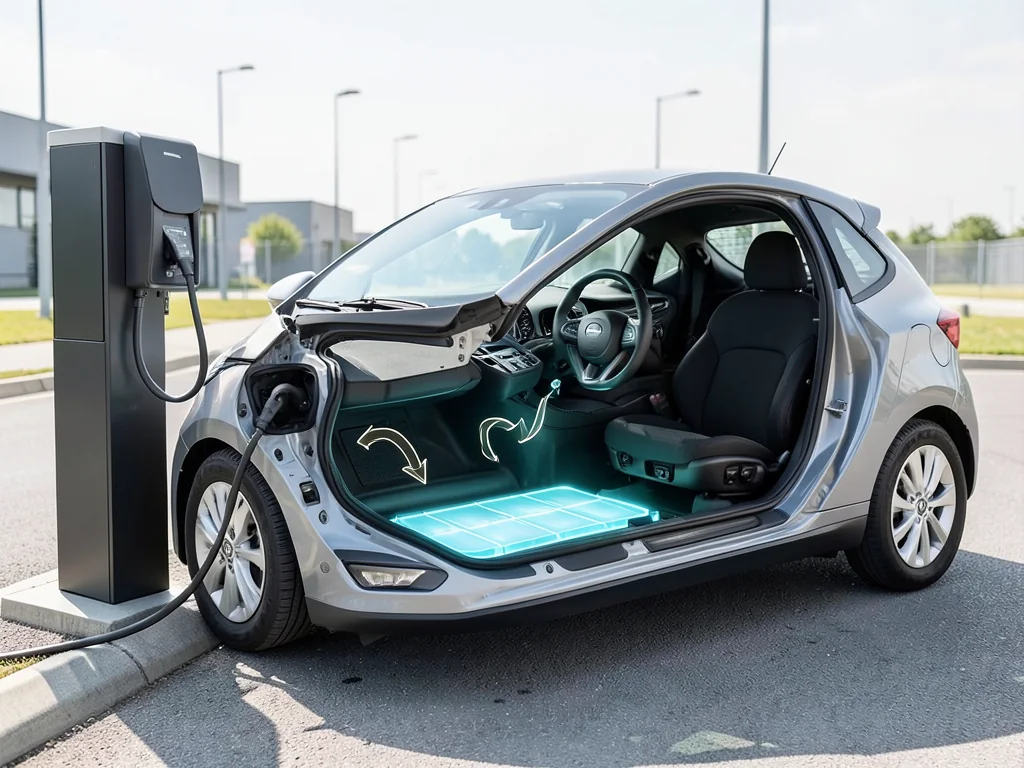
Electric car charging can feel mysterious the first time you plug in and nothing seems to happen right away. Every session actually follows the same order: the plug connects, the car and station communicate, safety checks run, and then energy flows under control. This guide explains what moves through the cable, how stations and cars work together, what the battery does internally, and why some energy never reaches the pack.
Electric car charging in plain terms: what actually moves from the plug to the car
At its core, charging an electric car means moving electrical energy from the grid into the car's high-voltage lithium-ion battery pack, where it is stored until the motor needs it. What surprises many new owners is that the car, not the station, usually directs the process. The station offers a certain amount of power, but the vehicle decides how much it will actually accept based on the battery's condition, temperature, and state of charge at that moment.
Every session involves three physical pieces: the power source, the charging equipment with its cable and connector, and the car's own charging hardware behind the charge port. Before energy flows, the connector must seat properly, the port must recognize it, and both sides must agree through a brief electronic exchange. That is why a short pause after plugging in is normal. Home wall units and public stations follow this same sequence; the main difference is how much power each can deliver.
How a charging station works: the handshake, the safety checks, and the power delivery
A charging station works less like a fuel pump and more like a safety-managed switch between the grid and your car. The cable carries no power while it hangs on its holster. The station closes its internal contacts only after it confirms a secure connection. During the charging handshake, the station and car exchange signals confirming that the connector is latched, the vehicle is ready, and how much current the car will take. If any check fails, the power stays off.
AC stations pass alternating current to the car and rely on its onboard charger to convert it, while DC fast chargers do the conversion inside the station and feed the battery more directly. In the US, you may see the J1772 plug, the CCS combo connector, the NACS connector (now standardized as SAE J3400), and the older CHAdeMO design. Your owner's manual confirms which port your car has. Station lights and screen messages generally show a ready, charging, complete, or fault status.
Plugging in at a public station: starting, monitoring, and ending a session step by step
Start by parking close enough that the cable reaches without stretching, then open the charge port door. Insert the connector firmly until it seats or clicks into its lock. Next, start the session with the network's app, an RFID card, or a payment terminal. If your car and the network both support plug-and-charge, the station identifies the car and starts on its own. Within moments, the car's dashboard or port indicator and the station display should both confirm that charging has begun.
If nothing starts within a minute or two, reseat the plug, recheck the authorization, and move to another stall if the problem continues. When you are finished, stop the session from the car, app, or station before pulling the connector, because many cars lock the plug while current flows. Never force a connector, keep the cable where it cannot be driven over, and avoid any cracked or damaged equipment. Port location, unlock behavior, and screen prompts vary, so check your manual.
What happens inside the battery while it charges
Inside each lithium-ion cell, driving moves lithium ions from one electrode to the other as the battery releases energy. Charging reverses that movement, pushing ions back to the side they left and storing energy chemically until you drive again. The battery management system oversees all of this. It continuously monitors individual cell voltages, temperatures, and balance across the pack, then tells the charging equipment how much current the battery can safely accept at any moment.
Charging speed naturally slows as the pack fills, because nearly full cells need gentler current to avoid stress. A cold or very hot pack may also charge slowly while the system protects itself. Many cars let owners set a charge limit, and the manufacturer's guidance is the right place to find a recommended daily target. The pack is sealed and monitored, so there is nothing for an owner to inspect or adjust. Unusual warnings or excess heat should go to a qualified technician.
AC versus DC charging: where the electricity gets converted and why it matters
The grid supplies alternating current, but a battery can only store direct current, so a conversion has to happen somewhere in every session. For AC charging, that job falls to the onboard charger, a converter built into the car. Its rating sets a ceiling on how fast the car can charge from any AC source. Plugging into a more powerful AC station will not speed things up if the onboard charger is already running at its maximum.
DC fast charging bypasses the onboard charger entirely. The station's large converter does the work and sends direct current straight toward the battery. That is why DC equipment can deliver far more power, though the car still decides how much it will accept. To tell which type you are using, look at the cable, since DC cables are usually noticeably thicker. The connector shape and the station's labeling are also clues. Your car's documentation lists its specific AC and DC limits.
Charging efficiency: why the battery gains less energy than the meter shows
Charging efficiency is the share of energy drawn from the outlet or station that actually ends up stored in the battery, and it is never perfect. Some energy becomes heat in the onboard charger or the station's converter, some is lost to resistance in the cable and connector, and some runs the battery's cooling or heating system during the session. The meter records everything drawn, so the battery always gains somewhat less energy than the total the meter shows.
Slow AC charging and fast DC charging lose energy in different ways. Long, low-power sessions keep the car's electronics awake for hours, while high-power sessions produce more heat that has to be managed. Extreme temperatures tend to raise losses either way. Charging when the pack is at a moderate temperature and skipping unnecessary preconditioning can help, though the results are not guaranteed. Because the car, the equipment, and the conditions all matter, no single efficiency percentage applies to every situation.