How Electric Car Batteries Work
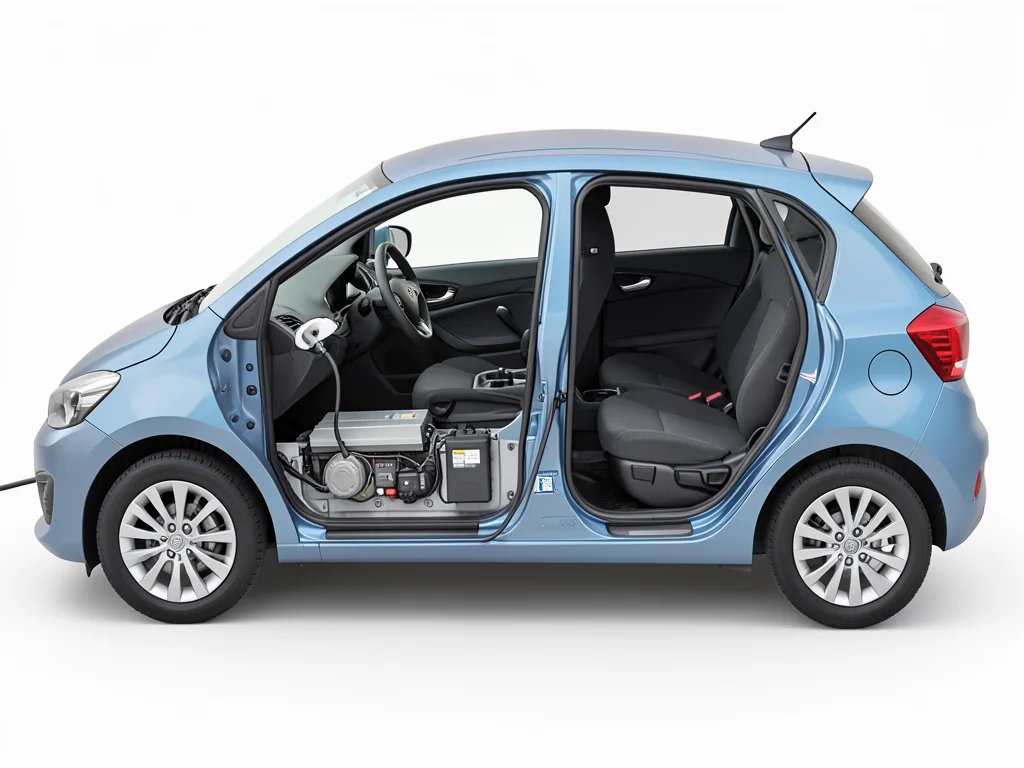
A battery electric car stores all of its driving energy in a large rechargeable pack, and that single component shapes range, charging speed, performance, and long-term ownership. Understanding how the pack works, how it differs from the small 12-volt battery that also sits in the car, and what affects its lifespan helps owners make better decisions about daily charging and service.
What the Traction Battery Does in an Electric Car
The traction battery is the rechargeable energy store that supplies electricity to move the vehicle. In a battery electric car, no fuel tank or combustion engine provides propulsion; every mile depends on electricity stored onboard, usually from a charger connected to the grid. That makes the traction battery fundamentally different from a starter battery in a gasoline car, which only needs to crank an engine briefly. The traction battery must deliver sustained power for acceleration, highway cruising, climbing grades, and running high-voltage heating or cooling systems.
Inside, the pack is built from many individual lithium-ion cells, the basic units that store and release energy. Some designs group cells into modules that are then assembled into the pack, while others place cells more directly into the pack structure. The complete battery pack also includes wiring, sensors, cooling hardware, a protective enclosure, and control electronics. Placement depends on the vehicle, but many manufacturers mount the pack under the floor between the axles, which keeps weight low for stable handling and shields the pack within the vehicle's structure.
How Stored Energy Becomes Motion
Battery cells store energy through chemical reactions. During charging, electrical energy drives lithium ions from one electrode to the other, where they are held in a higher-energy state. When the car demands power, the ions move back through the electrolyte while electrons flow through the external circuit, producing usable current. The battery supplies direct current, but most traction motors run on alternating current, so an inverter converts and precisely controls that energy. These power electronics adjust the current sent to the motor based on accelerator input, determining how much torque reaches the wheels.
When the driver lifts off the accelerator or brakes, the motor can act as a generator, turning some of the car's momentum back into electricity for the battery. This regenerative braking extends range, especially in stop-and-go traffic, but it never recovers everything, because energy is lost to heat, friction, aerodynamic drag, and conversion inefficiencies. Recovery may also be limited when the battery is cold or nearly full. Overseeing all of this is the battery management system, which monitors cell voltages, temperatures, and current, then limits charging and discharging to keep the pack within safe operating conditions.
The Role of the Separate Auxiliary Battery
Alongside the high-voltage pack, an electric car still relies on a low-voltage electrical system, commonly supported by a 12-volt auxiliary battery. This circuit runs everyday equipment such as lighting, infotainment, door locks, power windows, and many control modules. It also plays a critical role at startup: the computers that verify system status and connect the high-voltage circuit need low-voltage power before the traction battery can be brought online. Without that supply, the car may be unable to wake up and enable its drive system.
While the car is on, a DC-to-DC converter typically steps down energy from the traction battery to power low-voltage systems and replenish the auxiliary battery, much as an alternator does in a gasoline vehicle. Even so, the auxiliary battery can weaken with age or be drained by extended parking or electrical faults. That creates a confusing situation: the last reading may show plenty of traction battery charge, yet the car refuses to power up. A weak auxiliary battery is one possible explanation worth checking before assuming the high-voltage system has failed.
Understanding Capacity, Range, and Charging
Battery size is expressed in kilowatt-hours, a measure of stored energy, while kilowatts describe power, or how quickly energy moves in or out. A larger kilowatt-hour figure generally means more energy available for driving, whereas a higher kilowatt rating refers to faster charging or stronger motor output. Manufacturers typically reserve a buffer, so usable capacity is lower than the pack's total capacity. State of charge, shown as a percentage, indicates how full the usable portion currently is. It does not reveal battery health by itself, because an aged pack can still read 100 percent.
Range depends heavily on how energy is consumed. Sustained highway speeds increase aerodynamic drag, cold weather reduces battery efficiency and adds heating demand, and hills, headwinds, heavy loads, and aggressive acceleration all draw more energy. Air conditioning in hot climates adds load as well. Charging speed is similarly variable. The power a car accepts depends on battery temperature, current state of charge, the vehicle's own charging limits, and what the charger can deliver. Charging often slows as the battery fills, and a cold pack may accept less power until it warms up.
What Shapes Battery Lifespan
All lithium-ion batteries gradually lose capacity. Some of that loss is calendar aging, which occurs over time even when the car sits parked, and some comes from use, as repeated charging and discharging slowly change the cells' internal chemistry. There is no universal lifespan, since results vary with chemistry, design, climate, and habits. It also helps to separate lasting degradation from temporary range changes. A car that loses range on a freezing morning or during a fast highway trip may simply be using more energy, and range typically returns when conditions improve.
High temperatures and long periods at very high or very low charge levels can accelerate aging in many lithium-ion designs, though the ideal routine depends on battery chemistry and how the manufacturer configured the pack. For that reason, following the vehicle's own charging recommendations is more reliable than general rules. Thermal management systems help keep cells in a suitable temperature range during driving and charging. Battery warranties are also vehicle-specific, and while they describe a manufacturer's coverage commitment, they do not predict exactly when a pack might need replacement.
Assessing Battery Health and Service Needs
A traction battery is not a generic part. It must meet the vehicle's electrical requirements, fit its structural mounting and crash protections, connect to its cooling system, and communicate correctly with its control software. That is why careful observation matters more than assumptions. Useful signs include persistent charging failures, recurring warning messages, charging that is consistently slower than conditions explain, and a sustained drop in range when driving the same routes at similar speeds and temperatures. Noting dates, charge levels, and weather gives a technician helpful context.
Dashboard range estimates are predictions based on recent driving, so they are not a precise health measurement. Assessing usable capacity or diagnosing faults often requires professional tools that read battery management data, and any stored fault code is evidence to interpret, not proof a specific component has failed. Whether a pack is repaired or replaced depends on diagnosis, pack design, warranty coverage, and available qualified service. Owners should never open a pack or probe high-voltage components. If there is damage, unusual heat, or smoke, move away and contact emergency services or qualified professionals.