How Does the Heater Work in an Electric Car?
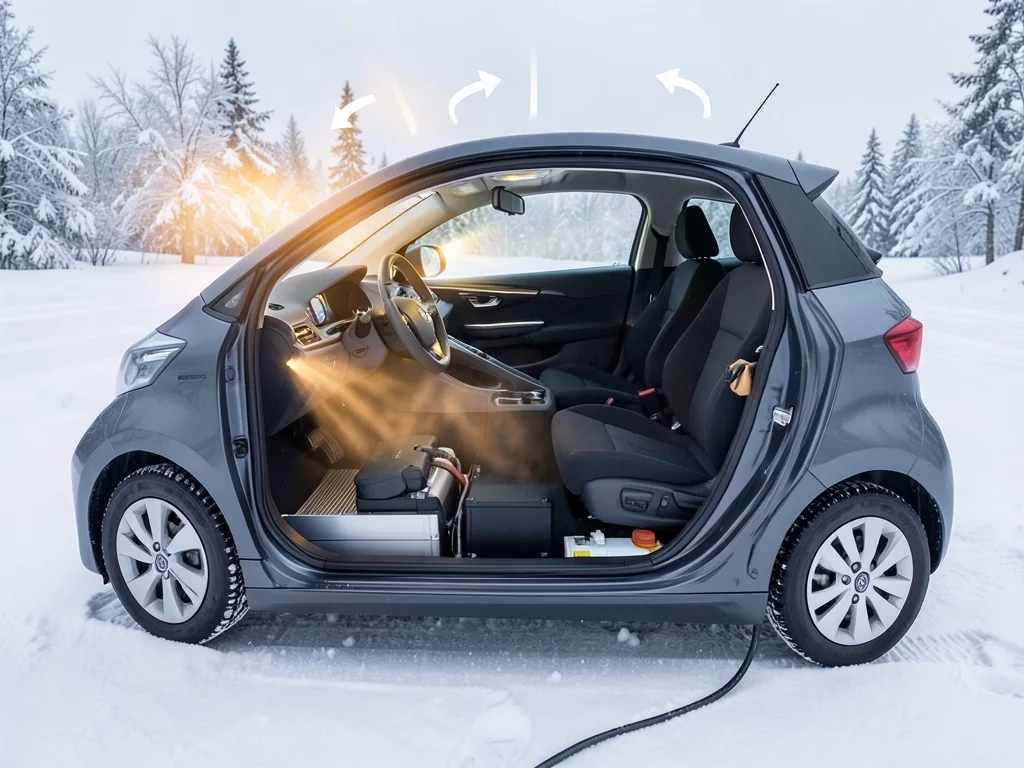
An EV car heater operates differently from the belt-driven heater core in a gasoline vehicle. Instead of using engine waste heat, an electric car draws from its high-voltage battery to run climate control, meaning cabin heating directly affects range. Understanding how PTC resistive heaters and heat pumps work helps drivers balance comfort, winter range, and preconditioning.
Where an Electric Car Gets Heat for the Cabin
Cabin heating in an electric car starts with the traction battery, which supplies electrical energy to a dedicated heating device. While driving, this energy is drawn from the same pack that powers the motor, so every watt used for warmth is unavailable for propulsion. The climate control system manages this balance automatically, blending heat output with other demands.
Two main heating technologies are used: PTC resistive heaters and heat pumps. Their presence depends on the vehicle’s design and trim. Once heat is produced, a blower pushes air across the element or heat exchanger and through vents. Some systems use a coolant circuit to transfer thermal energy to a cabin heater core, similar to a conventional car but with an electric heat source.
How a PTC Heater Produces Warm Air
A PTC heater relies on positive temperature coefficient elements, usually ceramic. When current passes through, resistance creates heat. What makes PTC unique is that resistance increases as temperature climbs, which naturally limits current and reduces the risk of overheating. Vehicle controls still adjust power to meet the requested cabin temperature.
PTC heaters can warm air directly as it flows through the HVAC case, or they can heat a coolant loop that circulates to a cabin heat exchanger. The arrangement varies by manufacturer and model. Because specific hardware cannot be assumed, a service manual or dealer documentation is needed to confirm whether a particular vehicle uses only PTC, a heat pump, or both.
How a Heat Pump Moves Heat into the Cabin
A heat pump moves heat by circulating refrigerant. The refrigerant absorbs warmth from a source—often outside air or a vehicle component—and evaporates. An electric compressor then raises its pressure and temperature, and a condenser or interior heat exchanger releases that thermal energy into the cabin. This process can deliver more heat per unit of electricity than resistive heating.
Outdoor temperature directly affects heat pump performance because the available heat in cold air is limited. Many systems include supplemental PTC heating or other resistive elements for very low temperatures. Automatic climate controls often coordinate the heat pump, supplemental heat, and blower without driver intervention, and some designs draw heat from the battery or power electronics when beneficial.
Why Cabin Heating Affects Winter Range
Energy used for cabin heating reduces the battery’s stored energy for driving. On a cold day, heating demand can rise sharply, especially when the cabin is initially very cold. The amount of energy used depends on outdoor temperature, the selected cabin temperature, trip duration, and how much the cabin has already been warmed.
A short trip after a cold start can show a larger percentage of energy going to heat because the cabin must be warmed from ambient. Over a longer drive, the initial warm-up becomes a smaller fraction of total consumption, though steady-state heating still draws power. Cabin heating should be considered separately from battery temperature effects and winter road conditions when estimating range.
Using Preconditioning Before Departure
Preconditioning warms the cabin before departure using a scheduled climate function or remote app, where supported. When the vehicle is plugged in, the charging station can supply much of the energy, reducing the initial load on the battery. The exact energy split depends on charger output and the vehicle’s thermal management software.
Cabin preconditioning is distinct from battery conditioning, which warms or cools the traction pack itself. Some vehicles coordinate both functions automatically, while others allow separate settings. Owners should consult the manual for supported options and timing, as the range benefit varies with conditions. Preconditioning improves comfort but should not be expected to eliminate winter range loss.
Keeping Windows Clear and Recognizing Heating Problems
Clear windows depend on warm airflow and moisture removal. When defrost is selected, the system directs heated air to the windshield and often runs the air conditioning to dehumidify. Visibility takes priority over energy saving in marginal conditions, so using the defrost setting is appropriate even if it increases consumption.
If heat output seems weak, check the set temperature, operating mode, and vent airflow, and note any warning lights. Weak heat alone cannot identify a failed PTC element, heat pump refrigerant problem, sensor, or coolant issue, as multiple causes produce similar symptoms. Persistent loss of heat or poor defrosting requires professional diagnosis, and high-voltage or refrigerant work must be left to qualified technicians.