How Does Summer Heat Affect a Parked Car Battery?
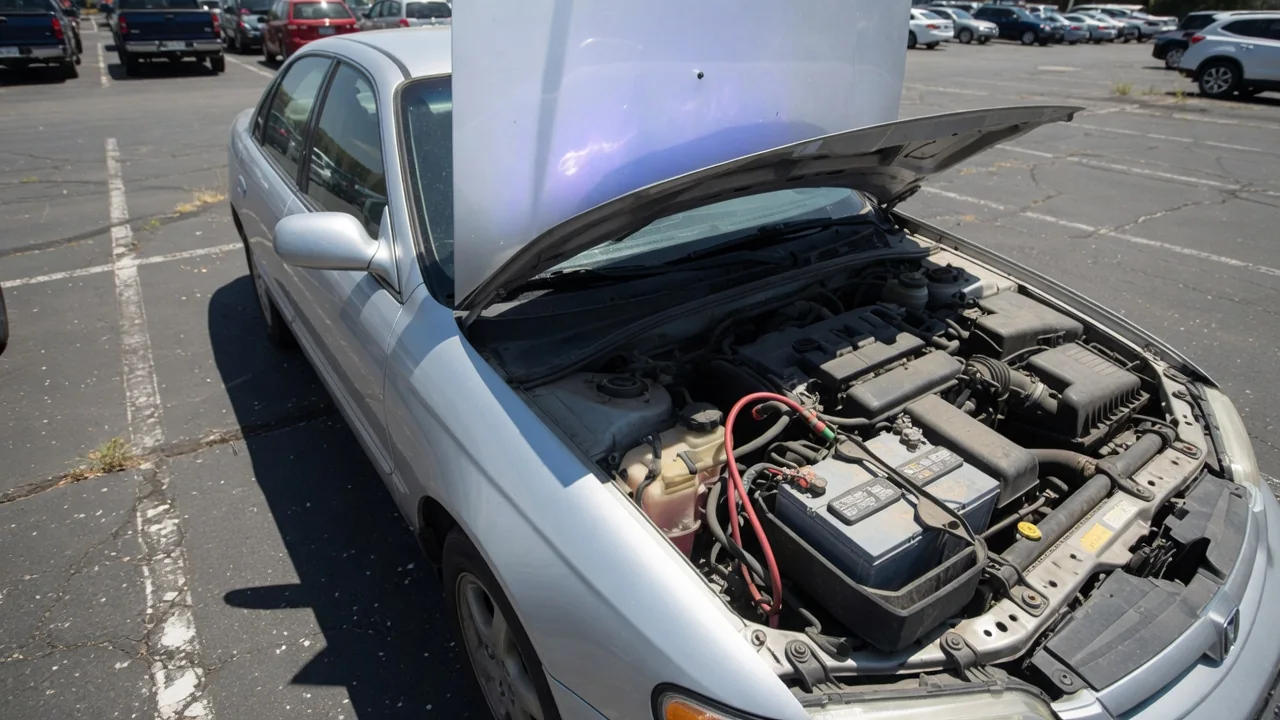
Battery trouble is usually blamed on cold mornings, but much of the wear behind a winter no-start happens during the hot months. Understanding how summer heat affects a parked car battery helps explain why a battery that seemed healthy in July can struggle later. The short answer is that heat speeds up aging, even while the vehicle sits unused.
Heat and battery chemistry
A conventional lead-acid battery stores energy through a chemical reaction between lead plates and an electrolyte of sulfuric acid and water. Heat makes that reaction run faster, which sounds helpful but also accelerates the unwanted side reactions. Corrosion of the positive plate grids proceeds more quickly at high temperatures, and the battery loses charge on its own at a faster rate. A parked car in direct sun can therefore lose battery capacity without ever being driven.
Heat also drives water out of the electrolyte in flooded designs, lowering the fluid level and concentrating the acid around the plates. Sealed absorbed glass mat batteries resist fluid loss better, though they are not immune to heat-related aging. Underhood temperatures can stay elevated long after shutdown, because the engine and exhaust continue radiating warmth into a closed compartment. Some vehicles mount the battery in the trunk or under a seat, which changes how much heat it actually sees.
Warning signs
The awkward part is that a heat-weakened battery often cranks normally in warm weather, because a warm engine with thin oil turns over easily. Early clues tend to be subtle: a starter that sounds slightly slower after the car has sat for several days, interior lights that dim noticeably during cranking, or a stop-start system that stops engaging. Many modern vehicles quietly disable convenience features when they detect low battery charge, so such changes deserve attention.
Physical signs are worth a look as well. A case that appears swollen or bulged, a sulfur or rotten-egg smell, wetness around the caps, or heavy crusty buildup on the terminals can all point to a battery that has been overheated or overcharged. A battery warning light on the dash indicates a charging system issue rather than proving the battery itself has failed, so it should be treated as a reason for testing. Any swollen or leaking battery should be handled by a professional.
Parking and maintenance
Where the car is parked makes a real difference. A garage, carport, or shaded side of a building keeps the body and engine bay cooler than open asphalt in afternoon sun. Windshield shades help cabin temperatures but do little for a battery under the hood. For a vehicle that sits for weeks, self-discharge combines with the small constant draw from alarms, keyless entry modules, and onboard computers, so the battery can end up deeply discharged, which causes sulfation and further capacity loss.
A battery maintainer designed for the battery type can keep a stored vehicle topped up, provided it is used according to the maker's instructions and the owner's manual. Keeping terminals clean and tight reduces resistance, and making sure the hold-down bracket is secure limits vibration damage. Some vehicles have a heat shield or insulating sleeve around the battery; it should go back on after any service. Whether a battery has serviceable caps or is fully sealed varies, so the label and manual are the guide.
Everyday Use and Observations
Driving habits interact with heat. Short trips with the air conditioning, cooling fans, and seat ventilation running may not fully replace the energy used to start the engine, leaving the battery partly discharged when it is parked in the sun again. A partly charged battery ages faster in heat than a full one. Occasional longer drives give the alternator time to restore charge, though vehicles with smart charging systems manage this differently and may deliberately hold the battery below full.
Owners can learn a lot simply by paying attention. Noting how the engine cranks after a weekend of sitting, compared with a daily restart, gives a rough sense of how well the battery holds charge. Some instrument clusters or infotainment menus display system voltage, and a reading that trends lower over a season is worth mentioning at the next service. The date code on the battery label also helps, since an older battery that has lived through several hot summers has less reserve left.
Limits and Next Steps
No observation at home can fully measure battery health. A resting voltage reading shows state of charge but says little about how much capacity remains or how the battery behaves under load. Shops and many parts stores use conductance or load testers that estimate cranking ability, and they can check alternator output and parasitic draw at the same time. Those results matter because slow cranking can also come from a failing starter, corroded cables, or a charging fault rather than the battery.
Battery life in hot climates is generally shorter than in mild ones, but the exact span depends on the battery design, vehicle, and usage, so no single number applies. Having the battery tested before and after summer is a reasonable habit, especially ahead of colder weather when demand rises. On vehicles with battery monitoring systems, a replacement may need to be registered with the car's computer, and the correct type must match the manufacturer's specification. A qualified technician can confirm those vehicle-specific details.