How Does Salt Air Affect a Car Near the Coast?
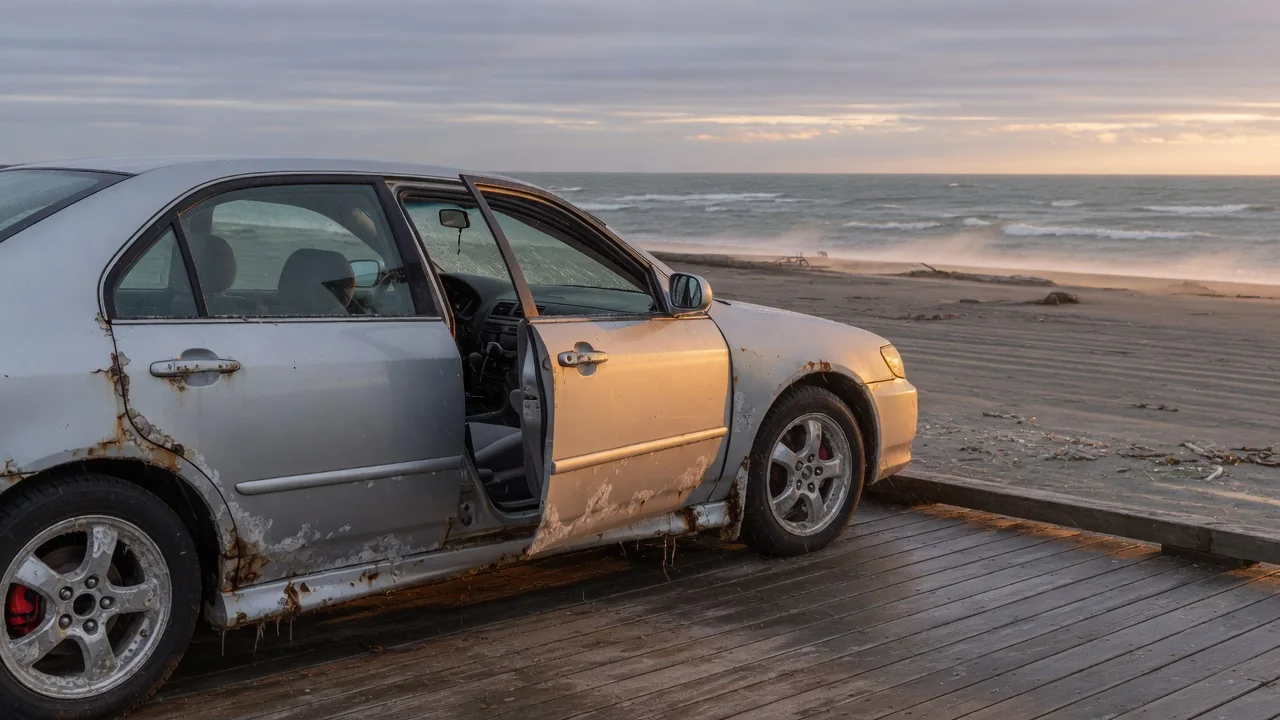
Living near the ocean exposes a car to a steady supply of airborne salt, even if it never touches a wet beach or a winter road. Wind carries fine droplets of seawater inland, and when they dry, salt settles on paint, metal, and rubber. Coastal salt car corrosion is usually slow and uneven. You can manage the risk better if you know where the salt builds up, where it hides, and how rinsing helps.
Deposits
Breaking waves throw tiny droplets of seawater into the air, and onshore wind can carry this spray some distance from the shoreline. How far it travels and how much reaches a parked car depends on wind, surf, terrain, and nearby buildings, so exposure can vary noticeably between locations. As the water evaporates, it leaves a thin film of salt, mostly sodium chloride along with other dissolved minerals. On a car this film often appears as a hazy, slightly gritty dullness on glass and paint, though a light coating can be hard to see at all.
Salt attracts moisture, and that is what makes these deposits harmful. In humid coastal air or overnight dew, the dry crystals absorb water and turn back into a concentrated salty solution on the surface. That solution conducts electricity far better than plain water, which speeds up the electrochemical reactions that rust steel and pit aluminum. Chloride ions are particularly aggressive because they can break down the thin protective oxide layers that otherwise slow corrosion on many metals. Rain does not always wash the residue away, and each cycle of wetting and drying leaves a little more behind. A car that sits outdoors near the coast can collect more and more salt between washes.
Intact paint and clear coat act as a barrier, so on a well-kept body panel the main visible effect is often dulling or spotting. The real concern begins wherever that barrier is broken. Stone chips, scratches, and worn edges let salty moisture reach bare metal. Rust can then spread under the surrounding paint and show up later as bubbling. Brake rotors, exhaust components, fasteners, and exposed suspension hardware start with less protection. Where different metals touch, such as steel bolts in aluminum parts, a salty film can also cause galvanic corrosion. One metal corrodes faster because it is in contact with the other.
Hidden areas
The parts of a car that owners rarely see often hold salt the longest. Underneath, salt spray, sand, and road film collect on several parts: • the floor pan; • the frame or subframe; • suspension arms; • brake and fuel lines; • the inner surfaces of the wheel wells; These surfaces are textured and sheltered from rain, so salt does not wash off naturally the way it can on the roof or hood. Sand and dirt packed into corners can stay damp for long periods, holding salty moisture directly against metal and protective coatings.
Body seams, door bottoms, rocker panels, trunk and tailgate edges, and spaces behind trim and bumpers are another concern. Many of these areas have drain holes so water can escape, but leaves, sand, or debris can block them and trap moisture inside. Spray can also enter the engine bay through the grille and reach several parts: • the radiator; • the air conditioning condenser; • hood hinges and latches; • battery terminals; • electrical connectors; Even small amounts of corrosion on thin cooling fins or electrical contacts can reduce cooling or make a connection unreliable. Which areas are most exposed depends on each vehicle's design, materials, and factory corrosion protection. The owner's manual and service information for that vehicle are the best guide to where its drains and protected cavities are.
Rinsing
Salt dissolves readily in water, so regular rinsing with fresh water is the most direct way to remove deposits before they do much harm. The goal is to dissolve and carry away the residue, not to scrub it into the finish. A gentle, thorough soak first loosens salt and grit so they rinse off instead of being dragged across the paint by a wash mitt. A car wash shampoo can then remove the film that water alone leaves behind. Finish with a final rinse and dry the car to limit spotting.
Rinsing the underside matters as much as cleaning the visible paint. A hose with a spray nozzle aimed into the wheel wells, along the rocker panels, and under the bumpers can flush out much of the trapped salt and sand. Some car washes offer an underbody rinse for the same purpose. Pressure washers can help, but a strong stream held too close can force water past seals, lift loose undercoating, or damage connectors and sensors. Keep a reasonable distance and avoid aiming straight at those parts. Clear debris from visible drain holes, door jambs, and the cowl area below the windshield so water can escape after washing.
There is no single correct washing interval. A car parked close to the surf, exposed to frequent onshore wind, or driven on beach access roads will collect salt faster than one kept in a garage farther inland. Rinse more often during periods of heavy spray and after beach trips. Wash again whenever a hazy film returns to the glass. Washing in shade or when panels are cool keeps water from drying too quickly and leaving salty spots behind.
Practical implications and limits
Salt air speeds up corrosion rather than causing sudden failure. The outcome for a given car depends on how much salt it collects, how long that salt stays wet, and how well the vehicle is protected. Two similar cars on the same street can age quite differently if one is garaged and washed regularly while the other sits outside where leaves clog its drains. Rinsing lowers the salt on the surface, but it cannot reach every enclosed cavity and it does not reverse rust that has already started. Once corrosion forms under paint or on structural parts, it generally needs repair or treatment, not just more washing.
Several habits support rinsing. • Apply wax or a paint sealant so water and residue bead off and the paint is easier to clean. • Touch up chips and scratches promptly to keep bare metal covered. • Park under cover to reduce dew and direct spray. A tight car cover over a damp car can hold moisture against the body. • Ask for a look underneath during routine service, including brake lines, fasteners, exhaust parts, and battery terminals, to catch early corrosion. • Before adding aftermarket rustproofing, check how it works with the factory protection and any warranty terms.